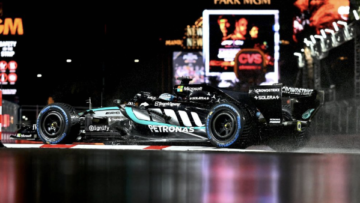






At Mercedes, qualifying in Las Vegas should have been a night of celebration. Kimi Antonelli set the fastest time of 1 minute 33.893 seconds, once again confirming his exceptional talent. George Russell finished third, 331 thousandths of a second behind his teammate. A particularly strong team result. But behind this performance lies a strategic disagreement that could leave lasting scars.
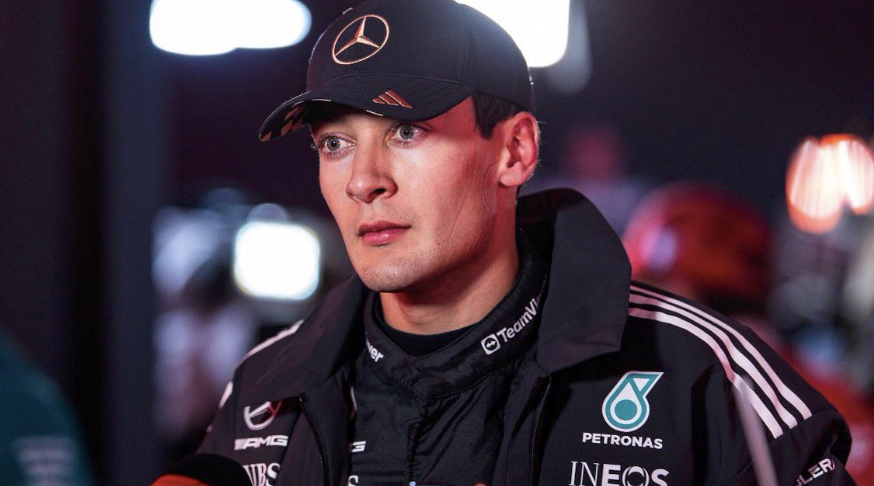
Mercedes deprives Russell of aspiration
In Las Vegas, the suction is causing a stir.
According to revelations from Sky Sports F1 and Motorsport.com , Russell had requested to benefit from Antonelli 's slipstream during the final part of qualifying. Mercedes refused this request. Ironically, it was ultimately Antonelli who benefited from a particularly effective slipstream to set the fastest time.
Russell wanted a boost from his teammate. Mercedes preferred the open air. And Antonelli found, almost by chance, the winning breeze.
Russell had anticipated the advantage
On the Las Vegas circuit, drafting can be a considerable advantage. The long straights allow a car following another to benefit from reduced aerodynamic drag, provided it maintains the correct distance and, above all, doesn't lose too much ground in the corners.
During Q3, George Russell realized this effect could be particularly advantageous. He therefore asked his team if he could take to the track behind Kimi Antonelli . The Briton knew his teammate would have to serve a five-place grid penalty for an engine change. He hoped this would provide a strategy that wouldn't necessarily jeopardize the team's sporting ambitions. But Mercedes preferred to give him more space.
A decision that Russell struggled to understand after qualifying.
Antonelli is taking advantage of the traffic
The end of Q3 was particularly chaotic. Drivers were slowing down to try and find the best position before their final run. No one wanted to open the road and give their rivals a tow. Kimi Antonelli ultimately found himself in a tricky situation. The Italian let several competitors through, risking not crossing the start line before the checkered flag. He finally managed to start his last lap behind another car, about a second and a half behind. A distance that engineers would generally have considered unfavorable. But the slipstream effect proved to be much stronger than anticipated.
Antonelli delivered an excellent final sector and set the fastest time. A spectacular result. And totally unexpected, even for his team.
Wolff acknowledges his surprise
Interviewed after the session, Toto Wolff admitted to being surprised by the extent of the slipstream. The Mercedes boss explained that he hadn't imagined a driver could follow another car at such a close distance for an entire lap without significantly compromising their performance. Normally, such close proximity can lead to substantial downforce losses in the corners. However, the characteristics of the Las Vegas circuit produced a different outcome. The advantage gained on the long straights clearly compensated for the difficulties encountered elsewhere.
For Wolff , this situation requires in-depth analysis. The team had a car competitive enough to aim for the top positions with both its drivers.
Russell frustrated, but not resigned
George Russell made no secret of his frustration. The Briton believes that qualifying demonstrated the considerable importance of slipstreaming. He therefore feels his team could have made better use of this opportunity. The driver confirmed he intends to discuss the situation with Mercedes.
A conversation that should help explain why his request was denied. However, it's not necessarily an open conflict. Drafting strategies are difficult to organize, especially when several drivers are simultaneously trying to gain an advantage. And a poorly coordinated attempt can backfire on those trying to exploit it. But when only a few tenths of a second separate the top spots, every decision takes on considerable importance.
A pole position that ultimately goes to Verstappen
The paradox of the evening doesn't end there. Despite his best time, Kimi Antonelli has to drop five places on the grid.
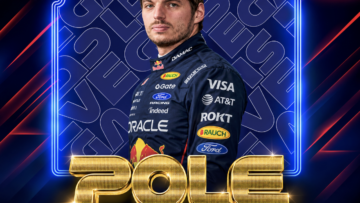
Pole position therefore ultimately goes to Max Verstappen , who qualified second.
George Russell has been given second place on the grid. He will therefore share the front row with his great Dutch rival. This situation could ultimately offer him an excellent opportunity to aim for victory. But the Briton knows he might have benefited from an even more favorable position with a different strategy.
Mercedes set the fastest time. Red Bull takes pole position. And Russell is still wondering why his team didn't want to give him a little breathing room… a vacuum.
A new dynamic at Mercedes
This affair comes in a particular context. Kimi Antonelli has already won the 2026 world championship. Mercedes has also secured the constructors' title. But both drivers continue to defend their personal interests.
George Russell is particularly keen to consolidate his position in the standings and finish the season on a positive note. Meanwhile, Antonelli aims to continue his run of impressive performances. The internal rivalry therefore remains very real, even though the main collective objectives have already been achieved. And the team's strategic choices are naturally being scrutinized closely.
Wolff will have to learn the lessons
The most important thing for Mercedes now will be to understand precisely the circumstances of this qualification.
Why was the drafting so effective? Why didn't the simulations seem to predict such a significant advantage? And could the team have organized its final attempts differently?
These are all questions that the engineers will have to answer. George Russell's explanations will be particularly eagerly awaited. Because while both drivers have equal chances, their strategies also need to be understood and accepted.
Toto Wolff has long been adept at managing particularly delicate internal rivalries. This time, he will have to explain why the driver who requested a tow didn't receive one, while his teammate found the fastest lap time thanks to it.
In Las Vegas, Mercedes won the battle of the clock. But for Russell , the denied slipstream left a bitter taste of missed opportunity.
And in a city where everyone is trying to draw the right card, Antonelli seems to have gotten the best hand without even asking for it.
🏁 MERCEDES, RUSSELL'IN TAKIM ARKADAŞINDAN DESTEK ALMASINA İZİN VERMEDİ!
George Russell, Las Vegas GP takes its turn on the right side of the car Kimi Antonelli'nin side of the road takes a turn at the Mercedes end of the year.
Toto Wolff,… pic.twitter.com/R6VaBkxpMi
—Mercedes-AMG | F1 News 🏁 (@MercedesAMGTR) November 21, 2026