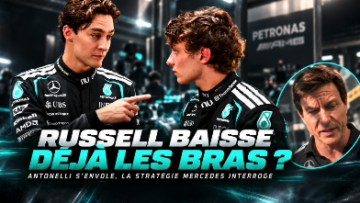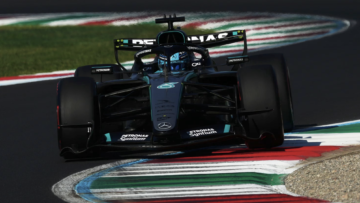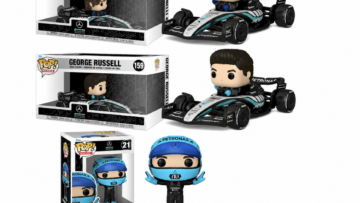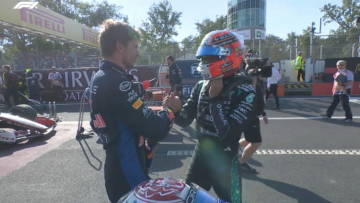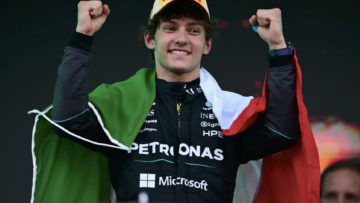









After Monza, Mercedes details its strategic choice. A necessary explanation or a plea to avoid accusations of favoritism? It seems that when a strategy works, it speaks for itself. At Mercedes, however, after Monza, they still prefer to release simulations, gaps, tires, projections, and a few additional explanations.
At Mercedes, Antonelli wins, Russell questions
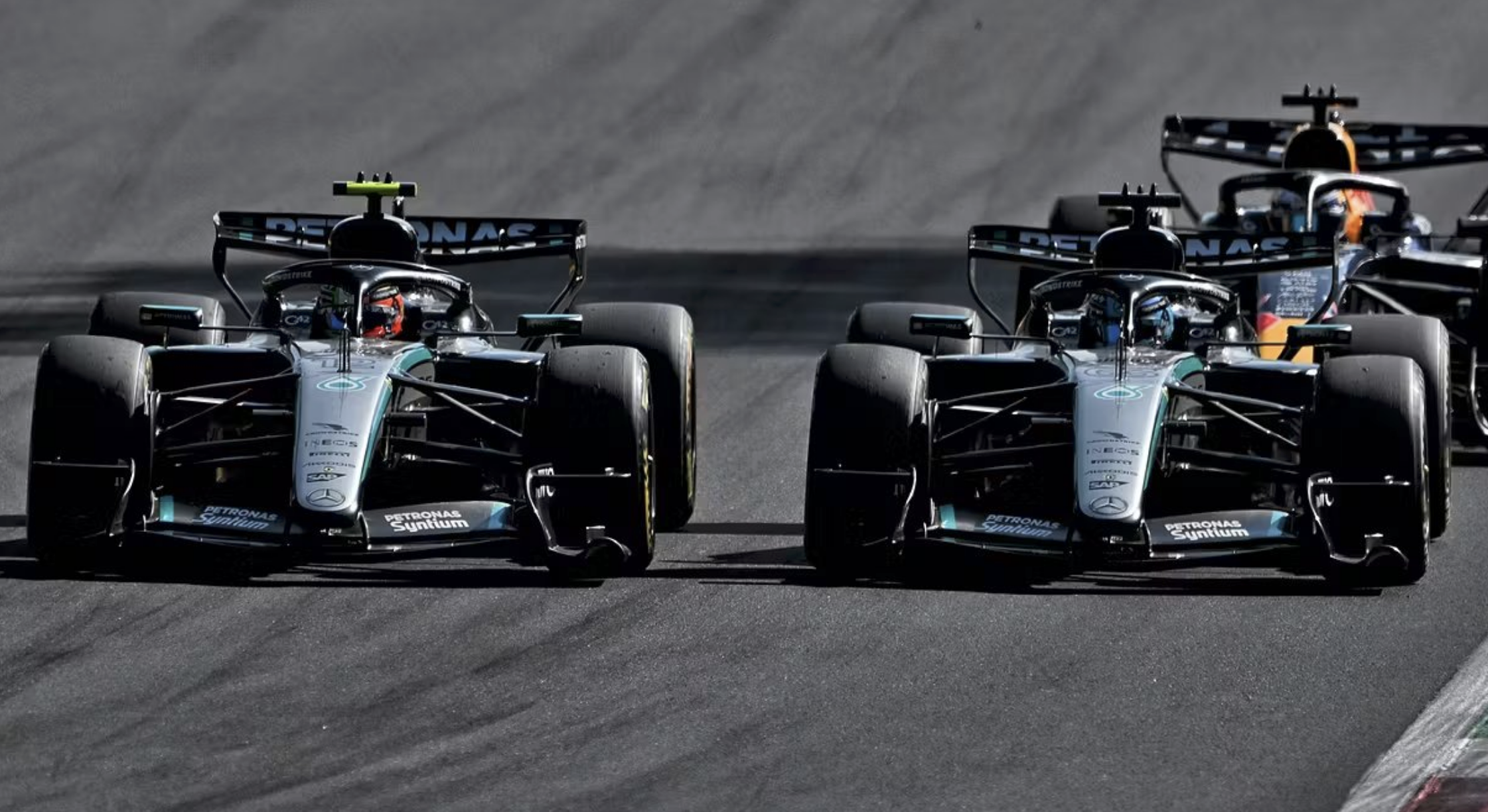
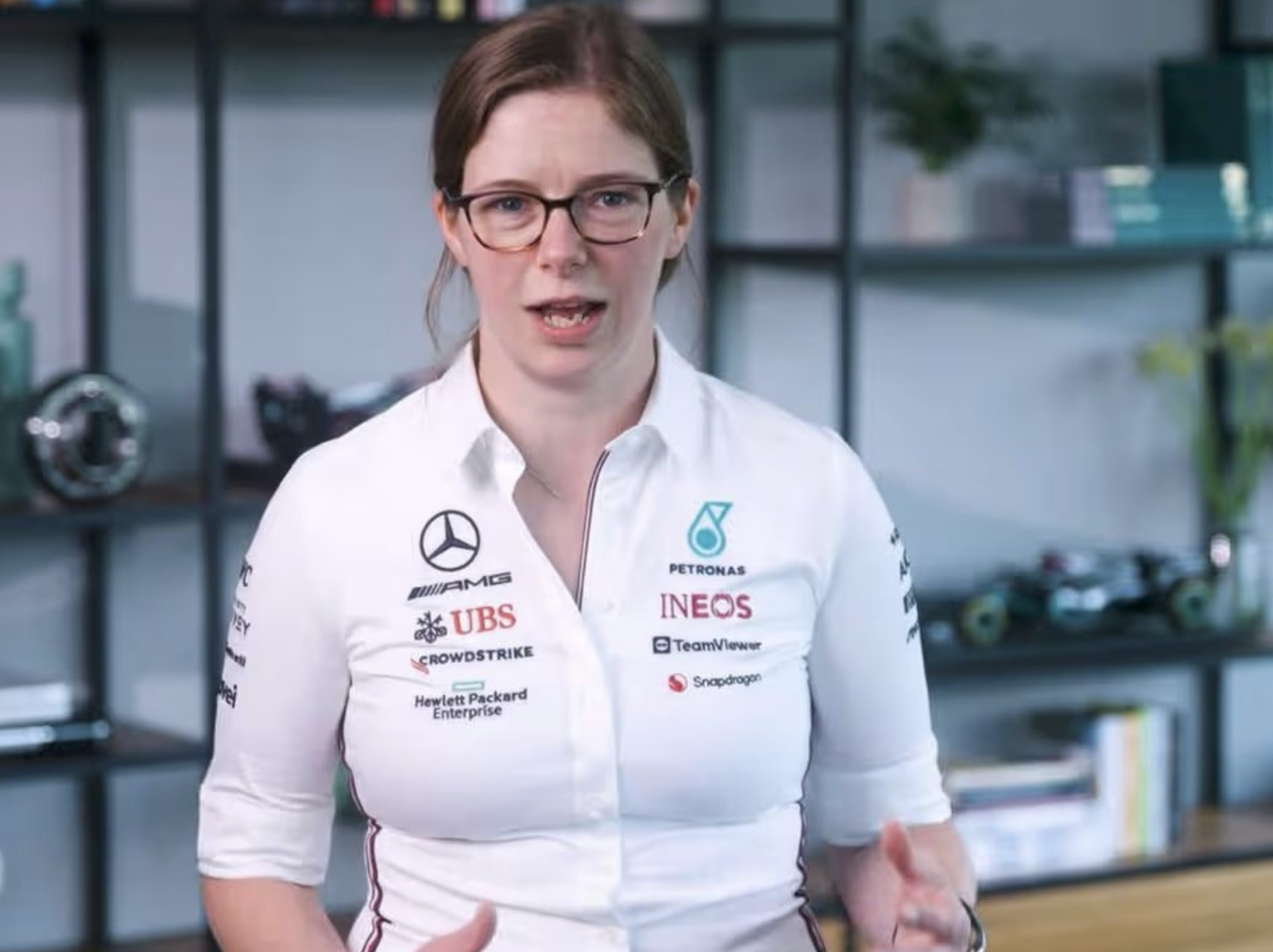
Rosie Wait, Mercedes ' head of strategy , spoke at length about the decision to place George Russell and Kimi Antonelli on two completely different racing lines during the Italian Grand Prix. And since one line led Antonelli to victory while the other allowed Russell to defend on aging hard tires, the demonstration inevitably resembles something more than a simple strategy lesson.
One question remains paramount: Did Mercedes simply cover two scenarios… or must it now convince everyone that it did not favor its championship leader?
The distinction is important. There is no evidence to suggest that Russell was deliberately sacrificed. But after two consecutive weekends where Mercedes decisions ultimately benefited Antonelli , Brackley's communication inevitably takes on a defensive tone.
Russell in front, Antonelli in the pits: the gamble that changed Monza
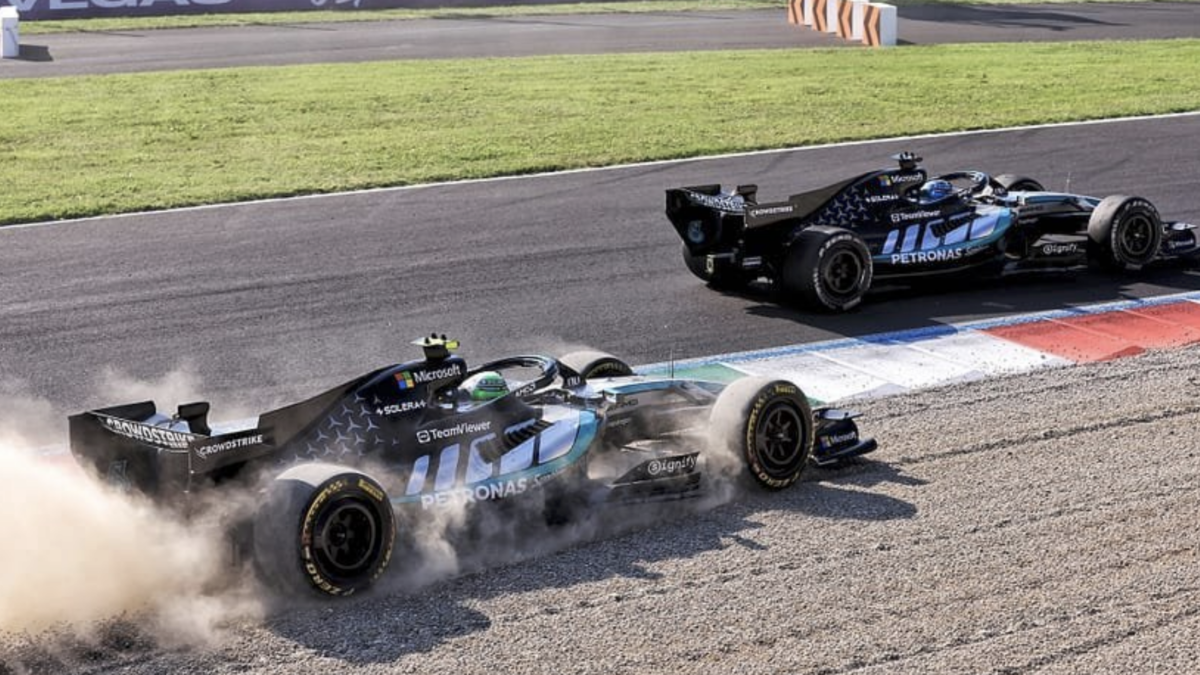
When the Virtual Safety Car was deployed at Monza, Russell was on hard tires while Antonelli had the opportunity to switch to fresh mediums. Mercedes then did exactly what a team with two cars at the front could reasonably do: they shared the risk. Antonelli pitted. Russell stayed out. And according to Mercedes , this was by no means a death knell for the Briton. Toto Wolff explained that the simulations still favored Russell 's strategy.
"The system said the one-stop shop came out on top."
The team believed Antonelli 's two-stop strategy could make a comeback in the closing laps, but not enough to beat his teammate. So much for the computer. Antonelli , however, clearly forgot to check the software before heading out. He rejoined the race around 14 seconds behind, with 24 laps to go and four cars to overtake before he could even think about Russell . He needed to make up around half a second per lap on average, conserve enough tires to finish, and navigate through traffic without losing time. He did all that. Then he overtook Russell and won.
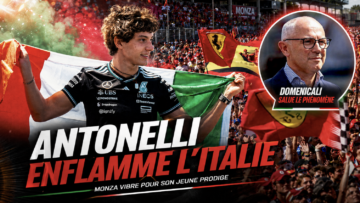
The Italian's victory from 19th position was therefore much more than a strategic gift: it was still necessary to turn the opportunity into a demonstration.
Rosie Wait insists: on paper, Russell had the right strategy
This is precisely what Mercedes now wants to emphasize.
Rosie Wait explains that keeping Russell out on track was, " on paper ," faster than making another pit stop. She adds that Antonelli needed to gain about half a second per lap while overtaking four competitors, and that the advantage provided by fresh tires would logically diminish as the stint progressed.
Technically, the argument holds water.
Before the race, Pirelli believed that a one-stop strategy was indeed the fastest at Monza, with limited degradation and hard tires capable of very long stints. Russell himself didn't claim that the victory had been stolen from him. When asked about the possibility of pitting under Virtual Safety Car (VSC), he admitted he hadn't considered that option and even thought his rivals would also stay out on track. He also acknowledged that, with Verstappen in the mix, Mercedes had an interest in covering both scenarios. So, case closed? Not quite.
Because two weeks earlier, Russell had already had to step aside
The problem for Mercedes isn't just Monza. It's Zandvoort plus Monza. In the Netherlands, Russell had already been asked to let Antonelli through in the closing laps. The young Italian had fresher soft tires, and Mercedes felt that a battle between its drivers risked exposing both cars to Ferrari.
Russell had obeyed and acknowledged after the race that Antonelli would probably have ended up overtaking him.
Toto Wolff then took care to add:
"We would have done exactly the same thing in the other direction."
A week later, Antonelli again capitalized on a strategic mismatch with Russell and won at Monza. Individually, each decision is defensible. Taken together, they create a perception. And in Formula 1 , perception is sometimes as tricky to manage as the degradation of a medium.
Especially since Antonelli now has a 66-point lead.
There's also a huge silver elephant in the middle of the garage: the championship. After his victory at Monza, Antonelli now has a 66-point lead over Russell . He's no longer just the prodigy protected for years by Toto Wolff . He's the Mercedes driver best placed to clinch the world title.
From then on, every order, every stop and every strategic difference will be examined from this perspective.
And the question has already been raised publicly. On Sky Sports F1 , the possibility of Antonelli being given an advantage because he leads the championship was discussed. Nico Rosberg categorically rejected it.
"Equal opportunities for both. That's how it has to be."
The former Mercedes champion emphasized a key rule: the leading car normally receives strategic priority. At Monza, that was Russell. According to Rosberg , if Mercedes was truly convinced that staying out on track was their best option, then there was nothing unfair about the decision. This is precisely what Mercedes is now trying to demonstrate.
Mercedes is not discovering the Russell-Antonelli conundrum today.
We also need to go back to Barcelona to understand why Brackley now operates this way. On that day, Russell and Antonelli spent several laps battling each other while Lewis Hamilton closed the gap. After the defeat, Wolff acknowledged that Mercedes needed to reconsider its internal rules regarding situations where one of the two drivers has a pace advantage.
His observation was quite clear:
"We need to look at how to manage a difference in pace when we risk losing a victory."
Mercedes has therefore gradually abandoned the romantic " let them race" approach for a much more pragmatic policy: if the two cars risk interfering with each other and an opponent poses a threat, the pit wall intervenes. This is what happened at Zandvoort.
And this also partly explains why, at Monza, Mercedes preferred not to put its two drivers on exactly the same strategy.
So, is Mercedes trying to exonerate itself? A little, yes.
Not necessarily a fault. But a suspicion.
Rosie Wait 's lengthy development comes precisely after the issue of favoritism was publicly raised. And when a team places so much emphasis on simulations, the number of cars to overtake, the 13 or 14-second gap, and the anticipated decrease in tire advantage, it's no longer just technical instruction. It's also about communication.
Mercedes wants to convey an extremely simple message:
We did not offer Monza to Antonelli ; we even thought that Russell still had the best strategy.
And the facts provide strong arguments for this defense.
But they don't completely erase one reality: Antonelli is now comfortably in the lead of the championship, Mercedes already gave team orders in his favor at Zandvoort, and the Monza strategy provided him with the weapon that allowed him to beat Russell . This doesn't prove favoritism.
This simply ensures that every future decision will be scrutinized under a microscope.
And the day Mercedes asks George Russell to move aside again, Rosie Wait 's software will have to have very, very good screenshots.