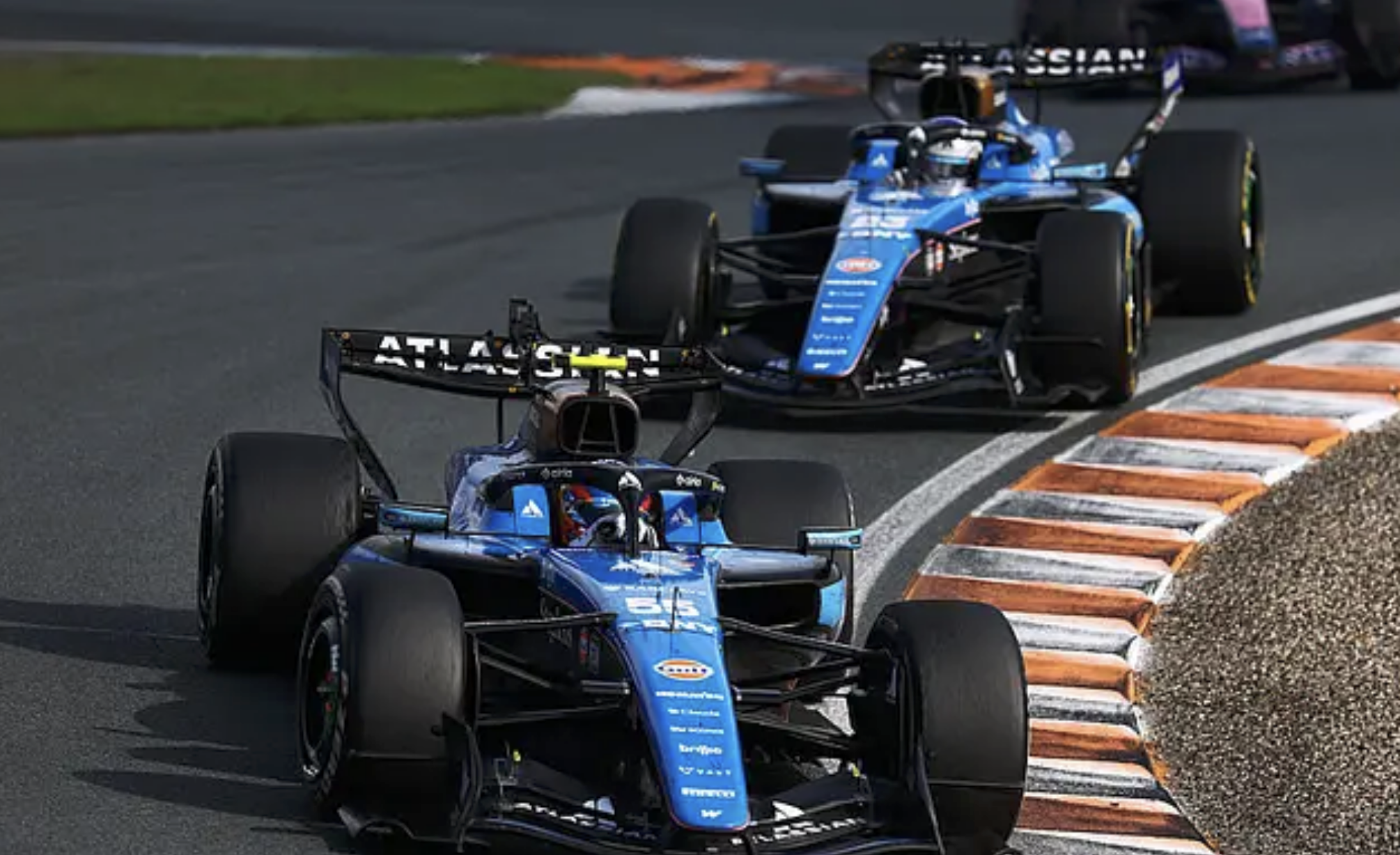








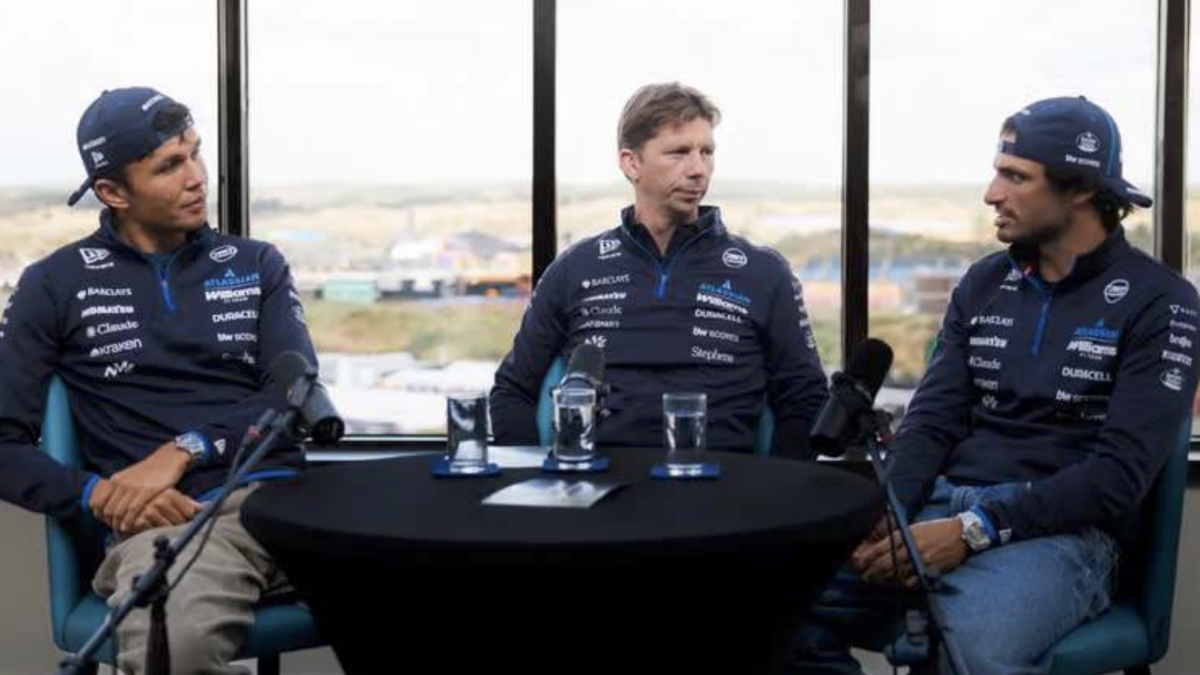
At Williams, the calendar seems to have a slight synchronization problem. It's the end of August, Formula 1 is already preparing for Monza… but the FW48, it seems, still has part of its brain stuck last November.
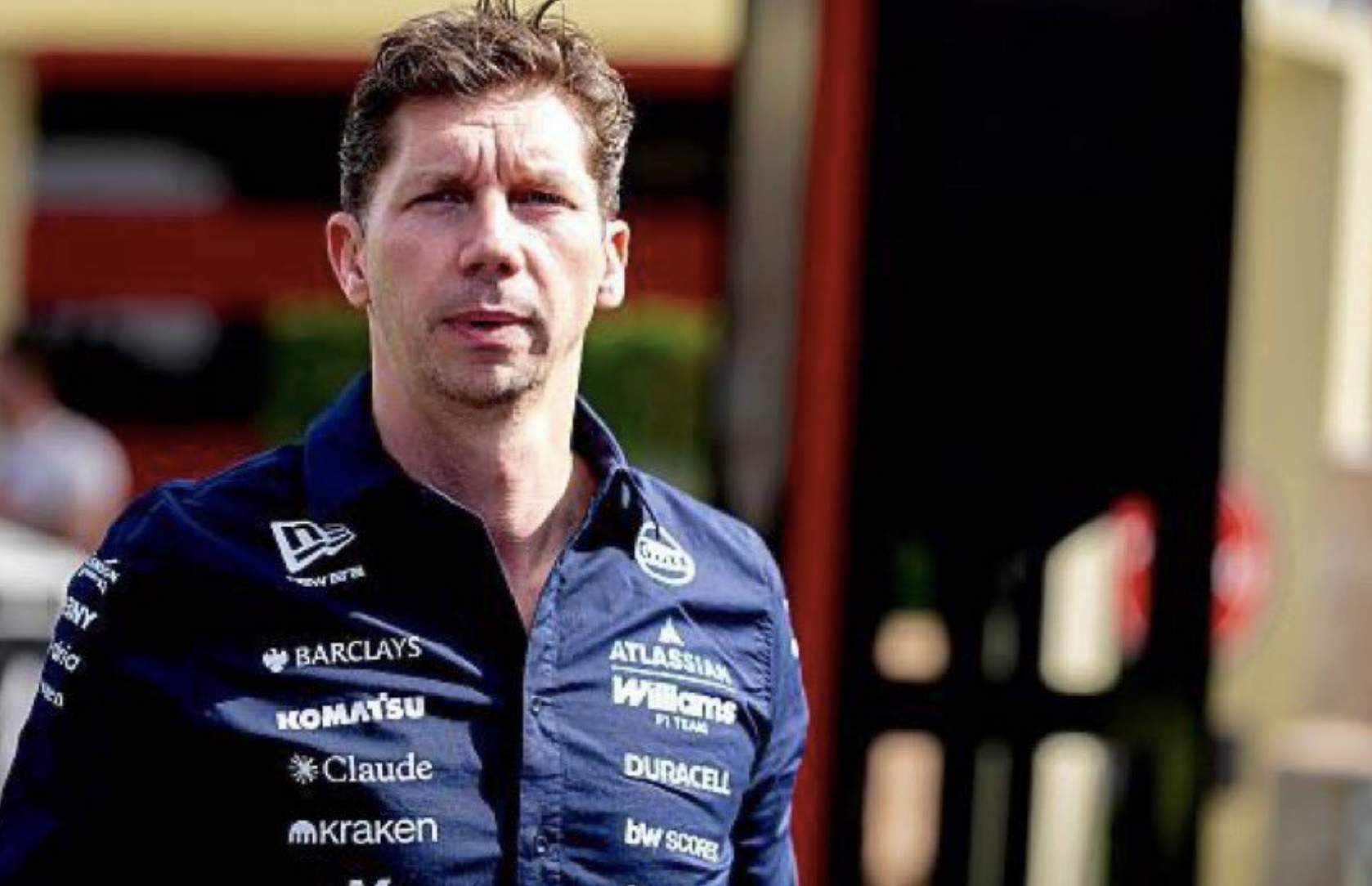
Vowles reveals the extent of the delay by Williams
James Vowles has indeed just acknowledged that the car currently in competition still has an aerodynamic base that essentially corresponds to the one tested in the Grove wind tunnel nine months ago. And, more importantly, the Williams boss now admits that the difficulties encountered during the winter were more serious than he had publicly suggested.
This puts into slightly different perspective the traditional "we understand the car better" heard since the beginning of the season.
Nine months later, the November wind tunnel is still running
Vowles ' statement is particularly revealing. According to him, the car currently on track corresponds to a version that was already in the wind tunnel in November 2025. The upgrades arriving today wouldn't even be those initially planned, as Williams has had to dedicate significant resources to repairing the consequences of winter development.
In other words, while McLaren, Mercedes, Ferrari , and Aston Martin are piling up new parts, Williams is still partly finishing the work it would have liked to have completed before the start of the season. The problem is therefore no longer simply a slightly slow FW48. It's a development pipeline that has fallen far enough behind schedule to prevent Grove from competing fairly with its rivals.
And in Formula 1 , nine months of aerodynamic delay is no small setback. It's practically archaeology.
The infamous “complicated” winter was apparently even more complicated
Vowles had already given several hints. In May, he explained that Williams had wanted to push back the deadlines considerably in order to maximize wind tunnel development. The gamble was ambitious: to produce a car far more complex than its predecessors, with up to one and a half to two times the complexity in some areas. The problem is that manufacturing didn't go as planned, and several difficulties, particularly with crash tests and industrial processes, quickly overwhelmed the organization. The FW48 even missed the private shakedown in Barcelona before the start of the season, a rather blatant first sign that the grand 2026 plan already resembled a race against time.
Vowles now acknowledges that these problems were "more significant " than he had communicated at the time.
Free translation: the small fire seen from outside had probably already reached the kitchen.
And the weight didn't help at all.
When the car finally started racing, another gift awaited Williams : excess weight. As recently as June, Vowles publicly acknowledged that the FW48 was running above the minimum regulatory weight and retained certain features the team would have gladly done without.
Williams has since designed parts that theoretically allow them to return to within the limit, but the budget cap necessitates careful selection of when to produce and introduce these components. Designing a lightweight part is one thing; manufacturing all the new parts at the desired time is quite another. Thus, Williams finds itself caught in a particularly delightful loop:
The car is delayed, so new parts need to be produced; producing these parts costs time and money; meanwhile, others are developing; and the delay continues. A kind of administrative DRS.
Sainz logically begins to find the joke less funny
Carlos Sainz is no longer hiding his irritation. At Zandvoort, the Spaniard explained that Aston Martin was now " in a different league ," judging Williams incapable of keeping up with the development pace of its direct rivals. The Dutch weekend was also complicated by a damaged floor, forcing his car to revert to a previous specification.
A few days earlier, Sainz had even suggested that the fundamental flaws of the FW48 required more than a series of minor upgrades, going so far as to mention the need for a completely new concept. It's hard to entirely disagree with him when the team principal then confirms that the current car is still based on an aerodynamic design that was several months old. Zandvoort didn't improve matters either: Williams finished the weekend without scoring points for the sixth consecutive race, after contact between Sainz and Alex Albon that notably forced the latter to retire.
When development stalls and the two cars end up meeting, we are getting dangerously close to a complete bingo.
From fifth to ninth force: the fall hurts
The contrast with 2025 is stark. Williams finished fifth in the constructors' championship last season, their best result since 2017, with Carlos Sainz notably contributing more podium finishes to the team. The arrival of the new 2026 regulations was supposed to be the perfect opportunity to continue this climb. Instead, Williams recently found themselves in ninth place with just 11 points, having stopped scoring since Monaco. Perhaps the most worrying aspect isn't even the standings. It's the fact that Williams deliberately sacrificed part of their 2025 development in order to prepare this new generation of cars so early.
So they started before everyone else… …only to end up arriving late. The feat almost deserves its own trophy.
Vowles no longer promises a miracle part
The Williams boss's rhetoric has nevertheless changed. Rather than touting the arrival of a massive package capable of suddenly transforming the FW48, Vowles now speaks of a large number of internal projects, aimed both at improving the car and at preventing the team from repeating the same mistakes in future seasons. This is probably the most important part of his admission. Williams is no longer just chasing a few tenths of a second.
The team is still trying to rebuild the very way it designs, manufactures and develops a Formula 1 car.
And that's also why Vowles retains Grove's confidence despite the results: his project goes far beyond the FW48. The recruitment of several technical managers, including Piers Thynne from McLaren , is part of this profound restructuring. The bad news is that this kind of overhaul can't be fixed with a new front wing. The good news is that Williams finally seems to be openly discussing the extent of the damage. Now they just need to get the car moving as fast as they can keep up with the explanations.
Because the competition has already set up its summer quarters in Monza for the weekend.
Williams , for her part, would probably like to start by leaving in November 2025.