







A year after Liberty Media's acquisition of Dorna Sports, initial assessments are beginning to emerge in the paddock. While most stakeholders welcome the stability brought by MotoGP's new owner, some believe the championship now needs to accelerate its transformation. This is the case for Paolo Campinoti, head of Prima Pramac Yamaha, who is calling for a more ambitious evolution of the economic model.
For the Italian, MotoGP can only reach a new level by ceasing to think primarily in terms of savings and focusing on an essential question: how to generate more revenue?
Guest of Andrea Migno's podcast, Campinoti delivered a frank analysis of the first year of Liberty Media at the top of the championship. While he says he is generally satisfied, he believes the pace of development remains too slow. Yes, I'm satisfied, although some things should go faster. »
For him, there are two levers in any business: reducing costs or increasing revenue. And on this point, his opinion is clear. The real change occurs when incomes increase"In other words, reducing spending may temporarily improve the accounts, but does not permanently transform a championship."
Campinoti adopts a more offensive vision. According to him, MotoGP must fully accept its status as an entertainment industry in order to attract more business partners and new audiences. Either you accept being an entertainment company, or you continue as before »
For the Italian executive, simply trying to save a few thousand euros on logistics will never lead to scaling up. The real challenge lies in making the championship more attractive to sponsors, broadcasters, and organizers.
To illustrate his point, Paolo Campinoti indirectly evokes the Grand Prix held at Balaton Park.
Despite its recent addition to the calendar, the Hungarian event has not met with the hoped-for popular success.
With a little more 80 000 With a low overall attendance over the weekend during its inaugural edition, it ranks among the lowest attendances of the season. For the teams involved, such an event generates little economic benefit and raises questions about the wisdom of certain geographical choices.
In his view, MotoGP must prioritize markets capable of sustainably supporting its growth. It is precisely with this in mind that Campinoti argues for an offensive return in AsiaHis first choice, without hesitation, is India. I would go to India without hesitation, because it's a huge market. »
MotoGP had only held one edition there, in 2023, before logistical and administrative difficulties led to the disappearance of the Grand Prix. Campinoti However, he retains very positive memories of this experience. According to him, the public's enthusiasm was genuine and the stands were packed.
Beyond theIndiaHe also cites the China, the Indonesia and the Malaysia such as markets offering considerable development potential.
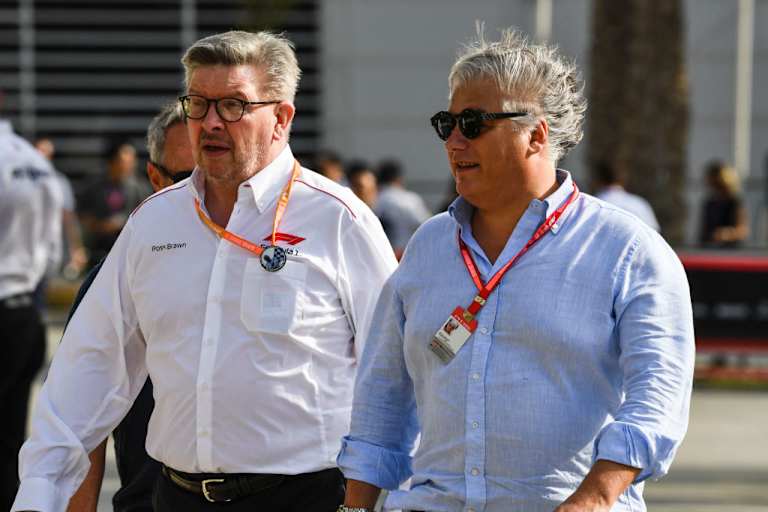
Paolo Campinoti: “ A ticket price of 15,000 euros is neither fair nor feasible, but positioning ourselves slightly higher than the current price is entirely possible. »
Another interesting point in his analysis: his perception of the Formula 1Far from seeing it as direct competition, Campinoti consider that Liberty Medium has gradually repositioned the motorsport discipline in a much more upscale segment.
Campinoti does not perceive it as a competitor, but as an ally who has opened up spaces: Formula 1 now targets a different audience than ours; it has taken a dominant position, which offers us considerable space to position ourselves more broadly."
He uses the example of prices to illustrate this new situation: a ticket for the F1 paddock club costs € 15.000, and even at that price, the black market is thriving.
MotoGP is not aiming for such prices, but rather taking advantage of this positioning: Reaching that level is neither fair nor feasible, but positioning oneself a little higher is entirely possible."
Prices in certain VIP areas, such as the Paddock Club, now reach tens of thousands of euros, creating a decidedly luxury product. For the boss of PramacMotoGP has neither the aim nor the interest to reproduce this model exactly.
On the other hand, he believes there is significant room to gradually enhance the experience offered to spectators and partners, without losing the accessibility that defines the championship.
Campinoti also shows support for the development of urban racesprovided that safety requirements are fully met. According to him, Liberty Medium et Dorna They are already considering this possibility. He sees no fundamental obstacle to organizing new events in city centers if the infrastructure meets the standards imposed by MotoGP. This development would bring the discipline even closer to certain strategies already implemented in Formula 1.
The statements of Paolo Campinoti ultimately reflect a broader debate about the economic future of MotoGP. Since its acquisition for approximately 4,2 billion eurosLiberty Media has a tremendous opportunity: to transform a sporting discipline that is extremely popular with enthusiasts into a product capable of appealing to a much wider audience.
For the boss of PramacThis transformation will come less from the pursuit of savings than from a strategy of international expansion, new markets and increased appreciation of the show.
The underlying message is clear: MotoGP still has significant commercial potential, but it will have to dare to break out of its habits if it wants to change its dimension. Liberty Media has succeeded in revolutionizing Formula 1. Now it remains to be seen whether it can achieve the same revolution on two wheels.