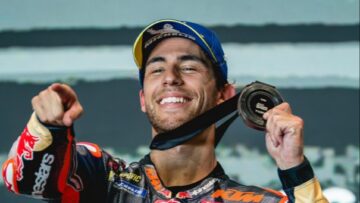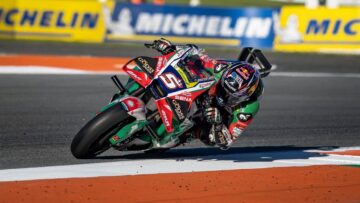






Let's be honest: the Austrian Grand Prix wasn't exactly a thrilling spectacle. Whether in the Sprint or the main race, no one could challenge Bagnaia ; and beyond that, the enormous gaps in the top 10 prevented any real action. This raises a question, one that's becoming increasingly common: Is MotoGP becoming boring? For two days, we'll try to answer that question together.
Like all installments of Let's Talk MotoGP , this is a subjective, reasoned viewpoint; my opinion is no more valid than yours. Therefore, I encourage you to share your thoughts in the comments section—valuable feedback that I read diligently, even if I can't always reply to everyone. To accomplish my mission, I've created a plan with several distinct, clearly defined sections to ensure readability and clarity, while getting straight to the point.
The facts – A heterogeneous and divided plateau
Let's start with the facts. In Austria, the lack of excitement was glaring, but still less so than the gaps separating the riders at the finish. Jorge Martin, second, crossed the line more than three seconds behind an exceptional Pecco Bagnaia. Enea Bastianini, third, was seven seconds behind his teammate. Marc Marquez, fourth, was thirteen seconds back . And so on, up to the symbolic twenty-nine-second mark, which represents more than a second lost per lap – this time by Aleix Espargaro, ninth. Admittedly, the phenomenon was more pronounced at the Red Bull Ring, but it was hardly different at Silverstone, where Franco Morbidelli, 10th, finished 23 seconds behind the winner, Enea Bastianini. In Germany, Raul Fernandez, also 10th, was 16 seconds behind. As you can see, there are significant gaps in the field.

How can we compare these observations? In my opinion, to the closest era in history, namely the 2016-2018 period, coinciding with the introduction of the famous single ECU . Ultimately, the field wasn't necessarily closer, as tenths of a second often finished more than 15 seconds behind the leader. So, this initial observation needs to be put into perspective. On the other hand, another factor cannot be ignored: the number of winners. In both 2016 and 2020, nine different riders won the season. This year, there are only four. And even then, two won once, another twice, and the last seven. Granted, but that still doesn't explain why the gaps on the podium, which are quite different from those between 2016 and 2020, are so large. After all, Marquez won 12 times in 2019, but the races were generally more competitive than this Austrian Grand Prix.
So, when did this phenomenon begin, which, based on the initial conclusions mentioned above, seems more like a feeling than a mathematical certainty? Personally, I think a turning point was reached this year . In 2023, as in 2022, many different drivers triumphed, took pole position, or, more generally, distinguished themselves. But what changed, then, to lead to this feeling of the championship being completely dominated in such a short time?
🏁 #MotoGP RACE 🏁 @PeccoBagnaia does the double in Spielberg for the second season in a row! 🏆 #AustrianGP 🇦🇹 pic.twitter.com/LvvisML0pT
— MotoGP™🏁 (@MotoGP) August 18, 2024
The reasons – Two aliens on a rocket
I see two main reasons for this changing landscape, and neither is negative. Let me explain. The first is simple, and I believe, quite easily noticeable. Ducati is simply too strong . Never before has a brand dominated so much in the modern era. You have to go back to MV Agusta in the late 1960s to find such dominance. For reference, Ducati is on a run of eight consecutive Grands Prix with three machines on the podium, and it's not uncommon to see five of them in the top five. The Desmosedici GP24 stands out by a wide margin, even ahead of its older sibling, the GP23, which has only been successfully tamed by Marc Marquez. While it's impossible to deny Ducati's power, it would be unfair to criticize them. The other manufacturers simply need to catch up (no pun intended). I don't much care for the dumbing down of the sport, and after all, MotoGP is an engineer's sport. They deserve credit, especially since they're putting eight Desmosedici bikes, including four GP24s, on the grid; it's quite fair and leaves room for some exciting battles.
So why do they never happen? Here's the second reason, and it's a bit more subtle. In my opinion, Pecco Bagnaia and Jorge Martin, without singling them out, have been in top form since the start of this season. It's been a long time since we've seen two riders this strong, and it's particularly noticeable over a single lap. Most of the time, they're the only two chasing the fastest time; everyone else is trying to stay behind them. Leaving aside Morbidelli, Bastianini also has a factory GP24, and he was formidable in 2022 with Gresini. Despite a win at Silverstone, he's not at the same level as the other two . Martin, and especially Bagnaia, stand out, with the same approach, the same racing philosophy . This dominance of the championship is also due to them.

Is it serious?
Now comes the time to conclude. Of course, this part will be even more subjective than the other two . Personally, I'm never bored watching MotoGP . Firstly, because I've always felt that the battle for the overall title takes precedence over the individual race battles. I prefer a championship that's close until the very end, with two riders dominating the races, rather than ten different riders winning but a grocer easily taking the title. In fact, that was the case in 2015 and 2013, two of my favorite seasons. The atmosphere was electric because the championship was at stake in every race, but in reality, the races weren't very competitive, with a few exceptions. Sometimes you get both, like in 2023, but well, you can't always control what history throws your way.
Secondly, and finally, because I think this perception is biased by the profile of those who dominate. Pecco Bagnaia and Jorge Martin are attackers, always on the edge. They crash a lot, have fairly low average points at the end of the season, but they rely entirely on their inherent speed, never calculating anything. On the other hand, when they win, they are miles ahead of their rivals because that's their style of racing . Both are rather "plain" champions, differentiated only by the slightly more "youthful" attitude of the Martinator – not to say arrogant. Bagnaia isn't very popular and, it must be said, isn't exactly a "marketable" figure . All of this combined leads to a feeling that isn't really representative of reality, in my opinion. This year, we've had a lot of action, and one or two bad races shouldn't overshadow the wonderful battle at Jerez, as well as the one at Le Mans.
However, in each of the examples mentioned above, one element had come along to spoil the party… his name? Marc Marquez. What does he have to do with the current MotoGP spectacle? To find out, don't wait any longer! Part two of this analysis is out; you can find it by clicking here.
In the meantime, if you want another story – coupled with a very interesting article – click here.
What do you think of this question? Let me know in the comments!

Cover photo: Michelin Motorsport