







For decades, the global motorcycle industry was dominated by a virtually untouchable quartet: Honda, Yamaha, Suzuki, and Kawasaki. Japan manufactured the technical benchmarks, while China essentially produced inexpensive copies for emerging markets. That era may be coming to an end.
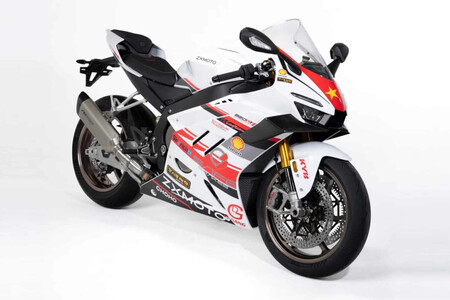
The statements of Zhang XueFounder Kove and ZXMotoare particularly interesting because they do not amount to gratuitous provocation towards HondaAbove all, they reveal a much deeper paradigm shift: the China no longer simply wants to catch up with Japanese manufacturers, it now believes it can surpass them.
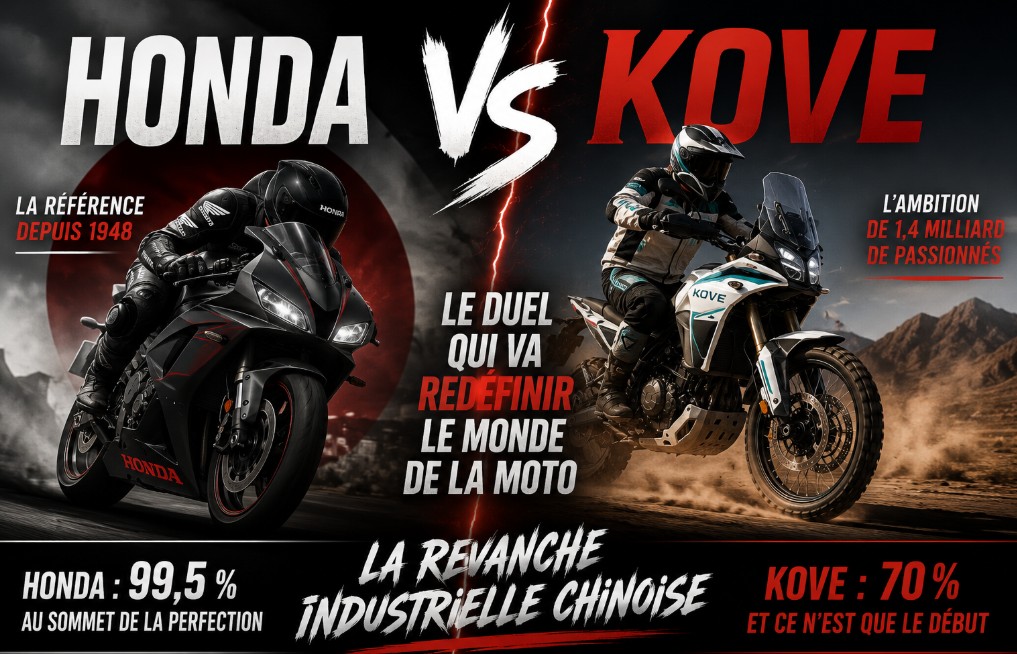
In an interview with the Taiwanese media ettoday.net, Zhang Xue used a particularly apt comparison to illustrate his vision of the future: The motorcycle sector has its limits. Let's say those limits are set at 100. Honda could be at 99,5, while we are at 60 or 70The further we are from these limits, the faster our growth. We have significant room for improvement »
The analysis deserves closer examination. The Chinese boss does not claim that Kove is better today than HondaOn the contrary, it implicitly acknowledges the current superiority of the Japanese manufacturer.
His reasoning lies elsewhere: he believes that Honda now suffers from the leader syndrome. When a company approaches industrial perfection, each additional advancement becomes extremely costly and marginal. Conversely, a manufacturer still in its upswing has considerable room for improvement.
« Our competitors want to surpass us, and we want to surpass them. It's like a race on a circuit We need to work harder, be more focused, invest more, and use the right methods. »
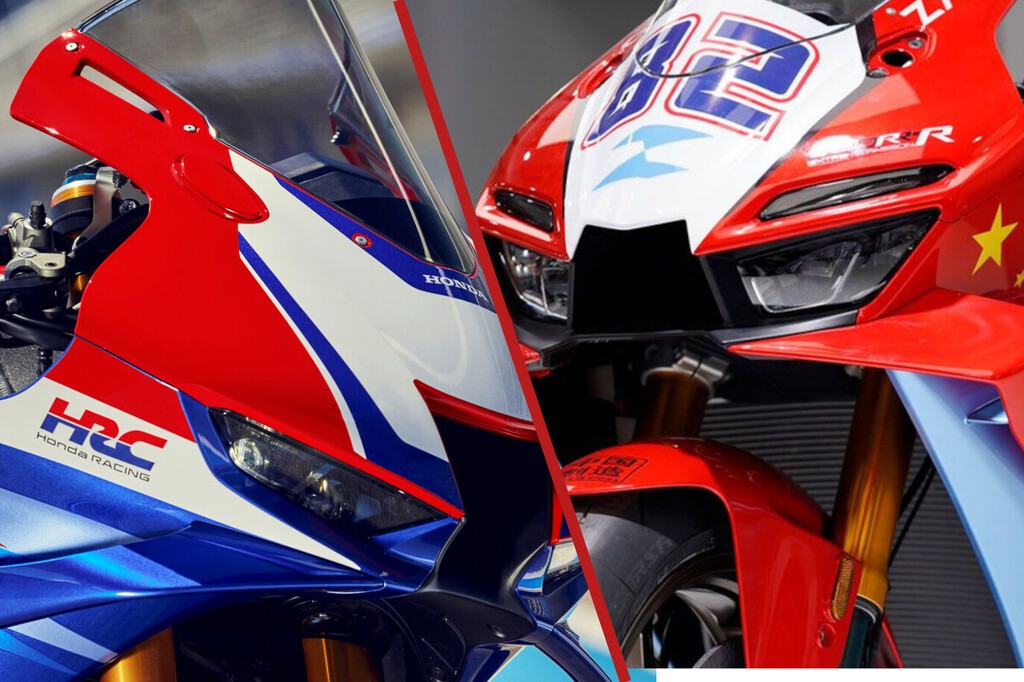
Honda's real rival may no longer be Yamaha
The real message is probably there. For years, the China has accepted its image as a low-cost producer. Now, Chinese manufacturers consider this phase to be definitively over.
Zhang Xue even incorporates this new philosophy into the design of its motorcycles. On my motorcycles, I deliberately affixed "Made in China" stickers so that these three words would no longer be synonymous with low quality, but with excellence and professionalism. »
This statement is particularly symbolic. While some Chinese brands still try to conceal their origins to reassure Western consumers, Kove does exactly the opposite. I hope that in the future, we can speak with pride about what "Made in China" means. »
It would obviously be excessive to bury Honda today. The Japanese manufacturer remains the world's leading motorcycle manufacturer with industrial power, a global network and technological mastery that few companies can claim.
Corn (Mais) Zhang Xue raises an interesting question: industrial history shows us that technological leaders often end up becoming the most difficult giants to change.
Japanese manufacturers themselves applied this recipe against Europeans in the 1970s and 1980s. Today, Chinese manufacturers are trying to apply exactly the same strategy against Japan.
The figures announced also give a sense of the ambitions of KoveIts future factory is expected to become operational as early as 2027 with a production capacity of 500,000 motorcycles per yearThe stated objective is even more impressive: to break into the world's top 10 manufacturers within eight years of international expansion. This is no longer the rhetoric of a small, emerging company. It's the discourse of an industrial player already thinking on a global scale.
Recent history in the Chinese automotive industry should also give pause to those tempted to scoff at these statements. Just ten years ago, few experts imagined that Chinese manufacturers could seriously compete with European or Japanese benchmarks. Today, brands like BYD are already setting the pace in several markets.
The motorcycle industry seems to be following exactly the same path, with just a few years' delay.
Zhang Xue's remarks are ultimately less an attack against Honda This is a warning to the entire Japanese industry. For fifty years, Japanese manufacturers have primarily competed amongst themselves, with only occasional forays into Europe. They must now contend with a new player possessing a vast domestic market, significant industrial capacity, and unbridled ambition.
Twenty years ago, "Made in China" made Western motorcyclists smile. In ten years, it's quite possible that those three words will inspire more respect than mistrust. And that's probably what Zhang Xue is already looking to build.