











At the beginning of December in Monaco, the FIM Board of Directors awarded the Nicolas Rodil del Valle gold medal to Mr. Fujio Yoshimura, President of Yoshimura Japan, in recognition of its active role in the practice, promotion and development of motorcycling. The opportunity to delve into the Yoshimura saga. Be careful, this takes a little time...
1/ Mistakes
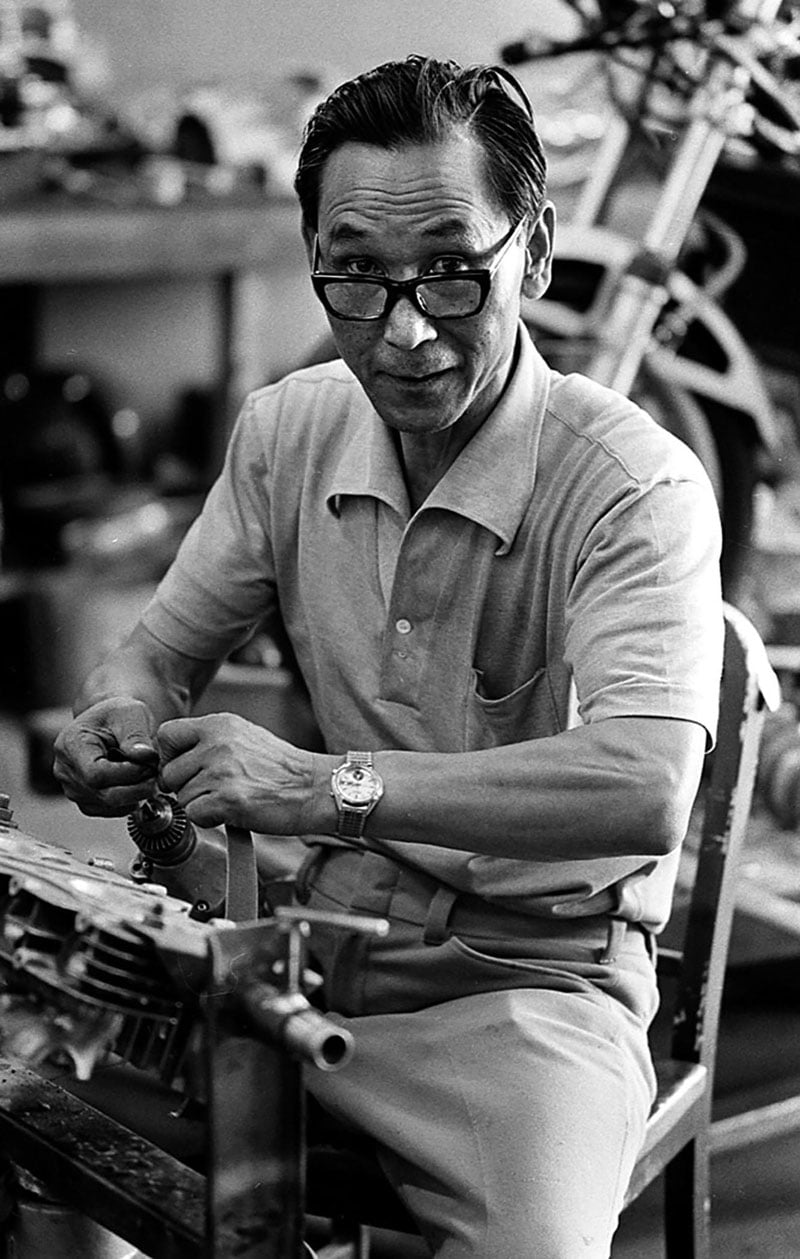
Hideo Yoshimura was born on October 7, 1922 on the island of Kyushu in Japan, where his father, an inventor, owned a carpentry workshop. From a young age, he wanted to be an aviator, a desire reinforced by visiting the crash site of a plane crash near his home.
At age 14, Hideo took the entrance exam to the Imperial Navy's flight school and was chosen as one of 219 new cadets from more than 10 applicants. He began his training the following year but, after 000 hours of flight, he suffered a near-fatal accident. The engine of his Yokosuka K30Y caught fire and he had to jump out of the plane at low altitude, but his parachute opened too late and he was hospitalized for two months. The dream of becoming a pilot is shattered...
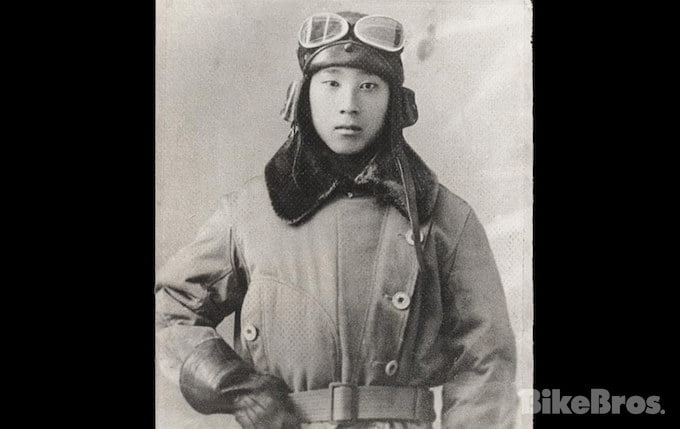
He then joined the Japanese national airline as a mechanic between 1938 and 1945, Imperial Japanese Airways, but found that he had neither the level nor the qualifications to be a flight engineer. He resigned, passed his exam and in September 1941 became the youngest flight engineer in the history of Japanese aviation. He was rehired by Imperial Japanese Airways and flew throughout Southeast Asia as a flight engineer on Douglas DC-3s as the Pacific War began with Japan's attack on Pearl Harbor. Practicing his job gradually allows him to diagnose the condition of an engine just by listening to it…
He marries naoe in 1944 but the war brought him into contact with suicide bombers and death. Stress is combated with alcohol, and 2/3 of his stomach must be removed. After the capitulation of Japan, the fact that his house was four kilometers from the American base at Itazuke, and that he was one of the few Japanese to speak English at the time, led him to rub shoulders with Americans at who supplies alcohol and cigarettes to the black market. Passed through prison in 1946, initially for 3 years of which only 6 months will be served for good behavior. The legend almost didn't become known to us...
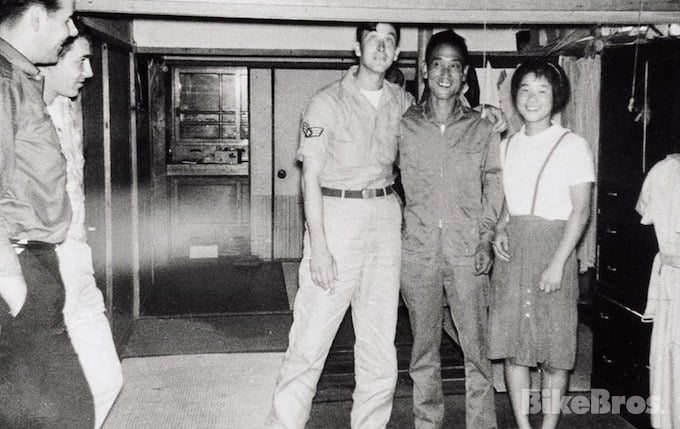
When he will be out of jail, Hideo Yoshimura first turned to family activities which evolved into the manufacture of fasteners for conveyor belts, before finding that motorcycle and aircraft engines had a lot in common. Hideo's first two children were born during this period of his life, his daughter namiko in 1946 and his son Fujio in 1948. In 1954, he used a corridor in the family workshop to install Yoshimura Motors.
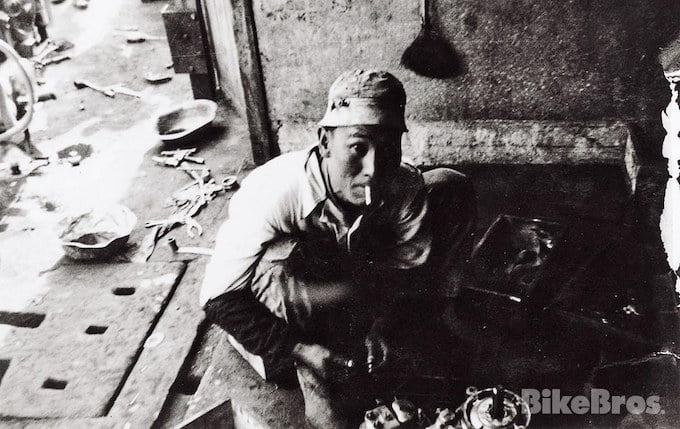
2/ The beginnings of Yoshimura Motors
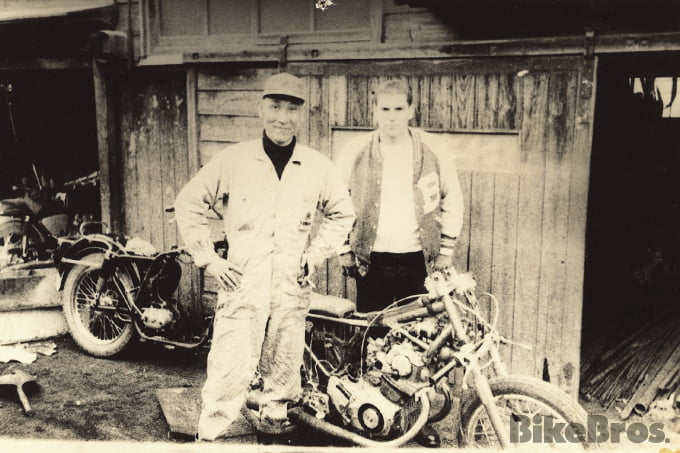
About a year after the store opened, Hideo is invited to participate in drag racing at Itazuke Air Base. At the time, the Kyushu Timing Association (KTA), a U.S. base military motorcycle club, organized individual quarter-mile races using a secondary track. Hideo He flies a Cabton 600 (an OHV parallel twin made in Japan) and is fascinated by the feeling similar to the one you get when you take off in an airplane.
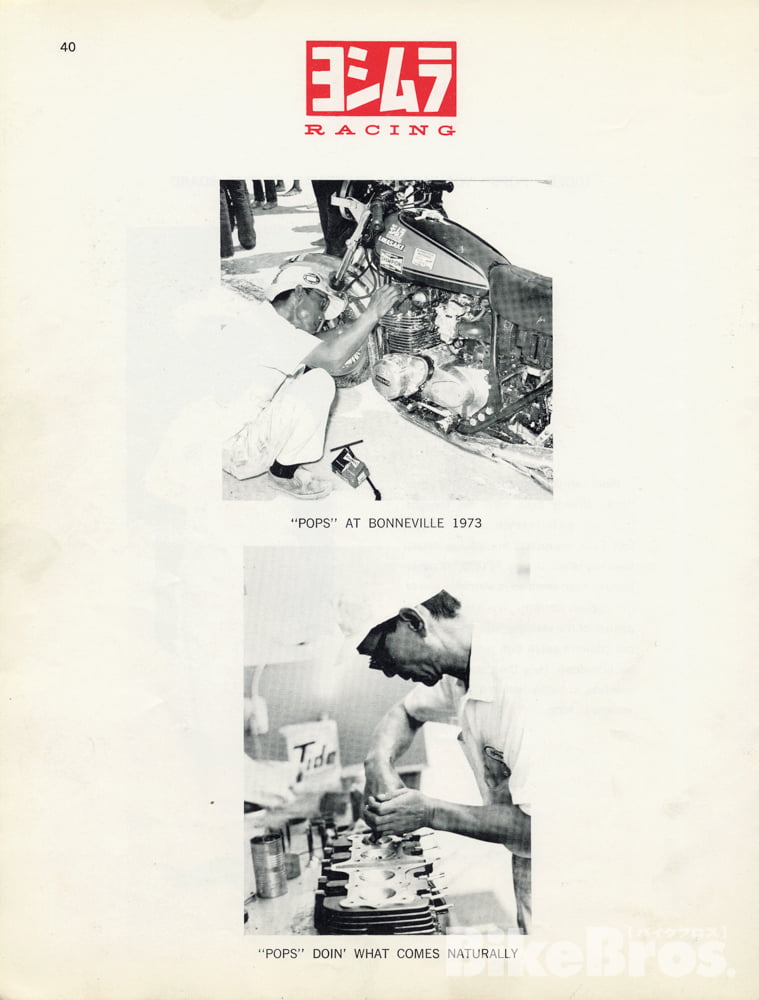
The Japanese motorcycles are then poor copies of the British or German motorcycles somewhat fragile due to the poor construction quality, so after a while Hideo changes his motorcycle in favor of a very reliable BSA Golden Flash. He modifies it by removing some weight and adding extra power. The Yoshimura-BSA 650 frequently wins on the airfield. That’s when Japanese bikers gave him the nickname “Pop,” an affectionate way of addressing a man old enough to be their father.
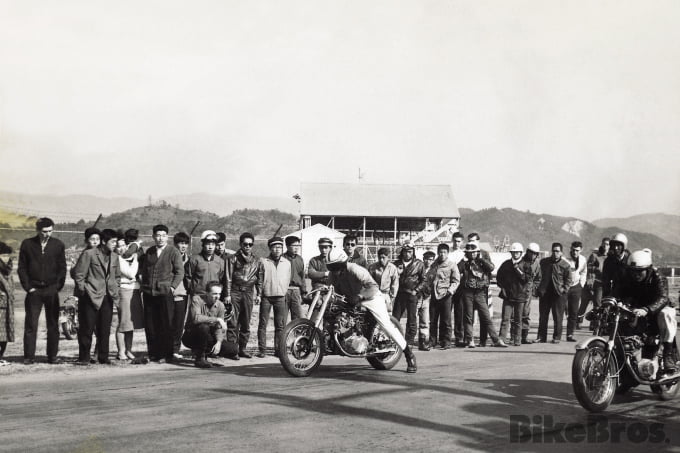
Hideo “Pop” Yoshimura discovered his passion for inflating engines: grinding camshafts, working on conduits, using larger valves from automobiles, he gradually created a reputation as a professional preparer of 4-stroke engines. At the time, no one resized camshafts and even less lengthened the rocker rods. Hideo done by welding before coating them with cyanide (!), heating them red with a blowtorch, dipping them in an oil bath and heating them again (quenching and tempering treatment) to make the extension as durable as the original. Although cyanide is highly toxic and requires extremely careful handling, its eldest son Fujio already helped in the workshop when he was in college…
A passion, know-how, a workshop, mastery of English, a clientele and a nearby airstrip, everything came together for spectacular growth...
3/ Races are developing
To maintain good relations with Itazuke Air Base, Hideo Yoshimura teaches the soldiers to drive on the left. This also allows him to get them to join the KTA which he is developing at great speed. In addition to Itazuke, races are organized in Ashiya and Gannosu, always on air bases.
In Gannosu, a real road route of 4,3 kilometers is even demarcated which surrounds the aviation runways in an X, like at Silverstone. Despite a dirt section, this makes it possible to organize real races, in 50, 125, 250, 350 and more than 500.
4/ The arrival of the Falcon, the Honda Dream Super Sports CB72
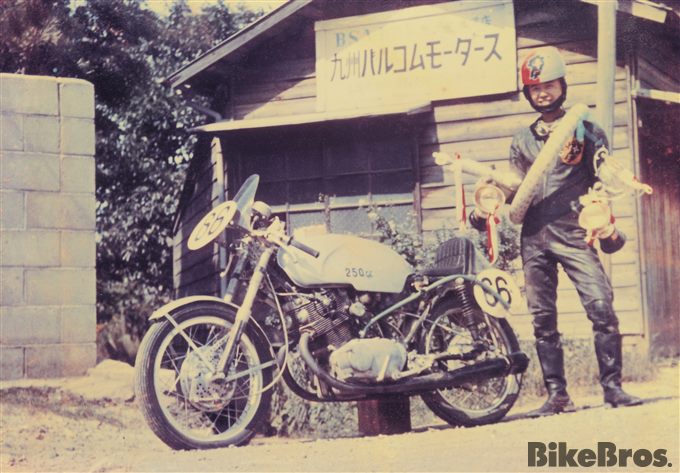
In November 1960, the Honda CB72 was released with a 247 cc twin-cylinder engine with overhead camshafts. Two versions are available, with crankshaft positioned at 180 or 360°. Pop Yoshimura prefers the Type I which produces less vibration at high rpm and can provide more power. It will be followed by CB77 Super Hawk of 305 cc in 1961. Inexpensive, success is there and requests to participate in races explode…
A little overwhelmed between preparing the machines, shopping and managing his business, Hideo hiring Fukuo Kuradome as a pilot, mechanic, salesman and... collector of unpaid bills among Americans.
5/ Recognition
Over time, the races became more professional and two other drivers were hired, Kuniomi Nagamatsu et Fukumi Koutake. The latter will then stand on his own two feet and, after a successful career in Japan, will race Daijiro Kato, Tohru Ukawa et Akira Yanagawa. But in the meantime, the drivers train, refine their style, and the structure thus formed attracts the attention of Honda, which entrusts them with the development of the very confidential CR72 competition cars.
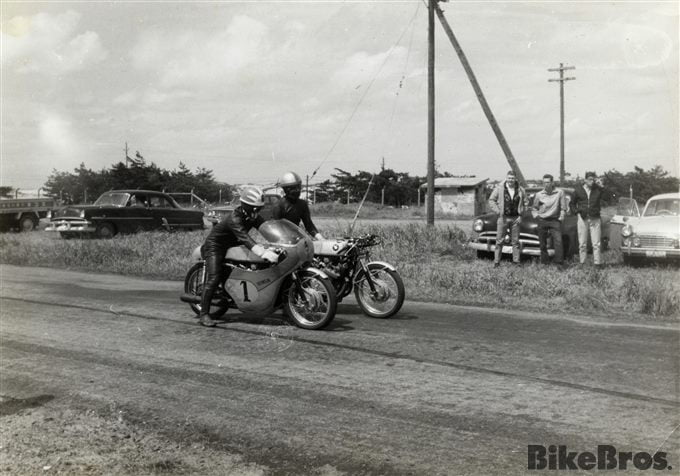
Pop Yoshimura then perfected his know-how, first of all by lightening the crankshafts, which he had never done, judging it to be of little use, then by filling his camshafts with stellite (cobalt/chrome) before grinding them, in order to obtain more lift.
In July 1962, Gannosu, home of Pop, American troops and all motorcycle racers on the island of Kyushu, was chosen to host the 5th national "All-Japan" race in which manufacturers field motorcycles from factory.
6/ The first “real” race
20 people come to watch the event, especially since, even if there remains a small unpaved part, it is the first time that the layout of an All Japan race is close to that of a real circuit . All manufacturers are on the lookout. A total of 000 motorcycles participate in qualifying on Saturday and races on Sunday. in 173cc, Honda relies more on prepared CBs, Yamaha on competition TD250s, carefully kept under tarpaulins and sheltered at the local dealership as soon as the sessions are over...
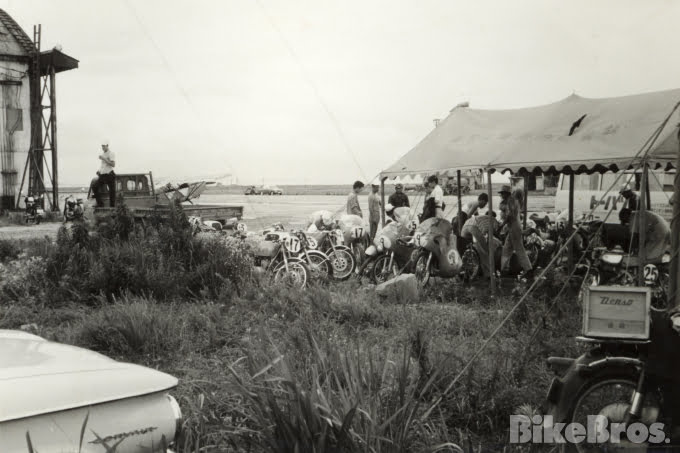
Obviously, Yamaha won the first three places ahead of a Tohatsu. The first CB72 is 5th, and it's not a Yoshimura. From then on, Honda will supply CR72 and CB77 to the Yoshimura team. During the same weekend, Pop falls while leading the race on a Yoshimura-BSA over 500cc. He immediately decided to end his racing career.
7/ Suzuka… already!
In September, after the Gannosu race, Japan's first fully tarmac circuit opened in Suzuka, and in November the 1st MFJ (Japan Motorcycle Federation) Road Racing Championship was held there as opening event.
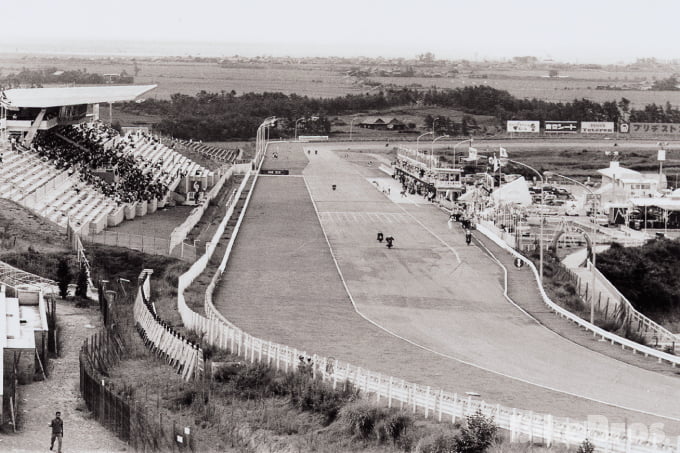
In 1963, the Suzuka circuit hosted the first Japanese motorcycle Grand Prix, during which Yoshimura's rider, Kuniomi Nagamatsu, with support from Pop, races in the GP125 class on a factory Honda RC145 DOHC 8-valve (the machine that won every GP of 1962) and finishes in 7th place.
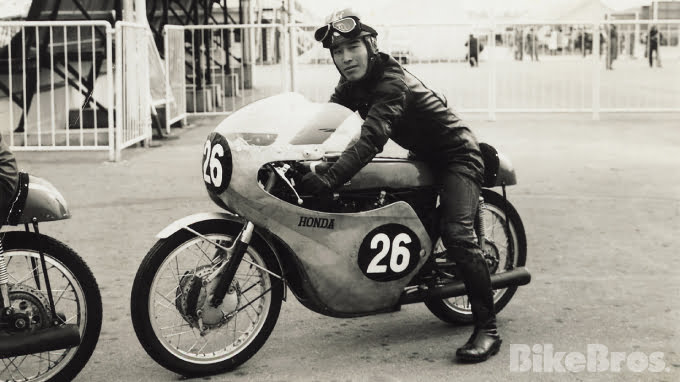
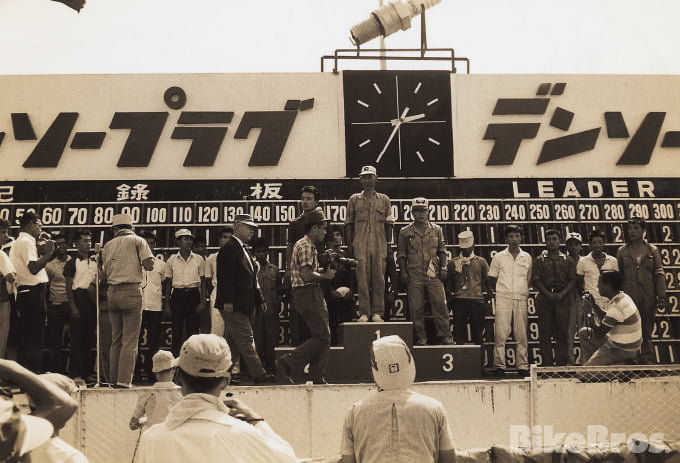
The next year, Kuniomi Nagamatsu obtained 5th place in the GP50 and GP350, but 1964 also saw the Japanese circuit host an 18-hour endurance race which became both a turning point for Pop and his company, and the ancestor of the Suzuka 8 Hours Endurance Road Breed today. The race started at 20:00 p.m. on August 1 and ended at 14:00 p.m. the next day. Pop is the team manager of two teams, Yoshimura and Fukuoka Honda. The Yoshimura team enters Kuradome, Watanabe and Koutake in the 250cc category riding a CB72. The Fukuoka Honda team enters Matsumoto, Ogata and Aoki in the over 251 cc category aboard a CB3 optimized by Yoshimura.
In the Suzuka 18 Hour Endurance Race, the Yoshimura and Fukuoka Honda teams face the Honda factory team. CB Yoshimura is fast but has to step aside. Fukuoka Honda takes over and overtakes the Honda R&D team which then retires due to engine problems. Pop climbs to the top of the podium as team manager and makes Yoshimura famous nationally.
8/ Moving
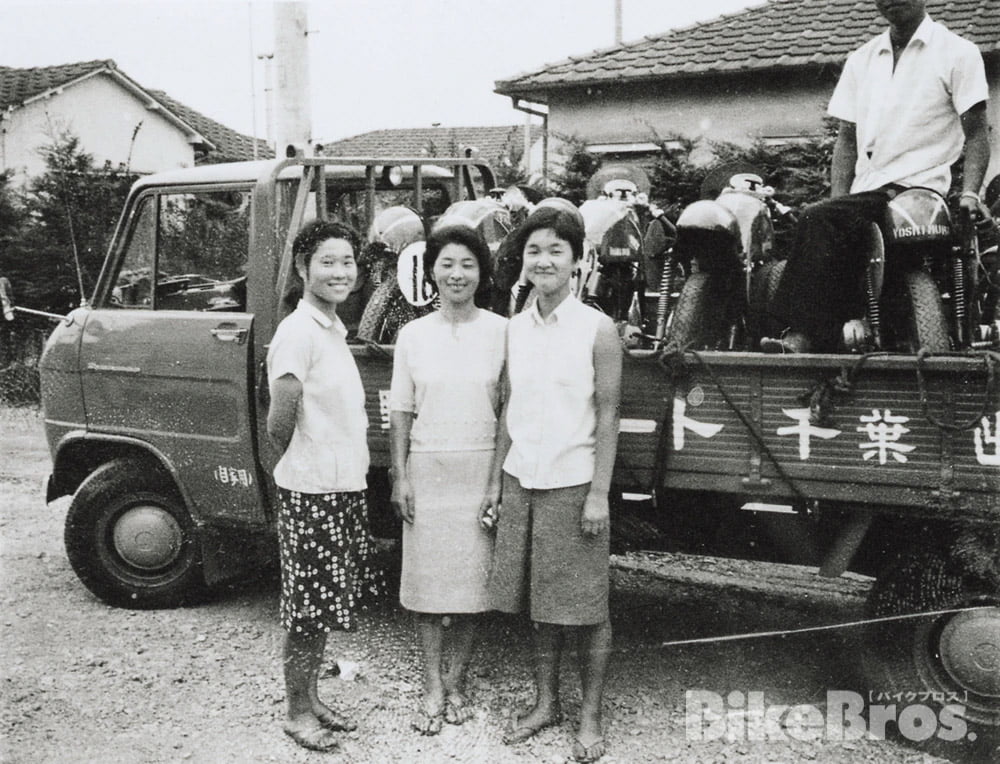
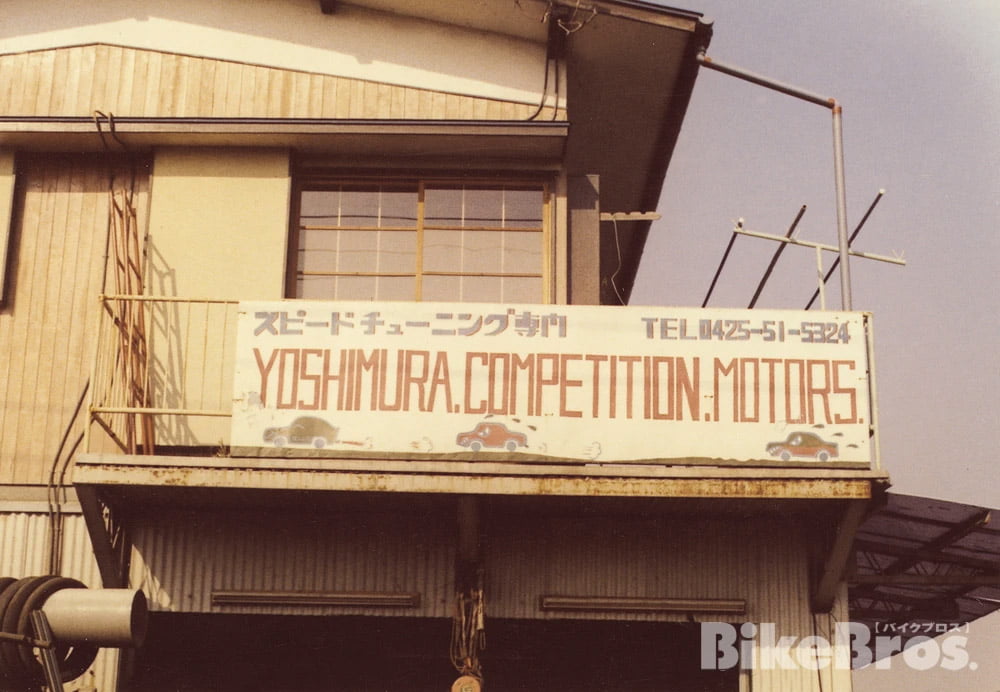
The performance of the CB72/77 tuned by Yoshimura at the Suzuka 18 Hours made the biggest impression on Honda, but American bases were becoming rarer in Japan. Pop Yoshimura had delayed the move to help local riders and prepare their machines, but the time had finally come. In April 1965, he moved to Fussa, a suburb of Tokyo, right next to the American Yokota Air Base.
His new store bears the English inscription “YOSHIMURA COMPETITION MOTORS”. The now famous “ヨシムラ” logo (Yoshimura spelled in katakana which, to Americans, looked like “three equals forty-seven”!) was also introduced at this time.
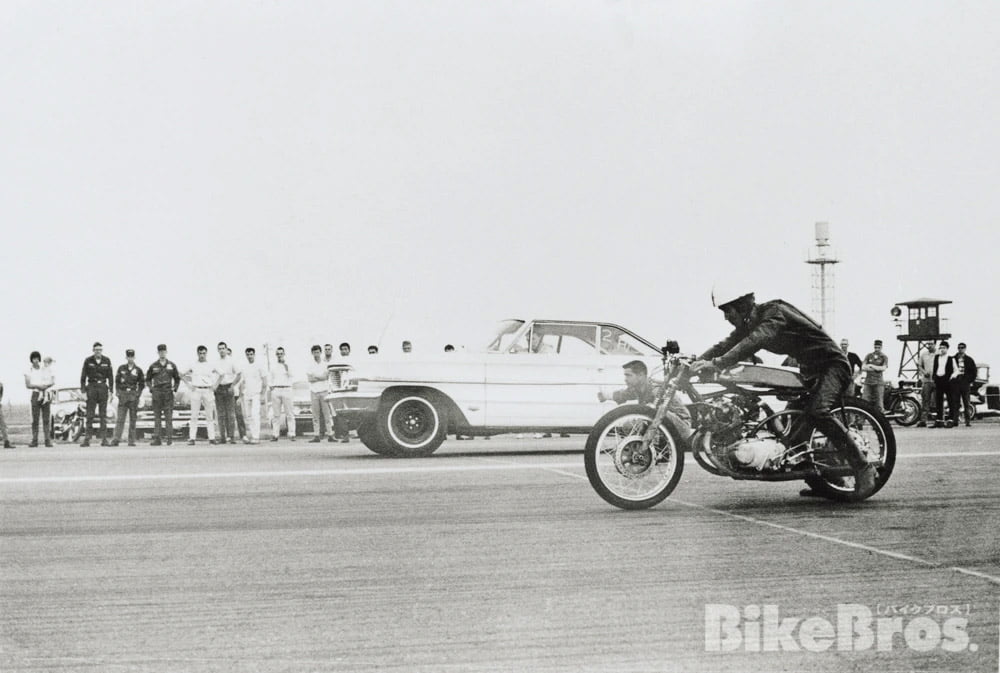
At the time in Tokyo, on two neighboring American military installations, Yokota Air Base in Fussa and Johnson Air Base in Iruma, races were held every Sunday, and among them the easiest to access were the races dragsters. Many CB72/77s optimized by Yoshimura made their debut on the airstrips there.
9/ The quarrel with Honda…
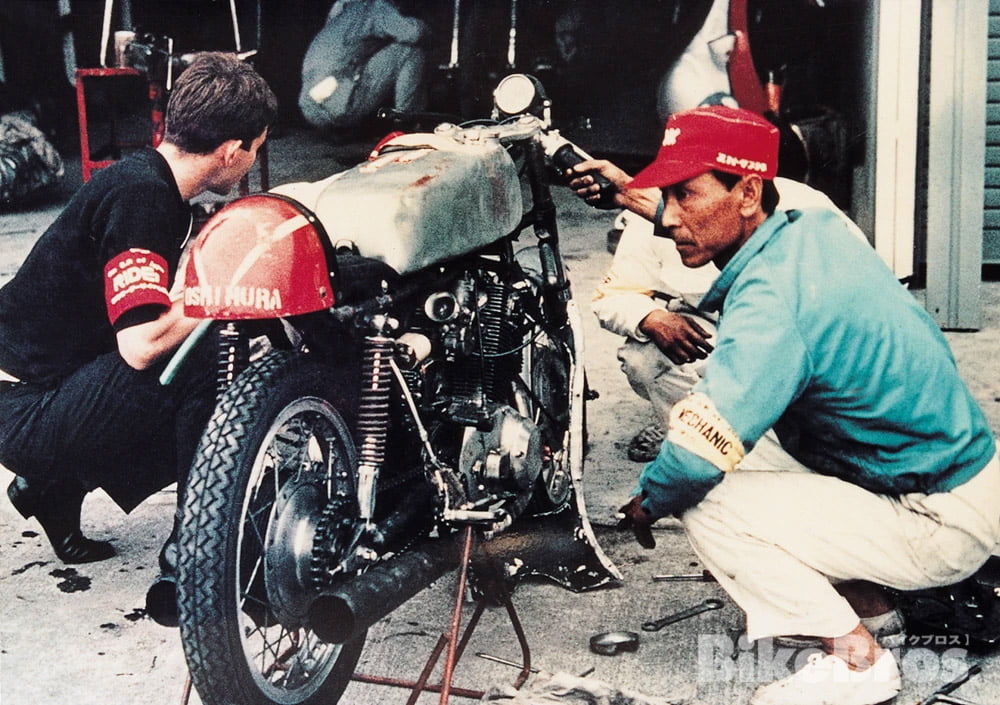
In 1965, the astonishing speed of the CB72s tuned by Yoshimura in the junior categories of the Japanese Grand Prix attracted the attention of Soichiro Honda himself. Very surprised, he ordered his engineers to test the Yoshimura CB. Considering this as an honor and an opportunity to contribute to the technological development of the Japanese firm, Pop Yoshimura puts his bike through a series of tests at Honda's motorcycle R&D department in Wako.
Honda engineers are amazed by the power delivered. While the original CB72 engine develops 24 hp and the Honda R&D version just over 27 hp, the one optimized by Yoshimura produces more than 32 hp. At the time of the Suzuka 18 Hours in 1964, the Yoshimura CB72 (SOHC) was already delivering as much power as the production Honda CR72 (DOHC) and the Yamaha YDS (2-stroke): uneasiness among Honda engineers in the face of the result obtained by " a local motorcycle shop”…
After this comparison, Soichiro Honda asks his engineers to beat Yoshimura in 2 weeks. He doesn't intend to start a quarrel but as a leader and competitive enthusiast, the Japanese boss just wants to inspire his employees to do their best. However, this incident seriously deteriorated relations between the two companies in the years to come. Although Honda's R&D department later managed to extract more power from their CB72 racing engines, it remained very embarrassing for some to be compared to Yoshimura.
10/ The preparer’s advice…
From April 1965 to August 1967 Pop Yoshimua contributes technical articles to the Japanese magazine Motorcyclist. This series of articles, the first of its kind in Japan, was well received by many, including the Honda engineers who built the CB72/77. All of this helped make Yoshimura a national brand. It is known today that grinding and polishing an engine's intake tracts to a mirror finish increases gasstream friction, but at the time it was considered the best option for getting more mileage out of the engine. power of an engine. Pop polishes everything from morning to night, pipes, valves, crankshafts and even gearbox gears.
While Yoshimura builds a reputation and gains national recognition, a serious problem develops. Honda begins to limit Yoshimura's supply of original racing kit parts (basic parts). Presumably someone was envious of Yoshimura's success. In an attempt to resolve the supply issue, Pop finally contacted soichiro to ask him the question, but that only made the situation worse. We say that soichiro furiously blamed its employees for the incident. At the end of 1965, relations with Honda ceased completely. Honda then created its Racing Service Center (the predecessor of the Honda Racing Corporation) to develop and supply authentic racing parts.
Meanwhile, two young fans of Pop entered Yoshimura's world of work: Ken Matsuura (who, in 1966, drove all the way from Ehime on a Honda S600) and Mamoru Moriwaki (who, that same year, drove all the way from Kobe on a Honda CB72). The two men would subsequently become world-renowned builders and preparers.
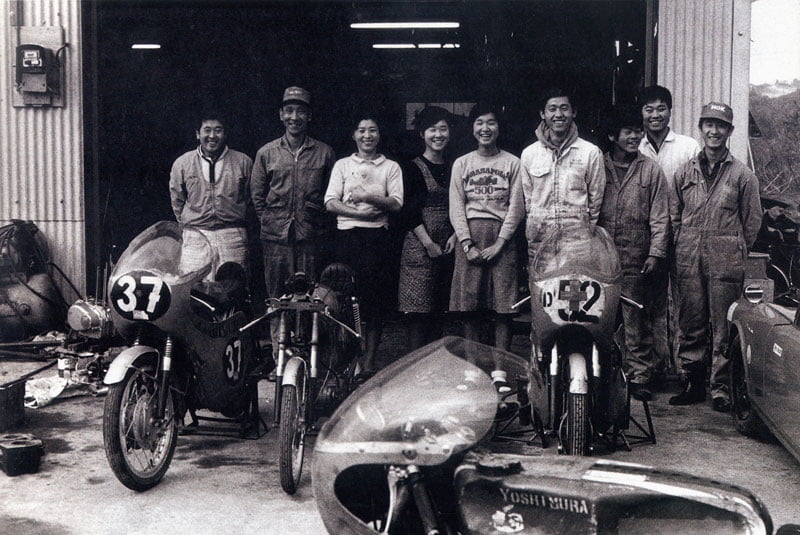
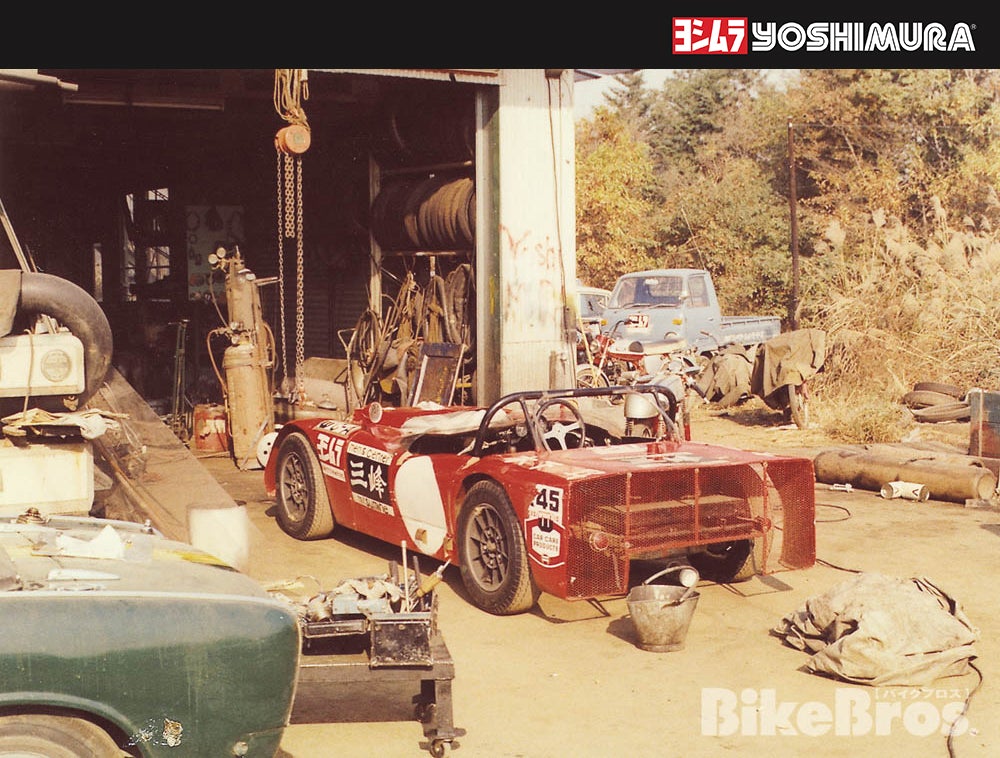
In 1966, Yoshimura moved to the rural area of Akigawa, a few kilometers from Fussa, to establish a large workshop. From then on, he began tuning more and more automobiles, and Yoshimura's name became more and more important in the Japanese motorsport scene...
11/ Cars
Honda released its S500 and S600 in 1964 and S800 in 1966, all equipped with 4 cylinders with double camshaft 8 valves very similar to motorcycle mechanics, with the exception of their water cooling. Hideo applies his recipes based on camshafts and polishing.
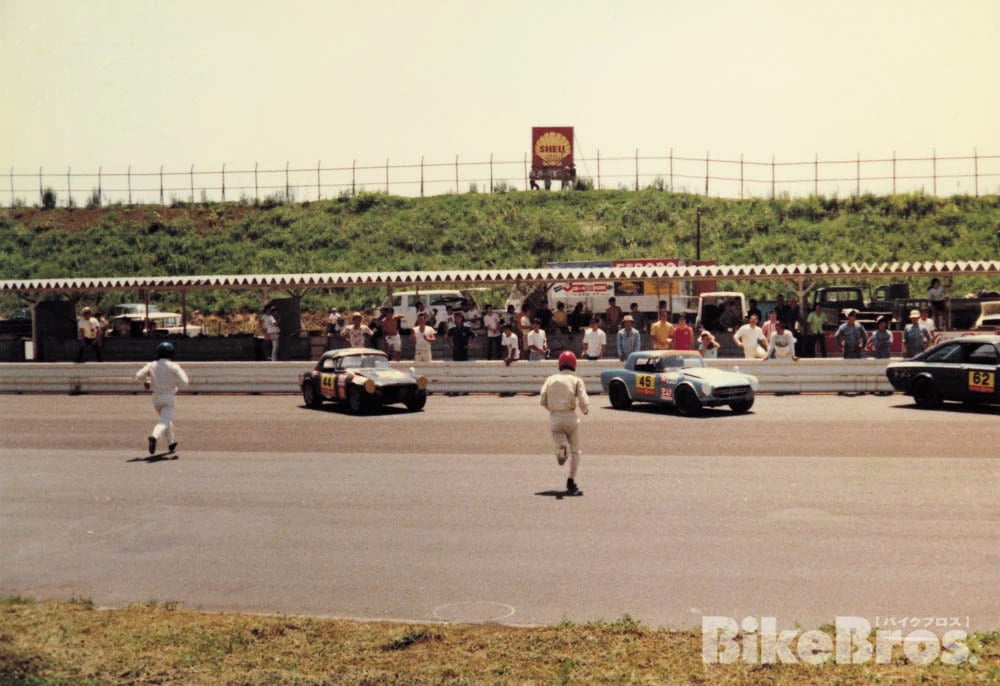
More and more pilots are using engines prepared by Hideo, whether on T360s, S600s, S800s or even single-seaters. At the time, it was not uncommon for Pop's clients to race both on motorbikes and in cars...
12/ The arrival of Ken Matsuura and Mamoru Moriwaki…
In 1966, Ken Matsuura leaves his island of Shikoku with his little Honda S600 filled with a futon mattress to apprentice for two years with Pop Yoshimura. There he modified his S600 to compete with the official RSC-tuned Hondas and achieved a victory in the GP-1 class of the 1967 Japanese Grand Prix. He then returned home to open his now internationally renowned engine tuning company, Ken Matsuura Racing. The company specializes in high-precision engine components, such as forged pistons, titanium connecting rods and titanium hollow valves, and has been meeting the various demands of motorcycle and automobile factory teams for decades .
1966 also saw the arrival of Mamoru Moriwaki, a Honda CB72 rider from the city of Kobe, 17 hours away. Right after making his first visit to Yoshimura with his father, he returns with his CB72 to be prepared. This undergoes complete preparation, allowing it to go from 130 km/h to more than 200 km/h! Without there being a cause and effect link, however, Mamoru Moriwaki starts “dating” Namiko Yoshimura, the boss's daughter. He married her before founding his own company in 1973, Moriwaki Engineering, in Suzuka.
But in the meantime, Mamoru Moriwaki, calm and true handyman Pop Yoshimura, is entrusted with the role of co-pilot of Fujio in the car, a little too hot for the bike… and the two men won the GT-1 category during the Fuji 1000 km race in 1970 on an S800.
13 / The first 4 in 1 exhaust…
Meanwhile, Hideo Pop Yoshimura, almost by chance, discovered that a 4 into 1 exhaust gave surprising results, leading to a dramatic increase in engine power and mid-range torque! It was while working on an S800 engine installed in a Brabham BT15 Formula 3 chassis that the Japanese made this discovery.
At this time, the Akigawa workshop acquired an engine dynamometer to test various exhaust configurations, and after trying countless combinations of pipe diameters, pipe lengths and collector positions, Hideo develops the 4-into-1 exhaust system that works surprisingly well on the S4's inline 800-cylinder engine. Later, after the launch of the Honda CB750 Four, the system was found to be effective on motorcycles as well.
14/ Yoshimura and Honda reconcile…
From the 2 cylinders of the N360 and Z360 to the 4 cylinders of the S600, S800 and H1300, Hondas whose engines are prepared by Yoshimura are more and more numerous on Japanese circuits. The relationship between Yoshimura and Honda is gradually returning to normal...
15/ The arrival of the Honda 750
It was in 1968, at the 15th Tokyo Motor Show, held from October 26 to November 11, that Honda unveiled to the world the world's first in-line 4-cylinder (SOHC 8-valve) transverse engine motorcycle. produced in large series.
The bike was called Dream CB750 Four and was received as a revolution by Yoshimura as well as the international motorcycling scene. Targeting the world's largest market, Honda then introduced the American version of the motorcycle at a dealer meeting in Las Vegas in January 1969.
With a bore and stroke of 61x63mm for a capacity of 736cc, the CB750 engine developed 67 horsepower at 8000 rpm, the highest output of any production motorcycle at the time, providing impressive performance. to enable a quarter-mile standing start in 12,4 seconds and a top speed of 200 km/h. Export to North America began in April, while in Japan the official launch date was July 18 and the retail date was set for August 10.
Fujio Yoshimura remember : “I broke my right arm in a race and couldn't go to the Tokyo Motor Show, but my dad (Pop) was able to place an order right after seeing one at the show . But what we got wasn't a Sandcast. It was a K0 Diecast.”
The first batch of the first K0 model had sand cast engines, then this was replaced with die cast engines in September 1969 to improve productivity.
Due to its popularity, it took a while for it to be delivered to Yoshimura, and one day, while waiting for the CB750 to be delivered, Koji Ota of Meiwa Racing (Honda Saitama Factory's in-house racing team) brought a CB750 to the Akigawa workshop to have Pop work on its engine, starting with modifying the cams. Ota was an admirer of Pop's work and personality ever since he was blown away by what Pop had done on Ota's CB125 race bike. Pop thus got his hands on a CB750 for the first time.
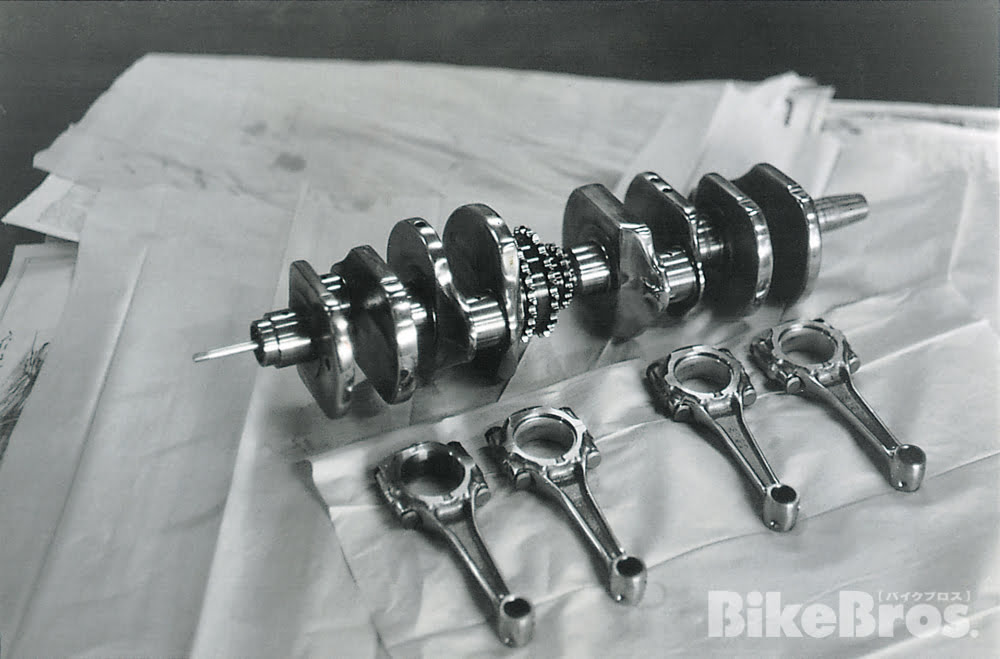
This stock photo shows a set of CB750 crankshaft and connecting rods that have undergone a mirror polishing process to improve strength and reduce friction. Polishing had been Yoshimura's regular job since the CB72s. All done by hand using electric sanders, the process was an incredibly time-consuming task.
On August 17, just a week after sales began in Japan, two CB750s from Honda's in-house racing team Blue Helmet MSC finished 1-2 at the Suzuka 10-hour endurance race (Morio Sumiya / Tetsuya Hishiki in 1st place, Yoichi Oguma / Minoru Sato 2nd). The following September 13 and 14, another CB750 (piloted by Michel Rougerie et Daniel Urdich) wins the 33rd Bol d'Or 24H. Then, in 1970, a CB750 factory racing machine piloted by Dick Mann takes historic victory at the Daytona 200. History is made…
16/ The first step in the USA…
1970 was the year the AMA changed the road racing regulations. As they did for flat track and speedway racing the year before, the 500cc limitation for OHV/SOHC/DOHC engines, which provided a competitive advantage to the side-valve Harley-Davidson KR3, been removed to allow a maximum displacement of 750 cc for all engines, regardless of valve location or number of cylinders.
The internationally renowned Daytona 200 then became a battleground between multi-cylinder machines such as the Triumph/BSA triple, Kawasaki 2-stroke triple and Honda four. Although the Honda of Dick Mann was the only one of the four CB750s to finish the race, the victory of the new 4-stroke 4-cylinder motorcycle caused an international sensation. U.S. Army veterans and retirees who had become Yoshimura customers while stationed in Japan began inquiring about Yoshimura's performance parts for the CB750.
At the Akigawa factory, Yoshimura So began exploring the potential of the CB750 using its K0 as a test mule, and developed performance parts such as high lift cams and big bore piston kits (the initial version was the 810 piston kit/ 812cc 64mm then the 823cc 64,5mm piston kit was added; both based on the stock pistons for the CB350 twin). The CR carburettors and close ratio transmission were supplied by Honda RSC.
As 1970 drew to a close, Yoshimura received a request from an American Honda dealership to prepare CB750 engines for the following year's Daytona 200. The dealership name is Krause Honda. Their boss, Ronald Krause, who knew that the Honda factory team would not return to Daytona, had decided to go into the race alone. At the time, racing results, particularly in the Daytona 200, were an extremely important factor affecting motorcycle sales...
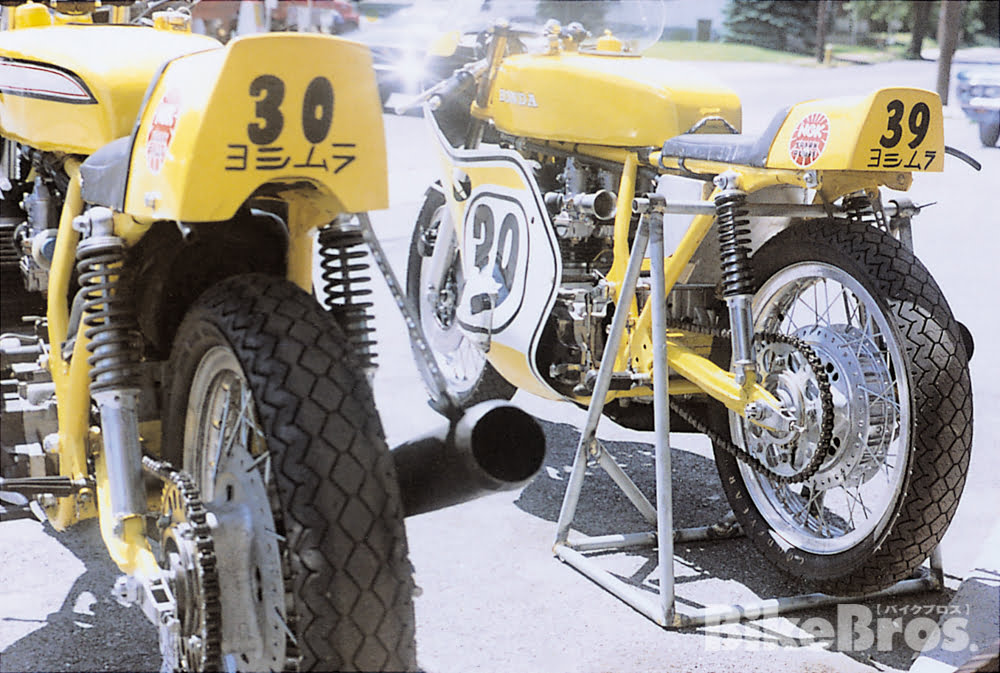
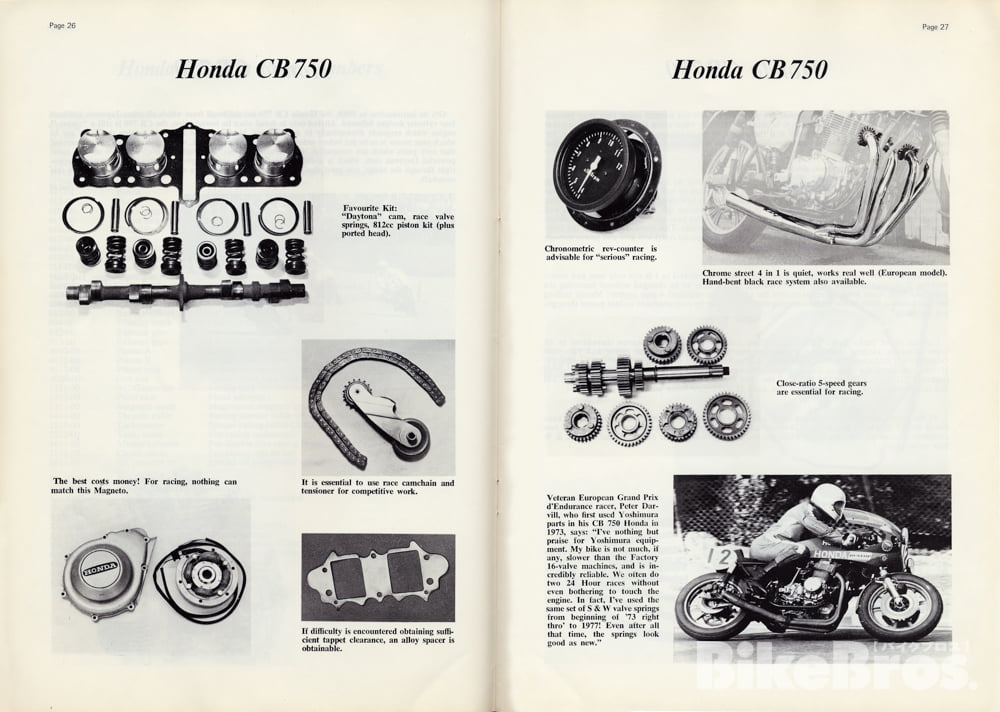
For the Krause Honda CB750, Yoshimura managed to increase the engine's power from the original 67 horsepower to 97, making modifications such as a high-lift camshaft, reinforced valve springs, a lightweight crankshaft, a rework on the cylinder head conduits, a cylinder head rectification (-1 mm for higher compression ratio), CR carburetors and close ratio transmission, as well as the first Yoshimura 4-in-1 exhaust with a long end in megaphone, replaced before the first race by a straight, short tube which was lighter and presented no difference in performance.
17/ “Yoshimura Magic”
At the start of the 200 Daytona 1971, the Krause Honda CB750 prepared by Yoshimura and driven by the rookie Gary Fisher leads the peloton, ahead of GP veterans and AMA greats. It was certainly the fastest bike on the banking at 31 degrees of lean as well as on the back straight, until it retired from the race on lap 10 with a broken timing chain. It didn't make headlines, but enough to introduce the term "Yoshimura Magic" to the world. Satisfied with the performance of the engine, Ronald Krause proposed to Yoshimura to continue the collaboration for the remainder of the AMA road racing season. Pop also thought it was a good start, and he also had something special in mind…
18/ The Shugokan…
Meanwhile, in Japan, Fujio tests a first four in one on the family K0.
“The first thing I noticed was the sound, a sound we had never heard before. And then the power! The engine was revving so fast! I thought, this is it. Much like the exhausts we made for the S8s (Honda S800), it was lightweight which contributed to better handling and overall performance. Since 750 and S8 shared almost the same displacement per cylinder, Pop must have had a rough idea of pipe diameters and such. »
This is the birth of the Shugokan: 4 in 1 exhaust for motorcycles.
“At the time we couldn't find suitable steel tubes of the right diameter and thickness, so we had to make them rolling and welding sheets of metal into tubes, pouring sand into them and by bending them by hand. We tried various combinations of tube diameter, tube length and manifold position. »
The 4-into-1 not only made the exhaust system much lighter, but also increased low- and mid-range torque as well as high-rpm horsepower. The only problem for motorcycles was bulk which could interfere with ground clearance, lean angle or the front tire.
Race after race, the 4 in 1 is developed empirically, even if the reliability of the motorcycles in the race is lacking, whether because of timing chains or cracked oil tanks. However, in a few months the majority of American pilots were using 4 in 1s made by local craftsmen, Pop, as usual, not even taking the trouble to file a patent for it. The Japanese is fascinated by the American reaction to the new concept, which, on the other hand, had been rejected by the Japanese engineers. What's sparking American interest in the 4-in-1 may not just be logical reasoning, but also the sound it makes.
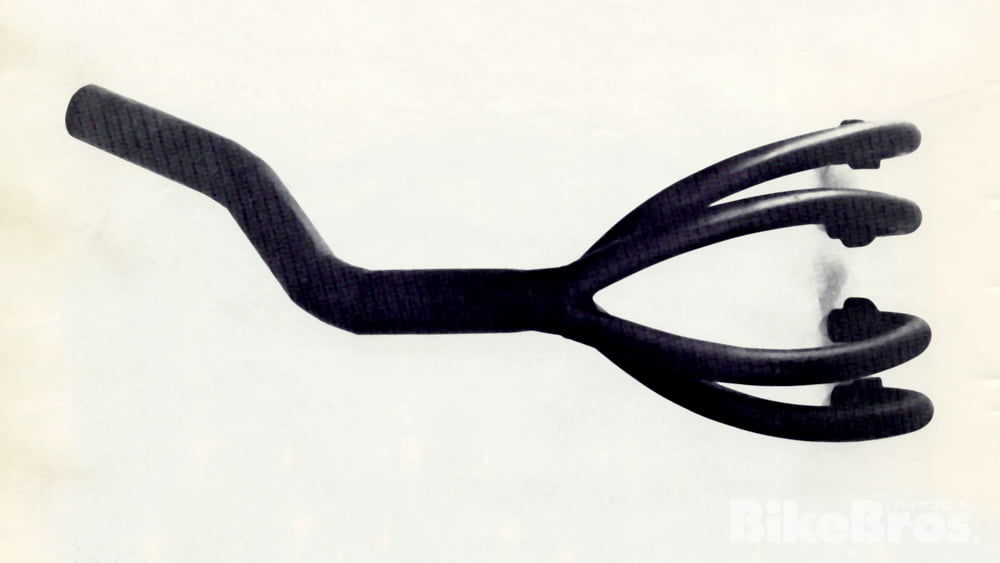
Krause Honda mechanics prepare their Yoshimura CB750s for the Daytona 200 in 1972. The year is marked by the debut of the Dunlop KR83 tire which was originally designed to handle the power (around 100 horsepower) of 750cc 2-stroke racers Kawasaki and Suzuki at Daytona. Needless to say, Krause Hondas also moved from Goodyear to Dunlop.
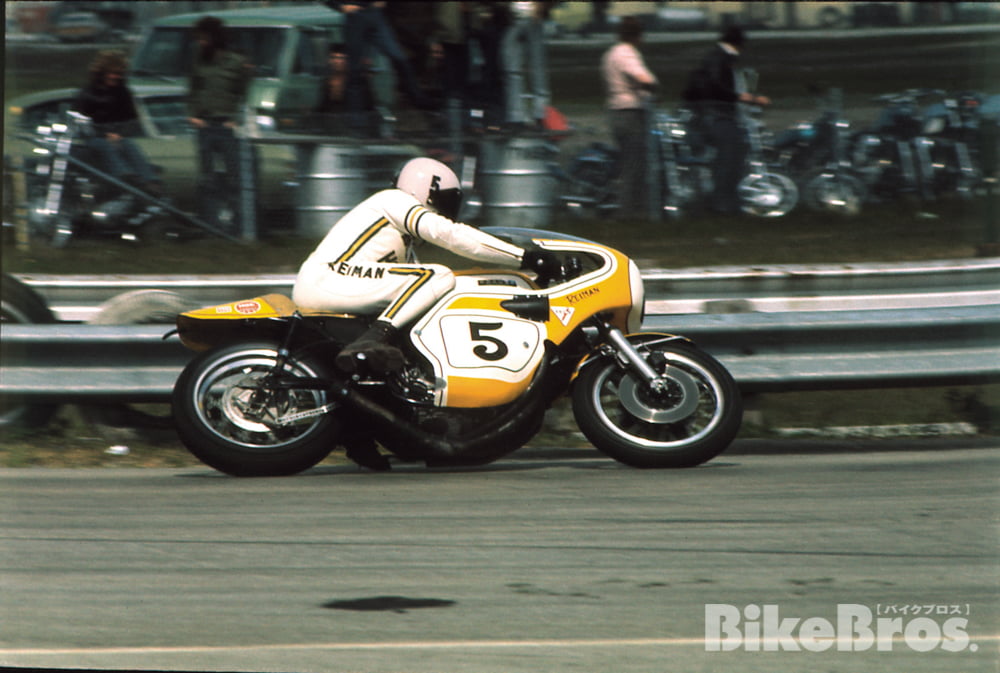
5th and 8th at the end of qualifying, the Krause Honda CB750s of Gary Fisher et Roger Reiman make life difficult for the best 2-stroke pilots including Yvon Duhamel et Gary Nixon on Kawasaki KR750, Art Baumann on a Suzuki TR750 and Kenny Roberts on a Yamaha 350 TR3. But once again, minor details hamper the race of the yellow Hondas. The name of Pop Yoshimura has, however, become essential in the American industry and magazines…
19/ Yoshimura Racing: Expansion in the USA…
While Yoshimura successfully markets its performance parts in the USA, two American employees of an American military charter operator, the flight engineer Dale Alexander and the pilot Starr Thompson of the Flying Tiger Line, began to frequently visit Yoshimura in Japan. Little by little, they secretly purchase and transport on board CB750 performance parts (such as camshafts and big bore cylinder kits) for personal profit. Recent reports on motorcycle racing at Daytona and the emergence of 4-into-1 exhaust technology made their side business very profitable...
Actually Pop has been thinking for some time about expanding his business to the United States, which he considers a dream country where he can fully utilize his talent in tuning the performance of 4-stroke motorcycles. The two American aviators suggested that he create a new company in the United States.
The new company Yoshimura Racing, a 50-50 joint venture between Yoshimura (Pop and Fujio) and the Americans (Alexander and Thompson), was founded at the end of 1972 in Simi Valley, northwest of Los Angeles. Its workshop, clean and spacious, resembles that of a successful American racing team, and the company began selling 4-in-1 exhausts at the end of 1972, then other parts...
20/ The Kawasaki 900 Z1
The first mass-produced 4-cylinder in-line double overhead camshaft motorcycle, the Kawasaki 900 Z1 Super Four marks motorcycle history. Its production began in August 1972, 3 months before its release on the American market, in November of the same year. To their great surprise, Yoshimura is chosen by KMC (Kawasaki Motors Corp., USA) to test the new Z1.
“I think it was around this time that I got a Z1 from US Kawasaki. My CB had more power, but the Z1 had much better engine characteristics and less vibration. Top speed was around 209 km/h. I noticed some chassis wobble at high speed, but it wasn't that different from my CB", Fujio recalls, referring to the Yoshimura Honda CB750 K0 he used to ride in Japan.
It was certainly not fair to compare an original Z1 with the CB750 of Fujio, as this was the exact bike that was used to develop the original 4-into-1 exhaust. It has been fully tuned with a big bore kit, duct work, cylinder head grinding for higher compression, mirror polished crankshaft and connecting rods, high lift camshaft, set of Keihin CR carburetors and a 4 into 1 exhaust, so not a stock motorcycle in production at that time.
Pop waiting for him at the workshop. As soon as Fujio arrives, the Z1 is dismantled and preparation begins…
“We immediately got an extra 10 mph out of the stock low end, including the pistons, and that was revving over 10 rpm. We did it in a few days. »
Rather modest result for a Yoshimura preparation, but sufficient for Kawasaki asked Yoshimura to prepare another Z1 engine to attempt to break world speed records at the Daytona International Speedway in March 1973, just after the Daytona 200.
A Z1 engine is therefore prepared in Japan by Pop himself, then delivered to Kawasaki Heavy Industries in Akashi, from where it is shipped to KMC in the United States, then to Daytona. Although its pistons and lower engine remain original, it is equipped with a fully prepared cylinder head, a set of CR carburetors and obviously a 4 into 1 exhaust.
KMC is bringing three Z1s to Daytona, including a sprint version that they built around the Yoshimura-prepared engine and equipped with a full white gelcoat fairing, a single-seat backsplash saddle, a pair of bracelet handlebars, 'a set of rear shocks and a set of grooved Goodyear racing tires. The other two Z1s are mostly stock except for clubman handlebars, heavy-duty rear shocks and Goodyear racing tires to ensure safety during high-speed endurance racing.
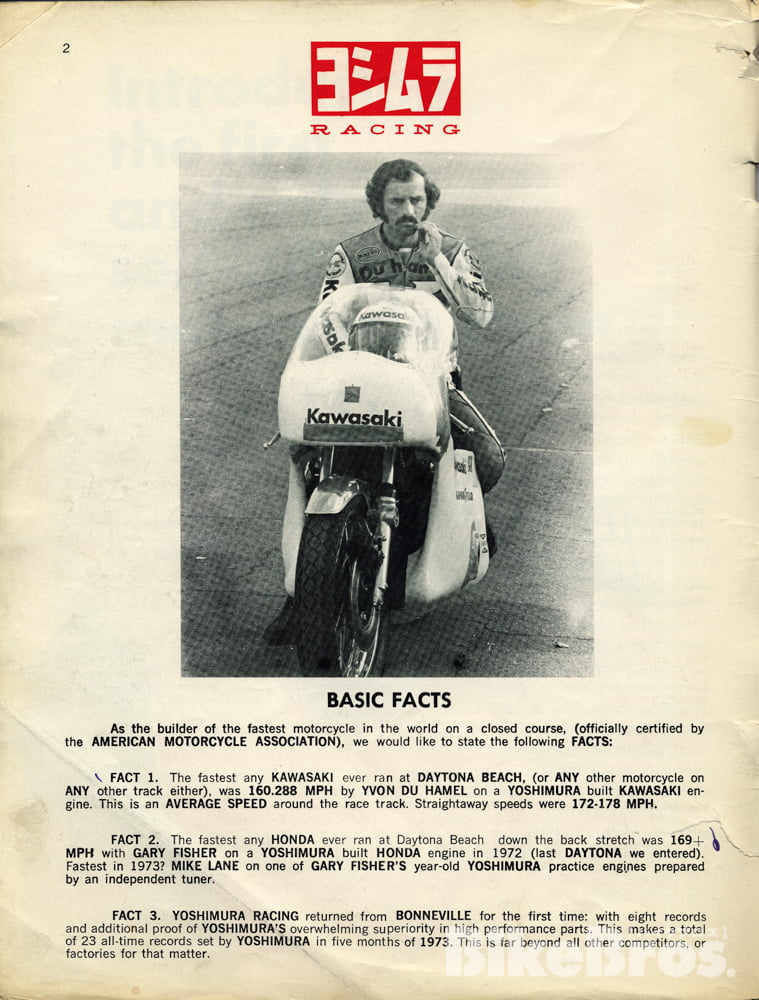
The KMC ace, Yvon Duhamel, is responsible for tackling the average speed record on a closed circuit lap with the sprint version. Both near-stock versions are aiming for 24-hour endurance records.
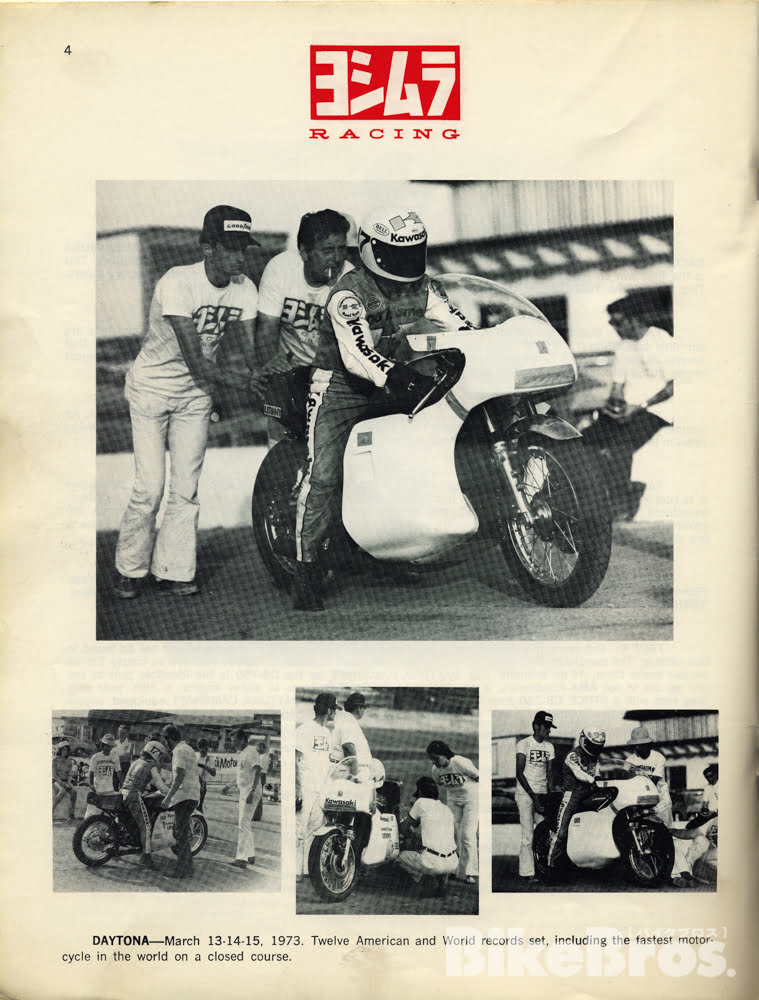
The operation is a great success! Kawasaki sets no less than 46 FIM/AMA records. The Z1 powered by the Yoshimura engine covers one lap at 160,288 mph (approximately 258 km/h), 10 km at 150,845 mph (approximately 243 km/h), and 100 km at 141,439 mph (approximately 228 km/h). One of the original Z1s traveled 2 miles (approximately 630,402 km) in 4 hours at an average speed of 232 mph (approximately 24 km/h), beating the previous record by more than 109,602 mph.
The challenge is filmed as a promotional documentary that is used around the world to tout the performance and endurance of the Kawasaki Z1, as well as the effectiveness of Yoshimura's preparation methods.
Orders for Kawasaki 900 engines and Honda 750s are pouring into Simi Valley. In August of the same year, Yoshimura takes four motorcycles, including a Z1, a CB750 and a CB500, to the Bonneville Speed Week in Utah. Under the leadership of Pop, and with Dale Alexander At the helm, Yoshimura managed to break seven world speed records on the famous Salt Flats.
The next challenge takes place in Europe. Kawasaki trusted Yoshimura to prepare its Z1 engines for the 24 Bol d'Or 1973-hour race, which is scheduled for September 22 to 23 on the Bugatti circuit in Le Mans. To give themselves the best chance, a batch of Z1 engines was sent from the Kawasaki factory in Akashi to the Yoshimura workshop in Akigawa, where Fujio and the mechanics apply their preparation while Pop is working on other projects in Simi Valley. Raw camshafts are also supplied to Yoshimura to work on using their mechanical camshaft grinding machine in Akigawa, eliminating the need for welding and grinding.
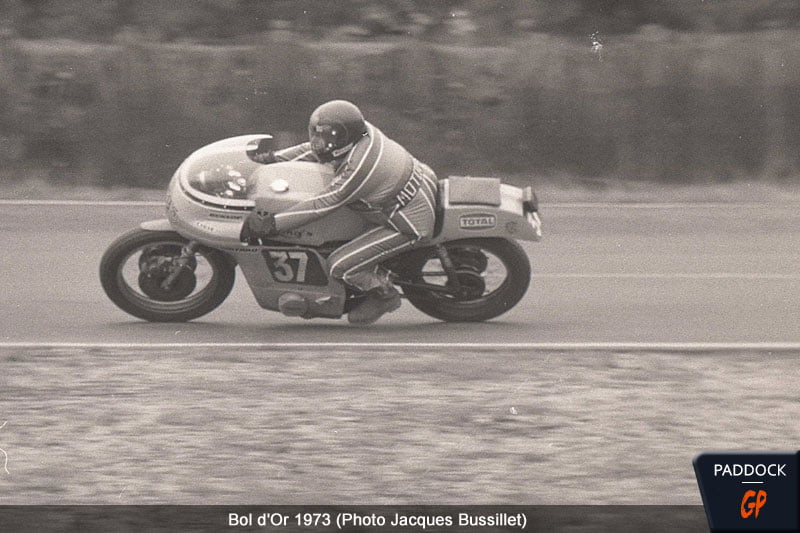
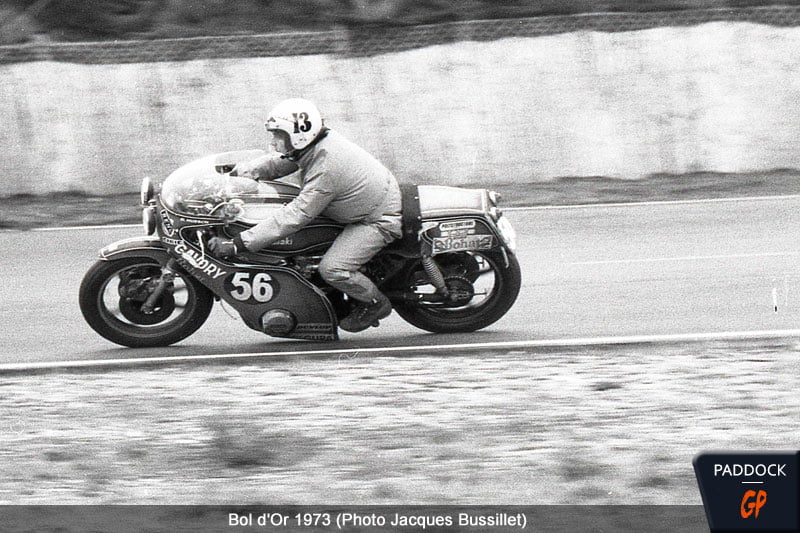
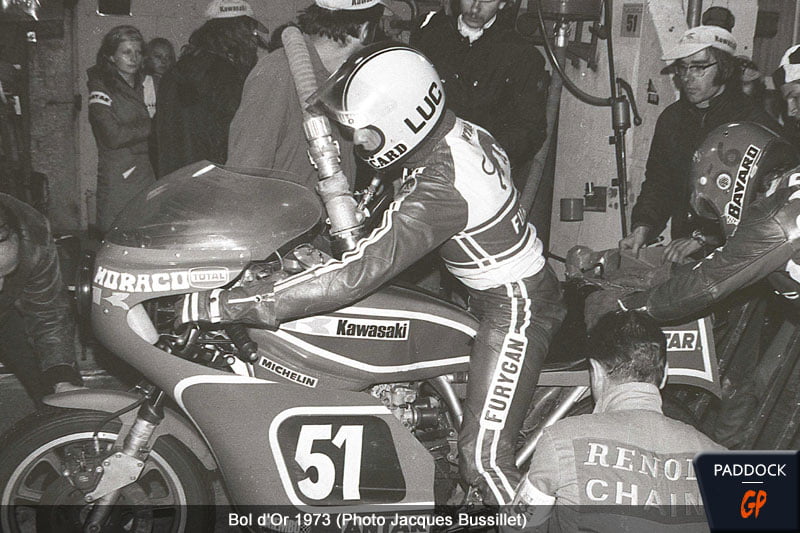
At the end of the French classic, four of the six Kawasaki Z1s equipped with Yoshimura engines successfully took 2nd (Alain Renouf/René Guili #37), 4th (Jean-Claude Guénard/Michel Cholet #48), 5th (Eric Offenstadt/Jacques Luc #51) and 7th (Gérard Choukroun/Gilles Husson #56) places in the general classification of the Bol d'Or, behind the CB750 (rebored to 969cc) of the French importer Honda Japauto driven by Gérard Debrock and Thierry Tchernine, at the end of a race almost entirely contested in the rain.
it is indeed a new international success for Yoshimura whose name is also starting to make people dream in Europe. Unfortunately, while the trend is great for repairers like Yoshimura, there's something fishy going on in Simi Valley...
21/ The American confusion…
The expansion of Yoshimura's fame is flourishing, and Yoshimura Racing is reaping the benefits in the USA. Unfortunately, it turns out that trading partners in the United States, Dale Alexander et Starr Thompson, invest business profits in purchases such as the purchase of luxury cars, and payments for parts, supplied by Yoshimura Competition Motors in Akigawa, are no longer paid despite numerous reminders from Pop's eldest daughter, Namiko Yoshimura, then in charge of accounting in Japan.
From the beginning, namiko and her husband Mamoru Moriwaki were skeptical about U.S. trading partners. There was something suspicious about them, but Pop didn't share the same suspicion. After long and bitter arguments over the debt, Pop makes a big error in judgment and asks Namiko to leave Yoshimura Competition Motors.
namiko et mamoru therefore left Akigawa a few days later, then lived for a while in Kobe before moving to Suzuka to start their own business, Moriwaki Engineering, on September 30, 1973. Although at this time Namiko was angry towards her father, she and Mamoru nevertheless felt that they must prepare for the worst for Yoshimura and his subsidiary, and be ready to support them if necessary. Mamoru told Namiko that she wanted to build " a place for Pop to come back at any time and do his stuff »
Mamoru Moriwaki has not only been a good rider on two and four wheels, but a truly unique and brilliant engineer with rational thinking, a logical approach and innovative ideas, especially regarding the construction of motorcycle frames. Namiko later said in an interview: “ Even if there had been no problem with the American subsidiary, he would have started his own business sooner or later, because his method is very different from my father's. »
After Namiko's departure, Pop no longer takes care of Akigawa's workshop. He had asked Namiko and Mamoru to come back and take care of it, but they were already too busy running their new business. The factory site was put up for sale in January 1974 and in March the factory was sold.
When Pop moves to the United States with his wife naoe and a small group of mechanics in May 1974, this marked the end of Yoshimura's operations in Japan, in favor of Yoshimura Racing in Simi Valley, California. But the situation at Yoshimura Racing is much worse than Pop expected: the business partners in the United States have no intention of paying their debt! Additionally, they claim ownership of the warehouse filled with machine tools and parts sent from Japan. Pop has no choice but to take his partners to court, but the latter only ratifies the 50/50 ownership of the company, leaving the Americans with the de facto management and commercial exploitation of the name. from the Yoshimura Racing company.
« You can have the business, but I'll be back ", declared Pop before returning to Japan on January 3, 1975.
22/ Reconstruction
Returning to his native country, Pop receives the full support of his daughters and sons-in-law: Namiko and Mamoru Moriwaki who run Moriwaki Engineering in Suzuka, as well as Yumiko and Shohei Kato who run the Yoshimura Kato parts store in Atsugi. Moriwaki Engineering began producing hand-bent Yoshimura 4-in-1s in-house. The production of relatively simple machine-bent Yoshimura exhausts is subcontracted.
namiko asks not to do business with the “Yoshimura” of Simi Valley. Mamoru Moriwaki conducts negotiations with Honda, Kawasaki and other motorcycle manufacturers regarding the supply of OEM components, such as camshafts and pistons. His business grows and he pays Pop a royalty for each Yoshimura exhaust produced at Moriwaki. It was a sign of respect and mutual support between family members.
Pop Yoshimura works like a madman and begins to rebuild a distribution network with the help of David Dixon (from Dixon Racing in the United Kingdom) and Ross Hannan (in Australia). At the same time, on June 1, 1975, he opened a new subsidiary called Yoshimura R&D of America, in North Hollywood in the suburbs of Los Angeles, and offers American customers the opportunity to exchange “fake” Yoshimura Racing products for “real” Yoshimura R&D of America products.
Eventually, Yoshimura Racing went bankrupt after changing its name to Dale-Starr Engineering. Former business partners found guilty in trial for smuggling parts from Japan (for exploiting their privileges as airline pilots and failing to pay customs)
The sky is clearing for Pop Yoshimura, especially since 1976 is the very first year of the AMA Superbike production championship…
So ! We'll leave it there for this long but nonetheless brief summary of the early history of the Yoshimura family. The vast majority of information comes from a titanic work of Tomoya Ishibashi uploaded by the Yoshimura family who also provided most of the photographic materials with the Road Rider archives. All published by Bike Bros Magazines on the official website https://www.yoshimura-jp.com/.
You can find the rest of the story and its countless details, at least until 1979, the rest still remaining to be written and probably being the subject of a book in the future. For our part, we are not yet quite finished with the Yoshimura and Moriwaki saga, since we will focus in detail on camshafts and carburetors...
Where are they today?
Hideo Pop Yoshimura died on March 29, 1995 in Japan. Naoe Yoshimura, his wife, is today chairman of Yoshimura Japan Co, LTD.
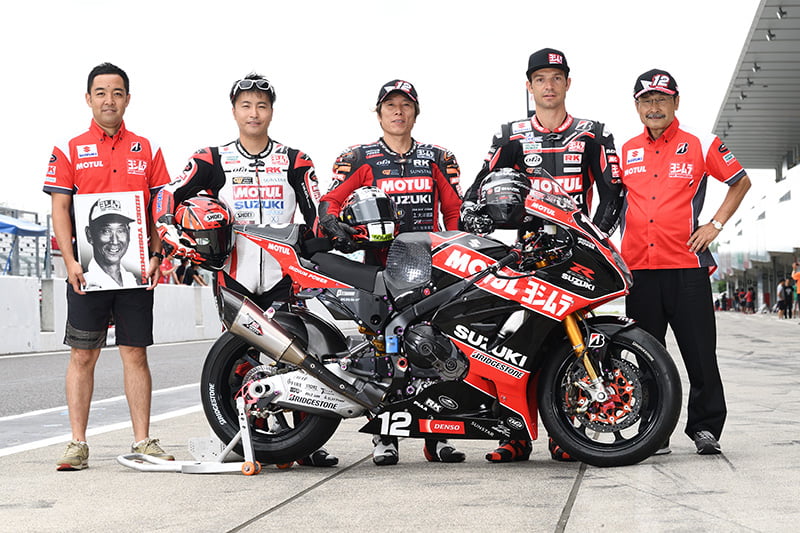
- Their son, Fujio Yoshimura is now President of Yoshimura Japan Co, LTD after having been at the helm of Yoshimura R&D of America. Yusaku Yoshimura, grandson of Pop, today presides over the destinies of Yoshimura R&D of America. His 2nd son studied engineering and is today Managing Director of Yoshimura Japan Co, LTD.
- Their daughter namiko, Married to Mamoru Moriwaki, opened Moriwaki Engineering. They had a daughter, Midori, who today heads the MIE structure Midori International Engineering which, among other things, fields motorcycles in World Superbike.
- Their daughter Yumiko, Married to Shohei Kato, opened the Yoshimura Kato store in Atsugi. They had a son, yohei, who is today the Managing Director of Yoshimura Japan Co, LTD and Team Director Yoshimura SERT Motul.
Among the Yoshimuras, the word family is far from being overused...