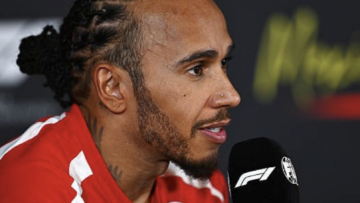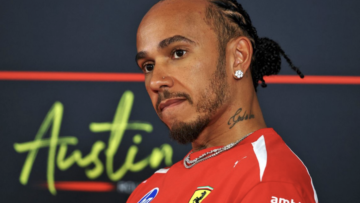





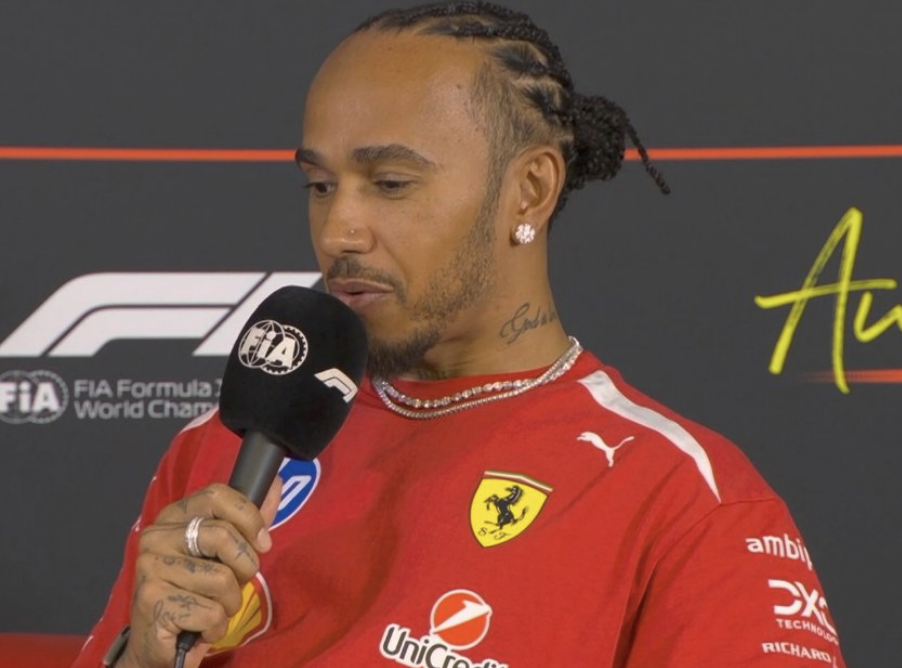
During the press conference for the United States Grand Prix in Austin, Lewis Hamilton was asked about the criticism surrounding the upcoming Rwandan Grand Prix. The debate centers on human rights and the risk that the event might be used to improve the country's image. The Ferrari driver did not shy away from the question: he supports the return of Formula 1 to Africa, but believes that a race should not distract from the political realities.

Hamilton responds to criticism of the upcoming African Grand Prix.
Formula 1 announced a ten-year agreement with Rwanda on October 13th. The African Grand Prix is slated to join the calendar in the early 2030s, once the Bugesera circuit near Kigali is built. The exact date is yet to be determined, and the circuit currently exists only on paper. This race would mark the championship's return to the continent for the first time since 1993, the year of the last South African Grand Prix at Kyalami.
For Hamilton , this project has a personal dimension. The seven-time champion has long campaigned for F1 to return to Africa. He recounted having held numerous meetings with Stefano Domenicali , the championship boss, as well as making calls to leaders in several African countries.
" This is a place that deserves to have a Grand Prix ," he explained, stressing that the issue goes beyond Rwanda alone: it is, according to him, about giving a place to an entire continent.
This ambition also gives him a reason to extend his career. " I am now obliged to stay longer because we have a race in Africa, and it is my dream to be able to race there, " he said in Austin.
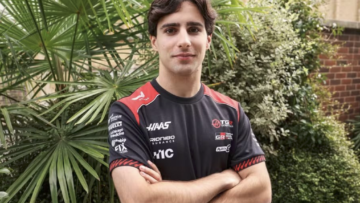
Hamilton is 41 years old and his contract with Ferrari runs until the end of 2027. To start in Rwanda, he would therefore need to continue his career at least until the beginning of the next decade and remain competitive. He acknowledged this: if he can still achieve good results, he will continue. Kimi Antonelli , who was by his side, encouraged him: " You have to at least make the first one ."
But for Hamilton , supporting a Grand Prix doesn't mean turning a blind eye to the host country. He pointed out that " Africa was colonized by the United Kingdom ," according to The Times , before discussing the consequences of colonialism and Western interventions. This statement refers to the history of the continent in a broader sense: Rwanda, for example, was colonized by Germany and then administered by Belgium, not by the United Kingdom. This distinction is important to avoid conflating African history with that of the country hosting the race.
Criticism of Rwanda remains very much alive. Amnesty International has called the agreement a " reputation-whitewashing prize " for Rwandan authorities, citing arbitrary detentions, torture, and the repression of freedom of expression. The organization also accuses Rwanda of playing a role in the conflict in the Democratic Republic of Congo. Human Rights Watch , for its part, has warned of the risks faced by journalists and those who challenge the country's official image. These accusations from human rights organizations are at the heart of the controversy surrounding the choice of Formula 1.
Hamilton says he has seen these criticisms. He calls for addressing the issue " with humility " and emphasizes that going to Rwanda should not lead to ignoring what is happening there. He also hopes that African history will be taught more in England. He believes the Grand Prix could encourage spectators to learn more, provided the spectacle of the event doesn't overshadow the political issues. The driver doesn't claim that the race will solve these problems; he hopes it will help bring them to the forefront.
He finally broadened his appeal beyond Rwanda, calling for efforts to " liberate Congo, Sudan, Syria and Palestine ".
This statement goes beyond the simple enthusiasm of a driver who dreams of racing in Africa. Hamilton supports F1's return to the continent, while also warning that the sporting event shouldn't be a mere formality. It's up to Formula 1 to demonstrate that its commitment to Africa can extend beyond the race calendar and address the challenges that come with it.
Lewis Hamilton answer about having race in Africa
"I really hope and I still have hopes that Africa unites. I know there's many people that don't want that to happen because they would be so powerful if they did, but um I'm still hopeful that some stage they will"
"of course…
— LH44(A) (@LH44Fanpage8) October 22, 2026