




The Ricardo Tormo circuit in Cheste, 20 kilometers from Valencia, has become the de facto event closing the MotoGP Grand Prix seasons. It has not always been the case…
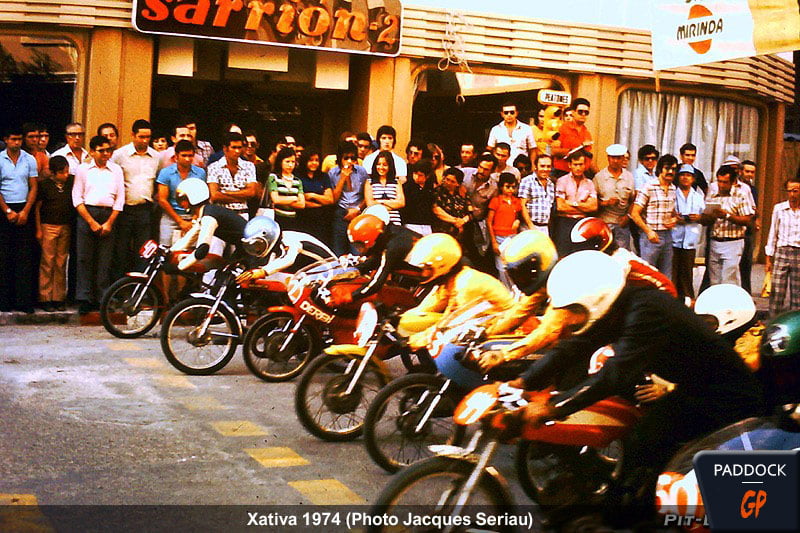
The history of this unmissable place dates back, albeit indirectly, to 1952, when Ricardo Tormo Blaya was born on September 7th near Xàtiva, in the province of Valencia. At the time, urban motorcycle races were frequently organized in the streets, as in the surrounding towns of Cullera, Alcira, Guadassuar , and Gandia.
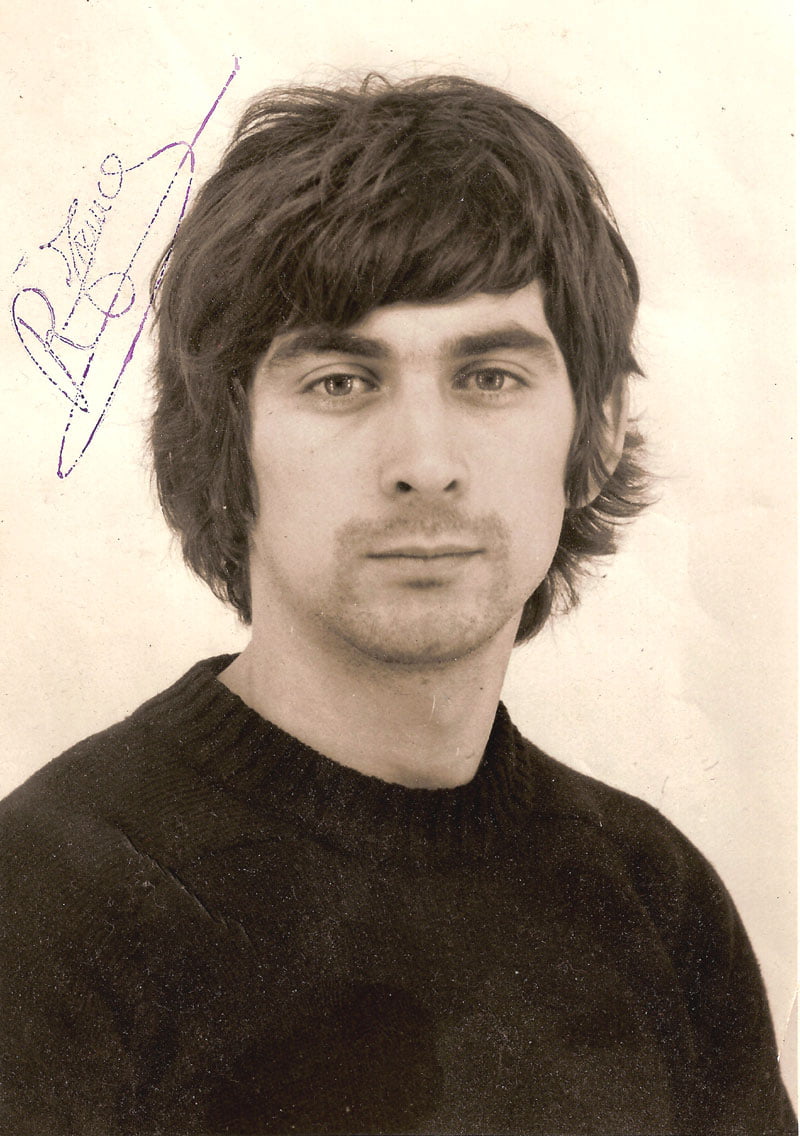
The young man quickly caught the virus, left school as soon as he could to work in his uncle's workshop, cut his teeth on a Ducson 50cc in the streets of Canals and, not yet being 21 years old , forged his parents' signature to obtain the national license that allowed him to race as a rider for the Moto Club of Xàtiva. In 1970, he secretly registered for a race at Cullera (the benchmark event) with a 75cc 5-speed Derbi purchased for 15 pesetas. He finished second there, but his father heard this on the radio and his first experience ended there, his license torn up.
Two years later, now of legal age and with his father's blessing, he truly began competing, winning several local urban races, still in the province of Valencia, with a Derb 75cc but also an Ossa 250cc. Admittedly, the tracks were rudimentary, often consisting of streets at right angles barely protected by a few bales of straw, but riders as famous as Ángel Nieto and Benjamin Grau came to compete for the starting prizes…
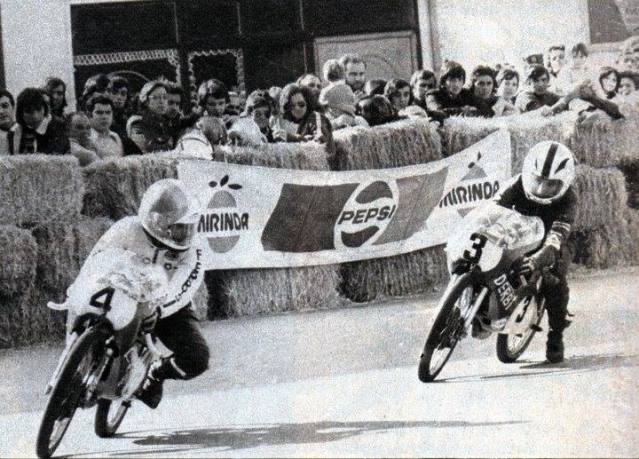
These local successes allow Ricardo Tormo to participate in the Spanish championship in 1973, which he finished in 4th position, then to register with the support of Salvador Carsí senior, from Escudería Ferrys, for the Grand Prix in Jarama which then closed the Grand Prix season . He finished 10th after one lap on a Derbi 50cc and scored his first point, in a race where the third conceded more than a minute to the official Kreidler drivers,
Jan De Vries et Bruno Kneubühler
!
Anecdotally, the latter finished 2nd on the same day in 50cc, 250cc and 500cc: Other times, other customs!
But let's get back to Ricardo Tormo : His career hadn't yet taken off, and he participated in the national 50cc championship in 1974 with a private Derbi, a Bultaco and a Kreidler in 1975, the year in which a first accident immobilized him for 6 months…
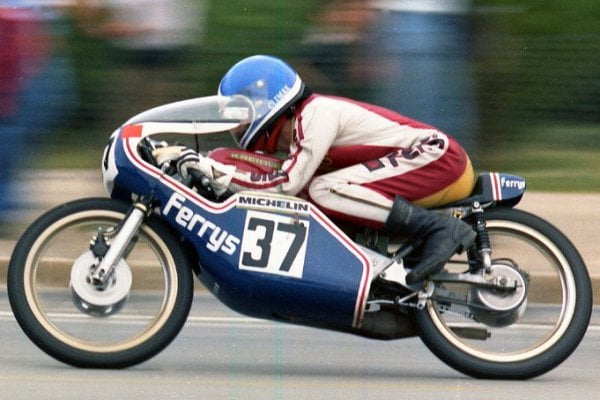
…before becoming an official “Bultaco” driver in 1976 with the help of the Spanish federation, which financed Eugenio Lazzarini ’s Piovaticci (a creation of engineers Jan Thiel and Martin Mijwaarts, now humorously known as Piovataco or Bultacuicci) . But the young Spaniard, not yet fully recovered from his injuries, preferred to resign, before later participating in the Spanish Grand Prix with his old Kreidler, in which he scored 5 points.
He returned to Bultaco in 1977, alongside Angel Nieto, and obtained 3rd place in the general classification of the world championship.
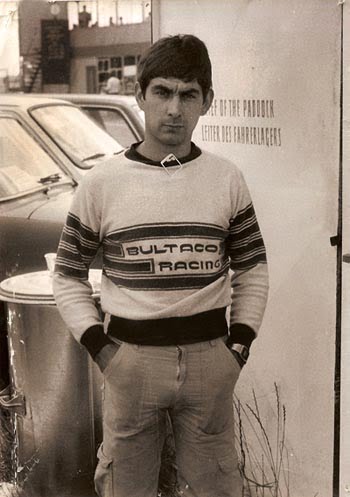
Unbeatable in the rain, the Valencian obtained his first title in 1978 by winning five of the seven races. Hey no, the 50cc are not on the program for all the Grands Prix…
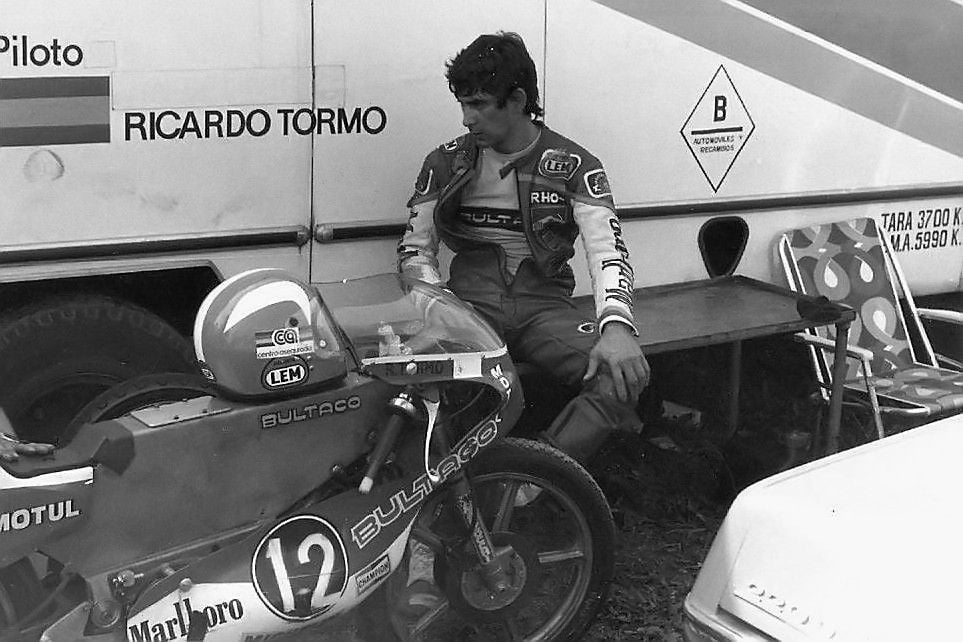
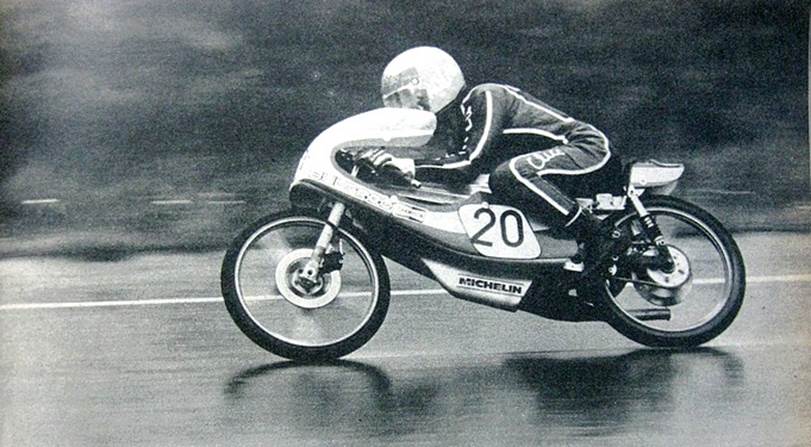
In 1979, Bultaco experienced commercial difficulties and ceased production. The racing department also stopped, and Ricardo Tormo finished the championship in 17th position.
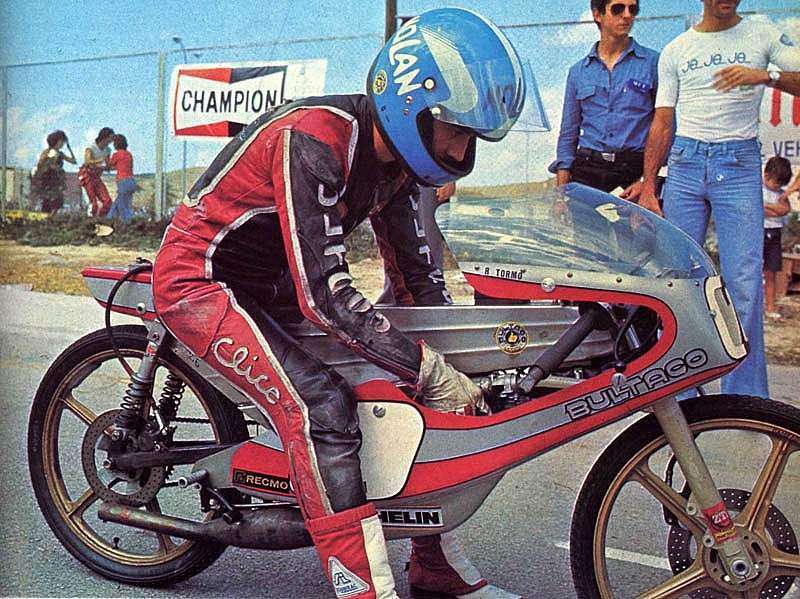
The following year, the RFME (Spanish Federation) leased the Kreidler van Veen for Ricardo Tormo in 1980. He won one race and finished 4th in the championship.
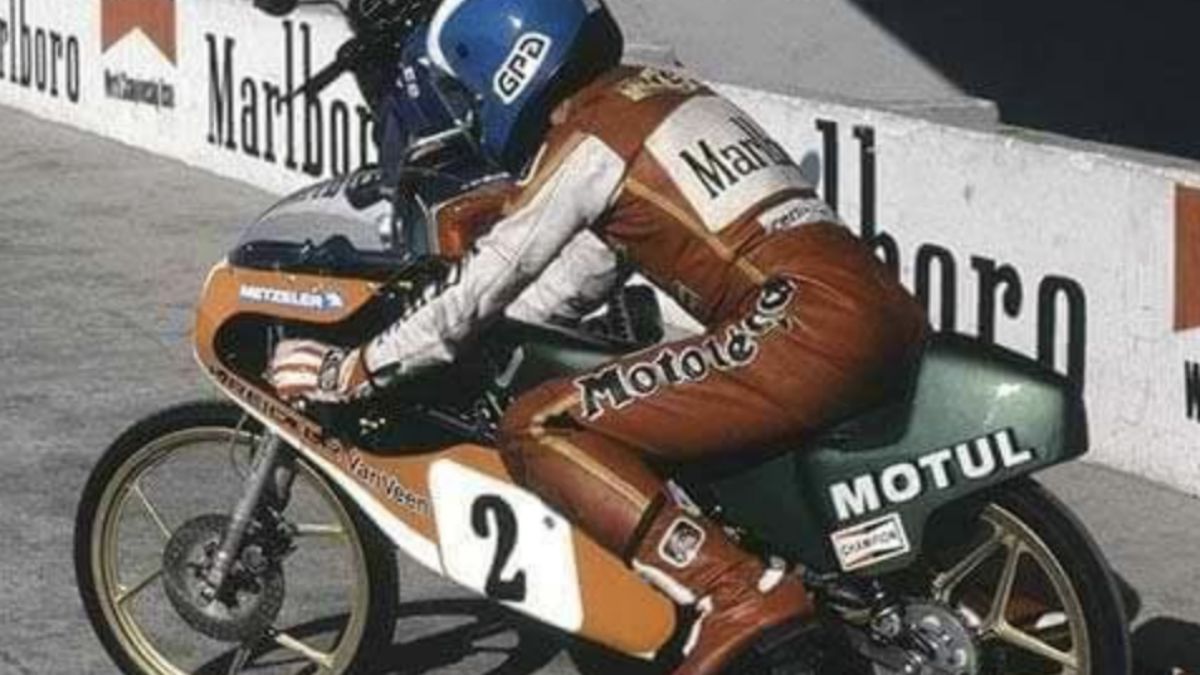
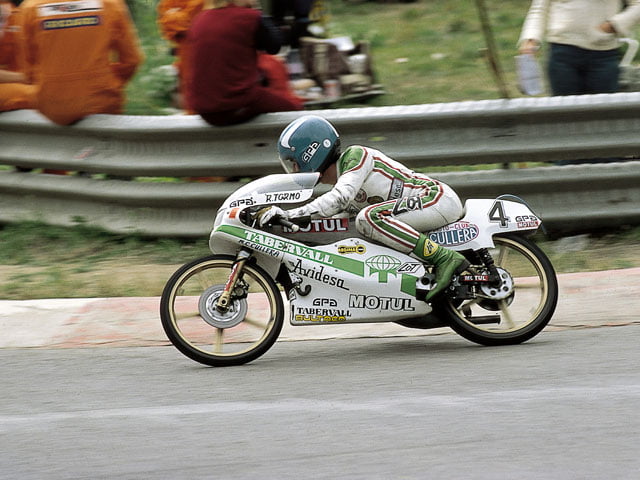
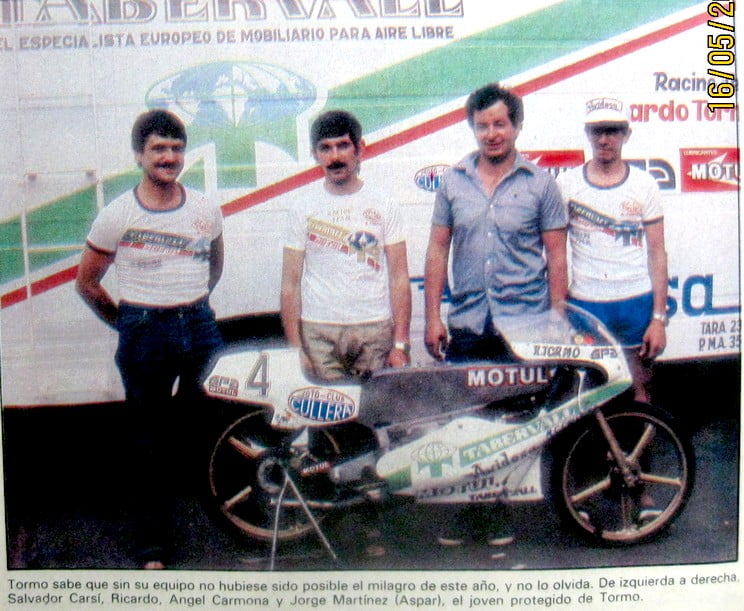
In 1981, he brought out his “old” factory Bultacos with his former mechanic Ángel Carmona, and with the sponsorship of Motul and always with the support of the Spanish Federation, achieved the impossible and won a new 50cc world title!
Note, completely to the right in the photo, a certain Jorge Martinez known as “Aspar” who was only a mechanic at the time…
From there, things will get a little complicated. The Bultaco was overtaken in 1982 and the Valencian only obtained one podium in 50cc. He is also an official Sanvenero rider in 125cc and finished 5th in the championship.
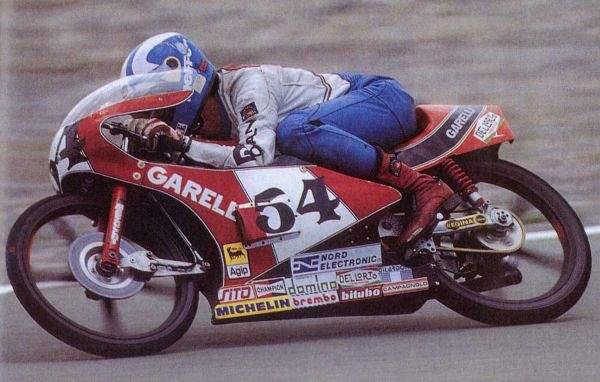
In 1983, “Ricardet” used a Garelli 50cc (and an MBA 125cc) and won the last Grand Prix of the “coffee cups” at Imola, the category moving to 80cc the following year.
1984 must be the year of renewal, as an official Derbi driver alongside Aspar.
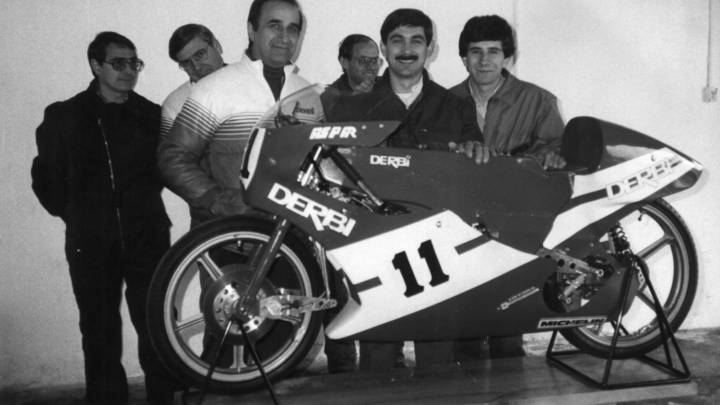
Unfortunately, Ricardo Tormo seriously injured his right leg during a training session in the industrial area of Martorelles (near Barcelona, since at the time there were only two permanent circuits, Jarama and Calafat), which abruptly ended his racing career and resulted in 27 operations.
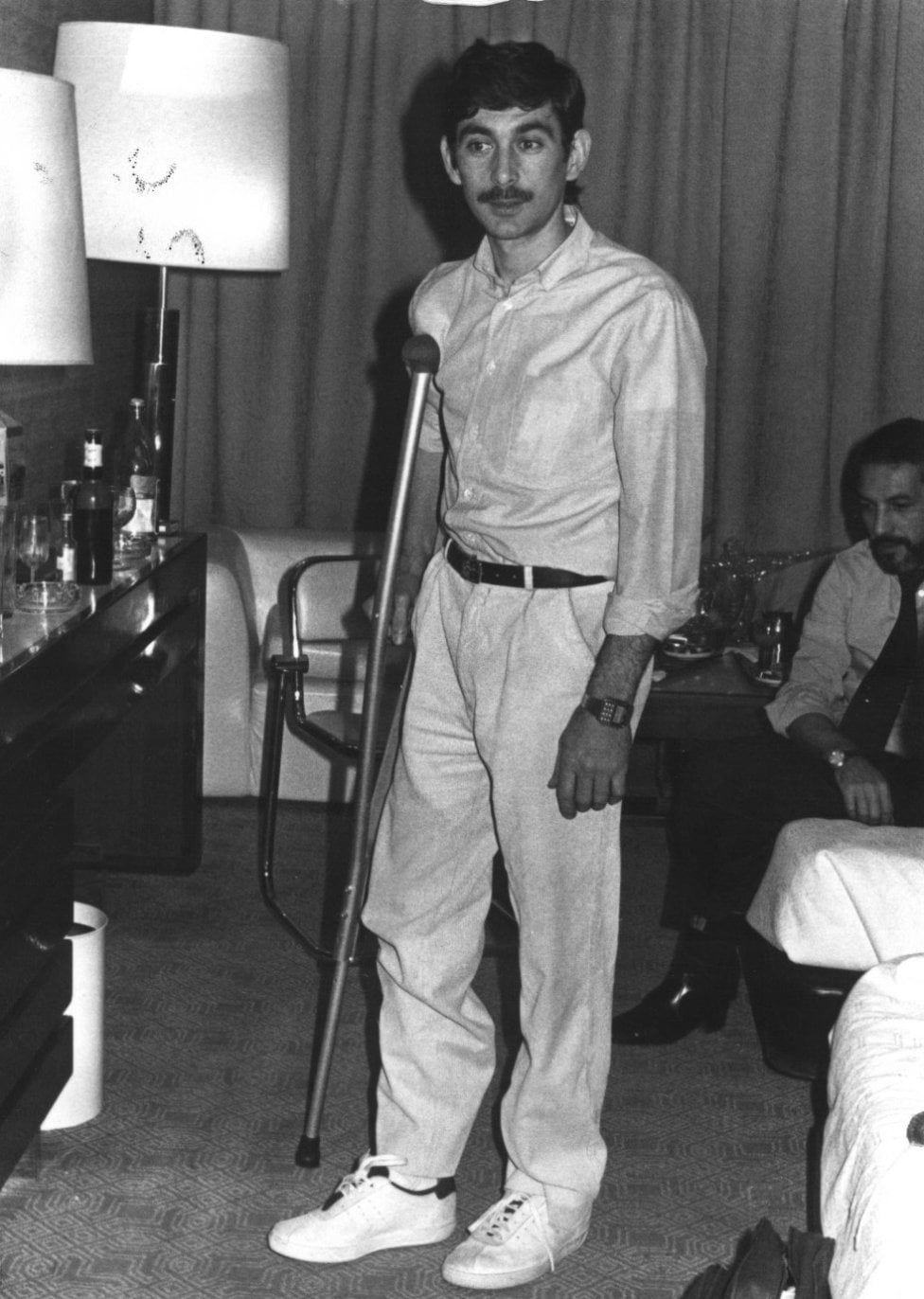
From then on, the man who became team manager of the official Derbi team tirelessly worked for the construction of a permanent circuit in his region, Valencia, where Jorge Martínez "Aspar," supported by the grandfather of Adrian Campos, the former Formula 1 driver, as well as the local motorcycle federation, were already very much in favor of having a speed circuit in the Valencian Community, given the region's rather unusual history in this area. The idea actually dates back to 1973…
Three municipalities offer free land: Guadasuar, Sagunto and Cullera, the latter being very motivated, due to the presence of the essential president of the Moto Club of Cullera, Salvador Gascón, who is at the same time president of the company that promotes said project.
In addition, Cullera organizes at least one Spanish championship event every year and generates popular enthusiasm that can be difficult to understand today.
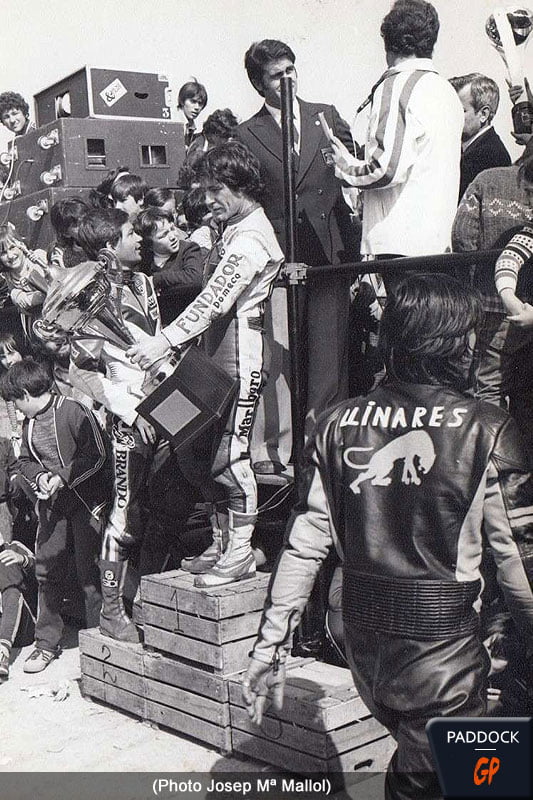
Here are a few choice examples, provided by one of our Spanish correspondents, former driver Josep Mª Mallol, who is not entirely unconnected to the forged signature of young Ricardo Tormo …
The first is this revealing photo that captures the whole atmosphere: Ángel Nieto in Cullera, standing on the top step of a Trofeo Bahía de los Naranjos podium made of four overturned crates of oranges, and looking incredulously at the size of the trophy…
One of the straight lines of the Cullera circuit ended at the entrance to the cemetery. On the day of the race, the door of the latter was left open as an escape route in the event of a failed braking. The other anecdote concerns a chicken breeder located near the circuit. He raised his chickens and sold his eggs, by the thousands. After the first race, the hens stopped laying eggs for two weeks. Today, this would probably be the subject of a complaint, but instead of protesting, the good farmer put on music for his chickens to get them used to hearing something, and there was never again problems in the following years.
Cullera has even studied an ambitious layout for its permanent circuit, with a bridge like at Suzuka…
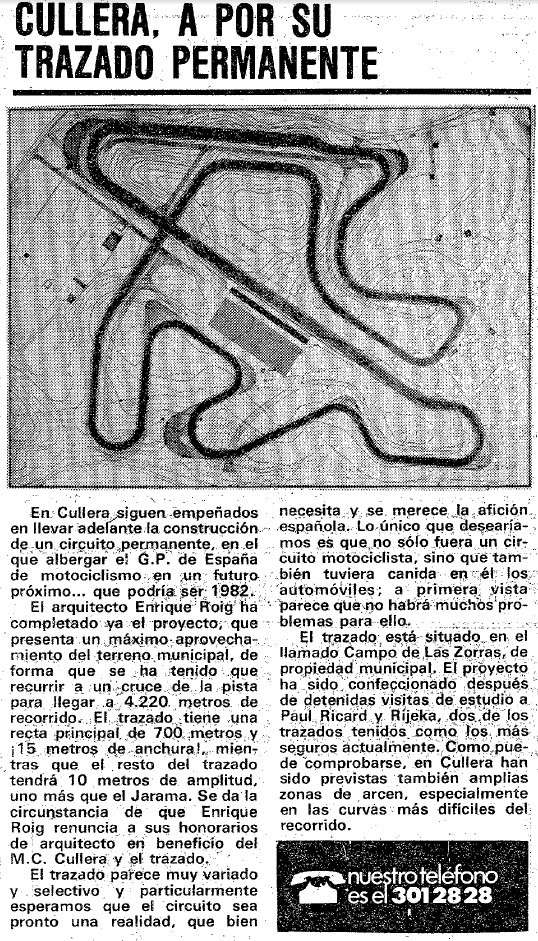
But after many debates and negotiations, it was finally Cheste, less touristy and in the immediate vicinity of Valencia and its airport as well as the Valencia-Madrid axis, which was chosen in the years 88-89 to host the circuit, in an area of rich irrigated land for agriculture called “Cambrillas”, consisting of a farm of approximately 300 ha belonging to the Generalitat. This will nevertheless provoke a demonstration by farmers on the day of the project's exhibition at the Casa de la Cultura de Cheste, the latter fearing negative repercussions for their activities.
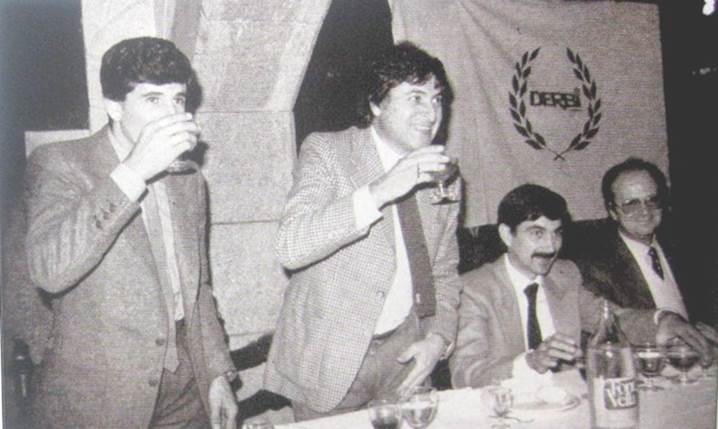
Ricaro Tormo was then appointed technical advisor for the project. He can be seen on the left in this photo, with "Aspar," the true driving force behind the project.
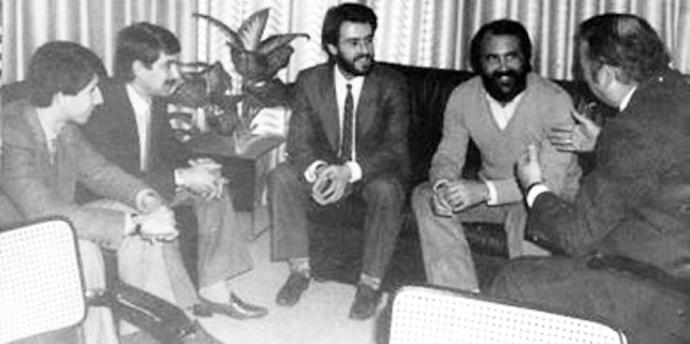
The first stone was laid on October 18, 1989 in the presence of Jorge Martínez “Aspar”, Julián Miralles and Javier Debón , European 125cc champion… And that’s almost all!
The work is making almost no progress, on the one hand due to the economic crisis which does not make it possible to pay all the expropriations and puts the construction of the circuit on the back burner, but also due to the discovery of two Roman villas on the land. on which the speed circuit was to be built.
One of them was excavated and its remains, including a tombstone, found their destination at the headquarters of the Institute of Regional Studies of Buñol, while the other, very damaged, was left as is at the place where she was. Today it is marked by an olive tree, next to a bend.
The years pass and construction stagnates. Local bikers meet every Sunday to demonstrate and demand the resumption of work, but it was not until the arrival of the new government in 1996 that all the land was finally expropriated in a financially suitable manner.
Jorge Martínez “Aspar” is growing impatient: “It’s incomprehensible that a community like Valencia, which has had riders at the forefront of the World Championship for 25 years, doesn’t have a circuit. You know what? Five years ago, 60% of the riders on the starting grids of national circuits were from Valencia. Today, there are barely five. The current government of the Generalitat, controlled by the People’s Party, has understood this and is developing a circuit that, by its design and structure, will be the envy of the world.”
But the construction of the circuit continued to be slow until 1998, 10 years after the decision to build, when things came to life in an almost frenzied manner, both to put pressure on a Catalonia-Barcelona circuit in the crosshairs of Dorna because of its lack of spectators, but above all because the political majority has changed sides...
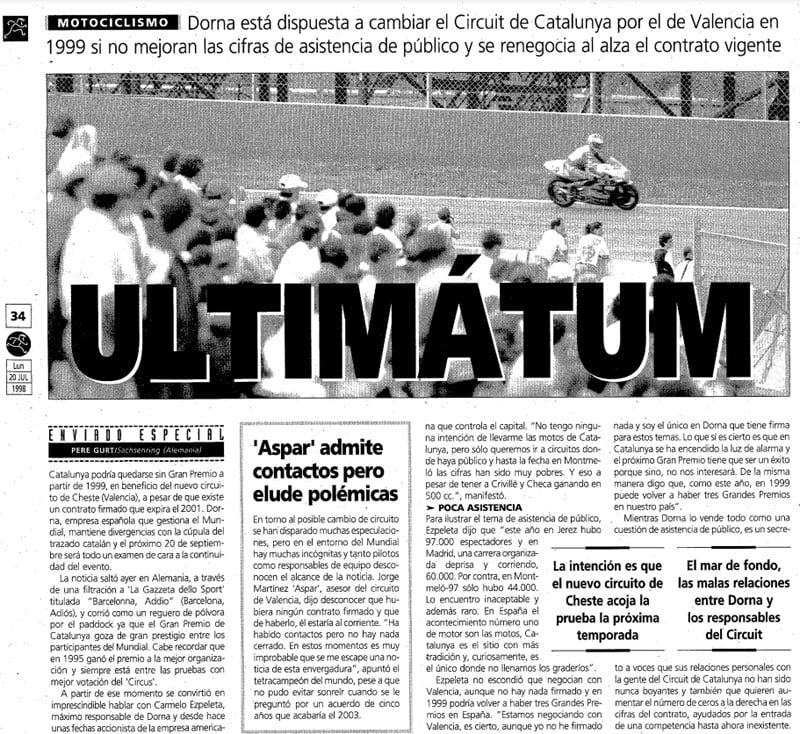
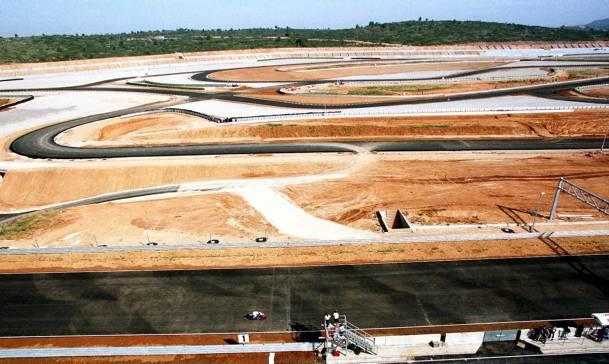
The Valencian Community circuit was indeed finally built in a period of less than a year, day and night, by 400 workers, from the end of 1998 to 1999!
Sadly, suffering from leukemia, Ricardo Tormo would never see "his" circuit completed. He died on December 27, 1998, at the age of 46.
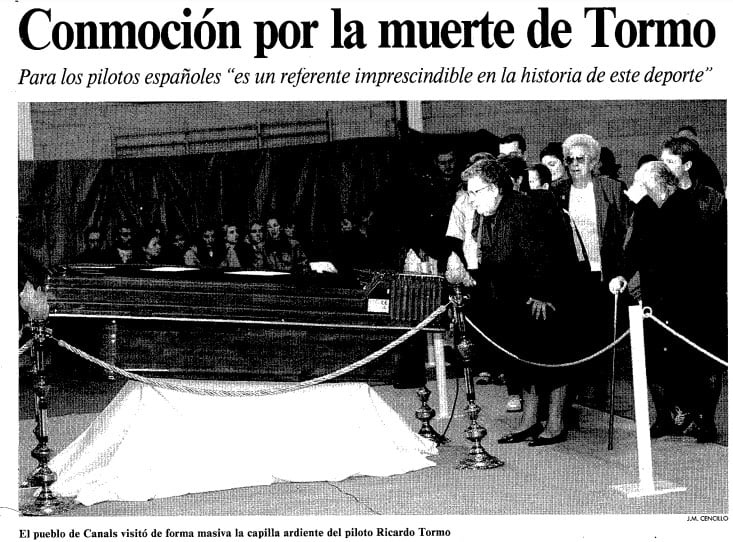
It was at this time that the idea of naming it Circuito Ricardo Tormo was considered, at the instigation of Jorge Martínez Aspar and Ángel Nieto , his personal friends.
In May 1999, the first IRTA tests took place, dominated by Alex Crivillé with a time of 1'37.375 on his 500 Honda, compared to the current record of 1'29.401 held by Jorge Lorenzo since 2016…
Alex Crivillé says: "Although there's a bit of a lack of grip because the track is still dirty, what I appreciated most was that the grandstand is close and the fans will be able to follow the race very closely," while Sete Gibernau notes that "For the 500cc class, the circuit is a bit too small for us."
The Ricardo Tormo circuit was inaugurated on September 19, 1999 by King Juan Carlos I during the first Grand Prix. Those who had seen him race said that Ricardo Tormo was a great driver in the dry but invincible in the wet.
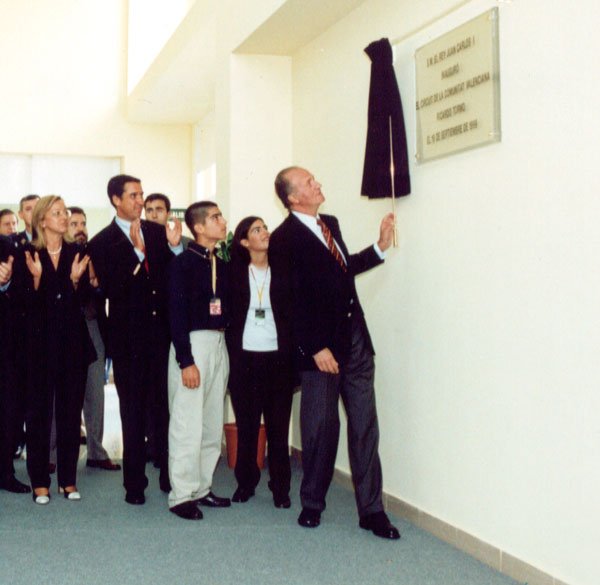
That day, after a sunny week, it started to rain. People said that "it was Ricardo's tears, who hadn't been able to attend the first Grand Prix on a circuit he had fought so hard for."
Regis Laconi won the 500cc race, the last Frenchman to have won the premier category before a certain Fabio Quartararo...
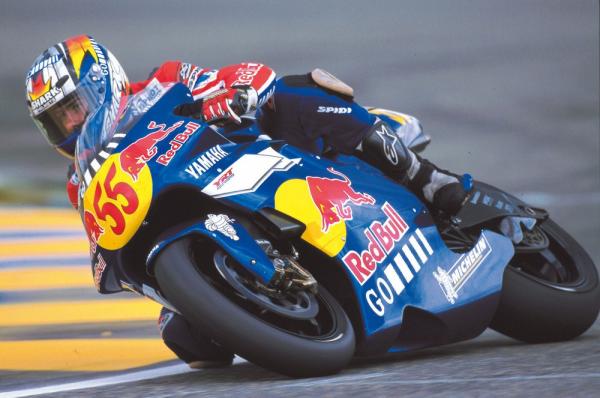
Today, the statue of Ricardo Tormo dominates those of other Spanish champions, such as Jorge Martínez “Aspar”, Ángel Nieto, Bernat Martínez Mas, Manuel “Champi” Herreros, Adrián Campos and Nico Terol.
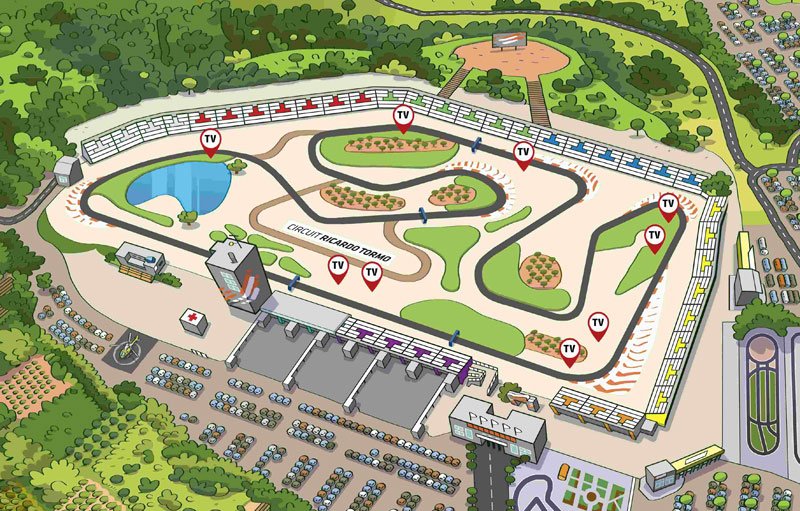
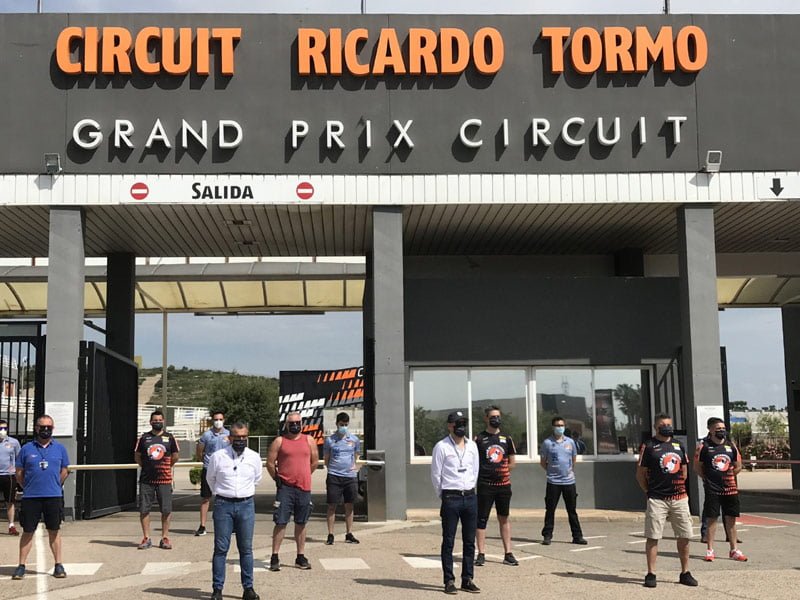
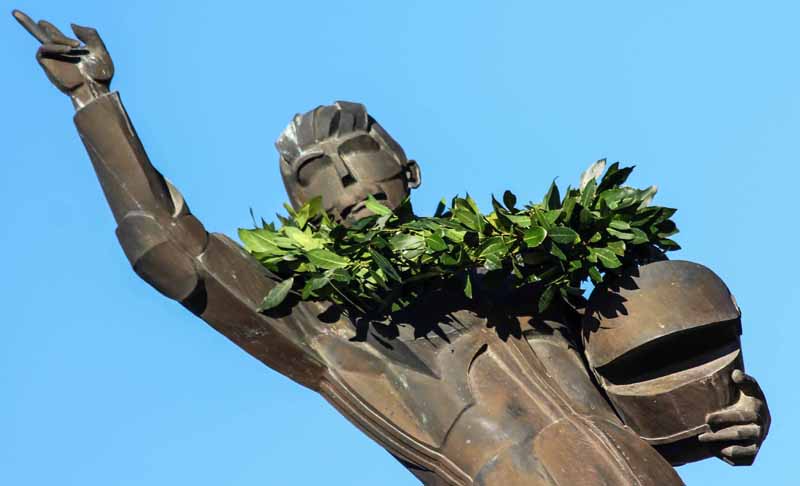
Photo credits: Soymotor.com, El Mundo Deportivo, La Vanguardia, Motociclismo, pilotos-muertos.com and others.
circuit Ricardo Tormo circuit Ricardo Tormo circuit Ricardo Tormo