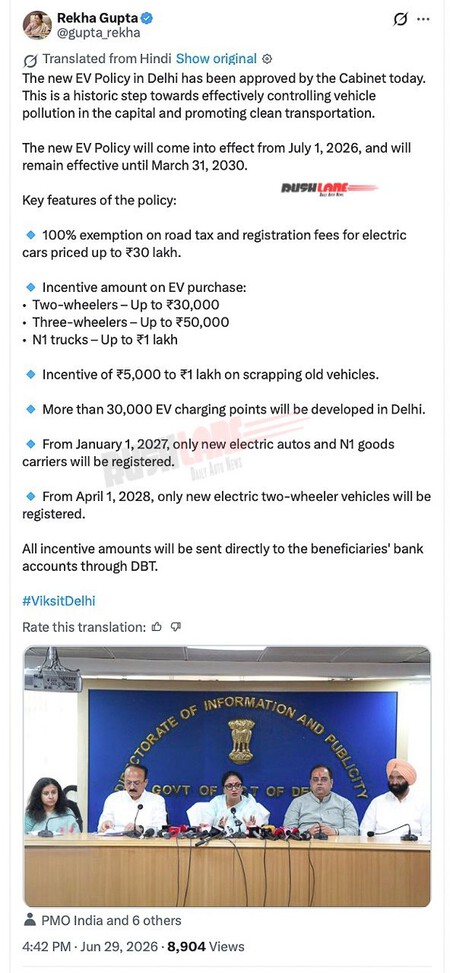















The Indian capital, Delhi, has just taken a major step in the transition to electric mobility. From April 1, 2028, no new gasoline-powered motorcycles or scooters will be allowed to be registered in Delhi.
The Indian capital is reaching a historic milestone. From April 1, 2028, Delhi. India will no longer allow the registration of new internal combustion engine motorcycles and scooters, as part of a broad plan to electrify transportation. However, this decision does not affect the rest of India, nor does it apply to motorcycles already in circulation. Owners will be able to continue using their gasoline-powered two-wheelers as usual.
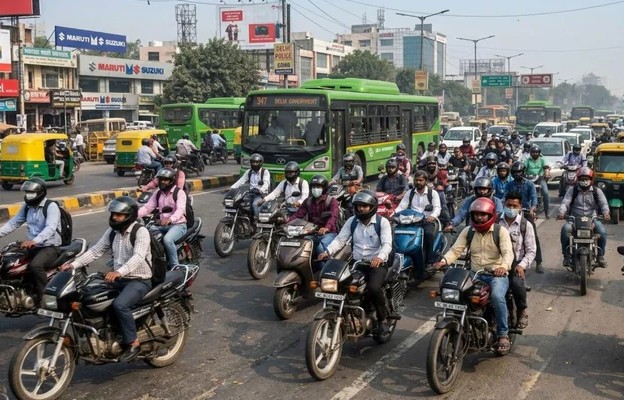
With several million two-wheelers in circulation, Delhi. It is among the most heavily motorized cities in the world. Air pollution there regularly reaches some of the highest levels on the planet. Authorities estimate that motorcycles and tricycles account for nearly half of the emissions related to urban traffic. The objective is therefore both health-related and environmental.
To support this transition, the city is planning purchase incentives of up to 30,000 rupees (approximately €300) for an electric motorcycle; scrappage bonuses; the deployment of more than 30,000 public charging points; and an overall investment announced at around €1,5 billion until 2030.
Delhi tomorrow, Europe soon?
For its part, the European Union is progressively strengthening emissions standards (Euro 5+, then Euro 6 to come). No official date for banning new internal combustion engine motorcycles has been adopted, unlike in the automotive sector where the debate around 2035 is much more advanced. Several member states still consider two-wheelers a relevant mobility solution in urban areas. In other words, Delhi is more of a laboratory than a model directly applicable to Europe. But this decision will nonetheless be closely watched.
India is today the world's leading motorcycle marketwith nearly 20 million two-wheelers sold each year. The major manufacturers — HondaHero, TVS, Bajaj, Yamaha Suzuki, KTM, Royal Enfield or even BMW — realize a significant portion of their volumes there.
If a metropolis of more than 30 million inhabitants as Delhi. As the shift towards all-electric vehicles becomes more gradual, manufacturers will need to adapt their product lines. The technologies developed for this market could then be deployed elsewhere.
In contrast, the European transition will likely follow a different timetable, guided more by emissions standards, battery developments and consumer choices than by a sudden ban on petrol motorcycles.
Delhi. France will ban the registration of new internal combustion engine motorcycles from 2028, without affecting motorcycles already on the road. This is a major development for the world's largest two-wheeler market, but it does not mean that Europe is embarking on the same path today.
However, this decision of Delhi. acts as a starting signal. If a city as dense and dependent on two-wheelers can mark the end of internal combustion engines for new vehicles within two years, global manufacturers no longer have any excuse to delay elsewhere.
The motorcycle industry is entering a phase where technical development will no longer be dictated by the pleasure of the engine, but by energy efficiency, urban range, and fast charging capability. the future of our planet. This is just the beginning.