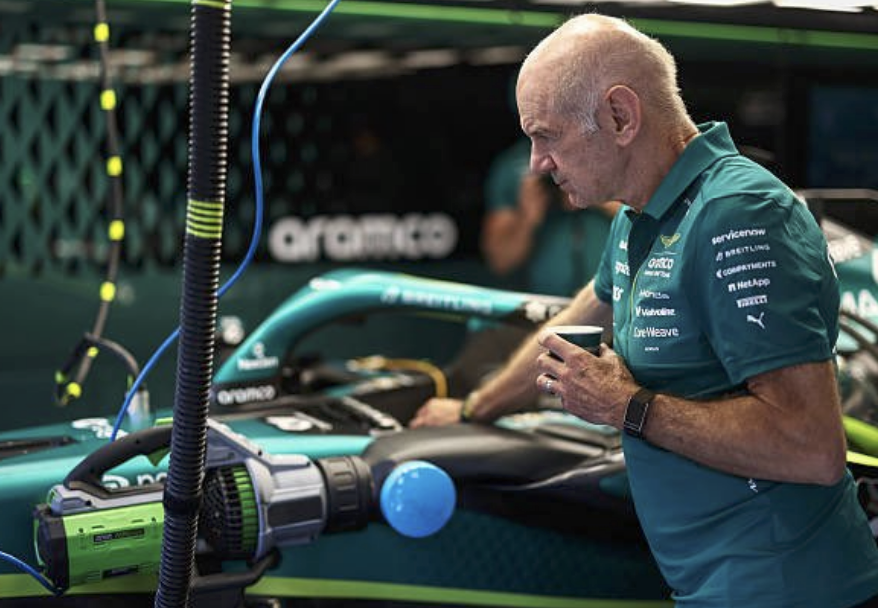





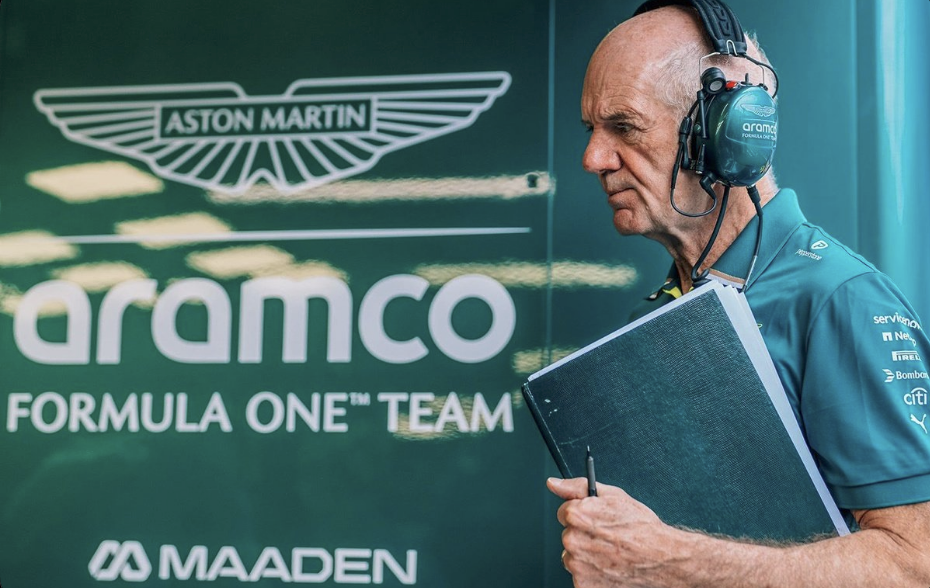
Adrian Newey has an almost intimidating reputation. The architect of numerous world championship-winning Formula 1 cars, the Briton is often portrayed as someone who sees what other engineers haven't yet seen. But even aerodynamic geniuses sometimes have to admit that their intuitions don't always produce the expected results.
Newey acknowledges the limitations of his aerodynamic gamble
Even geniuses can revise their work
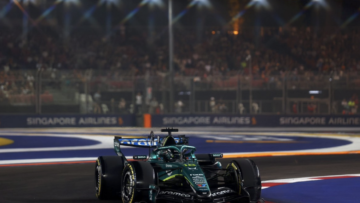
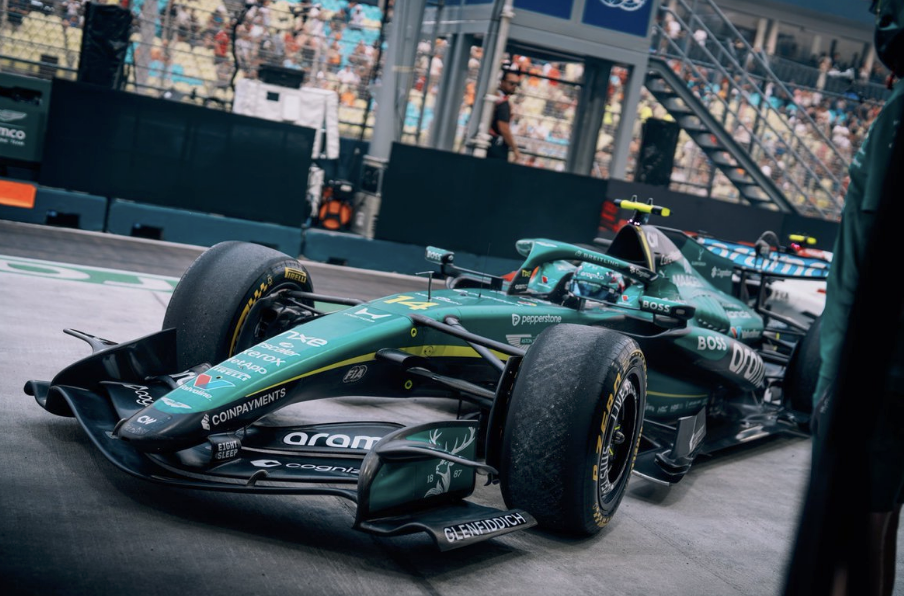
At Aston Martin , the 2026 season offers a particularly instructive demonstration of this. When questioned during the United States Grand Prix, Newey revisited one of the most spectacular choices of the AMR26: its particularly pronounced forward tilt, known as high rake.
An aerodynamic philosophy that he himself had favored. Since the Hungarian Grand Prix, Aston Martin has gradually moved away from it. And this time, Newey isn't trying to hide the difficulties behind the usual engineers' jargon.
A car designed in haste
To understand this change of direction, we need to go back to March 2025. When Newey joined Aston Martin , preparations for the new technical regulations were already significantly behind schedule. According to him, almost no in-depth aerodynamic research had yet been conducted on the 2026 car. The situation was all the more problematic as industrial deadlines were fast approaching. The main components had to be defined before the summer break, while the bodywork and wings had to be finalized a few months later.
The room for maneuver is therefore extremely limited.
The AMR26 won't enter wind tunnel testing until mid-April 2025, while several competitors began their work as early as January. This represents a delay of several months in a discipline where every week of development can alter the hierarchy. Newey must therefore make quick decisions, without the time to methodically compare all possible solutions. And one of these decisions will profoundly influence the car's handling.
The return of the plunging nose
Rake refers to the difference in height between the front and rear of a Formula 1 car . When the rear is significantly higher than the front, the car adopts a raked stance. This configuration allows, under certain conditions, the floor and diffuser to be used to generate more downforce . Newey is very familiar with this philosophy. He notably used it successfully on several Red Bulls in the early 2010s.
With the new 2026 regulations, which mark a return to flatter floors, the Briton initially believed this approach could become particularly interesting again. Aston Martin therefore committed to this direction. But the theoretical reasoning doesn't entirely hold up to the reality of the track. Because a single-seater doesn't function as a collection of independent parts. The floor, the suspension, the wheels, and the aerodynamic elements must work together. Modifying the rear height thus has a much greater impact than just the diffuser.
The trap of aerodynamic interactions
This is precisely what Andrea Stella, McLaren 's team principal , emphasized when analyzing the constraints of the current regulations. Aerodynamic efficiency depends, in particular, on the relationships between the floor, the airflow generated by the wheels, and the surrounding aerodynamic elements. A car with a high camber can improve some characteristics while degrading others. Turbulence from the rear wheels becomes especially difficult to control when the diffuser is positioned further from the ground. Added to this are regulatory constraints that limit certain solutions that previously allowed for the management of this airflow.
In other words, a winning formula from 2011 doesn't necessarily work fifteen years later. Even when it comes from the mind of Adrian Newey . The Briton now acknowledges that his concept had strengths, but also weaknesses. This realization explains the change of direction undertaken by Aston Martin.
Budapest, the decisive turning point
The transformation took place at the Hungarian Grand Prix.
Aston Martin introduced a major evolution of its AMR26, with modifications to the chassis and numerous aerodynamic surfaces. The team also reduced the car's camber, abandoning its extreme profile in favor of an intermediate configuration.
Newey now considers this solution to be a better compromise.
This isn't a complete abandonment of his initial work, but rather an adaptation based on lessons learned during the season. The changes have improved the AMR26's handling, even if overall performance remains limited by other challenges. The Honda engine, in particular, continues to be a significant drawback. In Austin, Lance Stroll mentioned a power deficit that could amount to around a second per lap. This considerable handicap prevents a full assessment of the progress made on the chassis.
Newey can't fix everything
This episode also serves as a reminder that the presence of a prestigious engineer is not enough to instantly transform an organization. Aston Martin now has modern facilities, a high-performance wind tunnel, and considerable resources. But the team still needs to improve its simulation tools and the correlation between numerical results and the car's actual behavior. Newey had already acknowledged that the simulation tools were not sufficiently developed when he joined the team. Investments are being made to close this gap. The process will inevitably take time.
And meanwhile, the other teams continue to progress as well. Formula 1 has this cruel peculiarity: even when a team is moving forward, it can feel like it's falling behind if its rivals are progressing faster.
A mistake or a necessary gamble?
To call Newey 's initial choice an absolute error would be an exaggeration. The engineer doesn't claim the concept was entirely flawed. Rather, he acknowledges having favored a solution whose limitations hadn't been sufficiently studied. The distinction is important.
With more time, Aston Martin might have discovered these constraints before the start of the season. The team could then have chosen a different configuration or adapted certain elements earlier. Instead, they had to make their corrections during the competition. An operation that is always more costly, more complex, and less efficient than a design mastered from the outset.
Aston Martin has finally found a more satisfactory compromise. The challenge now is to translate this technical evolution into sufficiently convincing performance to climb back up the standings. Newey has therefore done what any good engineer should know how to do: question his own solution. A respectable approach, even if it comes after several months of difficulties.
At Aston Martin , the genius had chosen to tilt the car. Reality simply reminded him that in Formula 1 , it's sometimes better to keep all four wheels, and your ideas, at the right height.