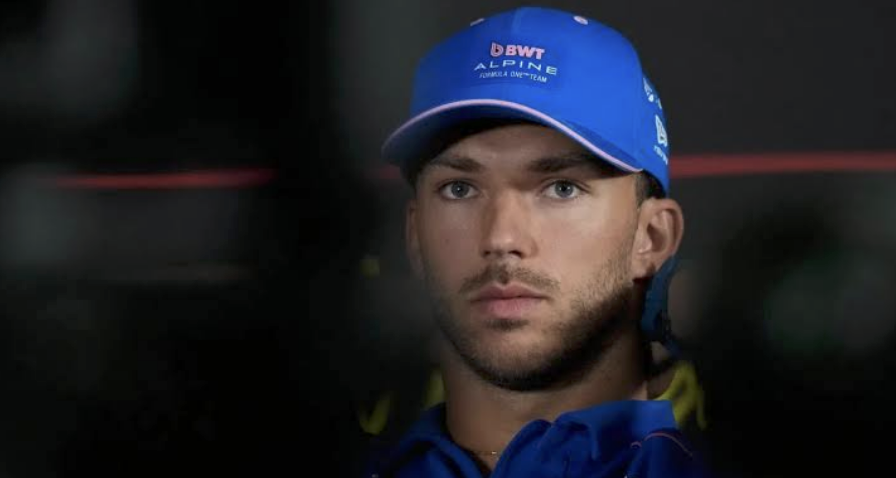





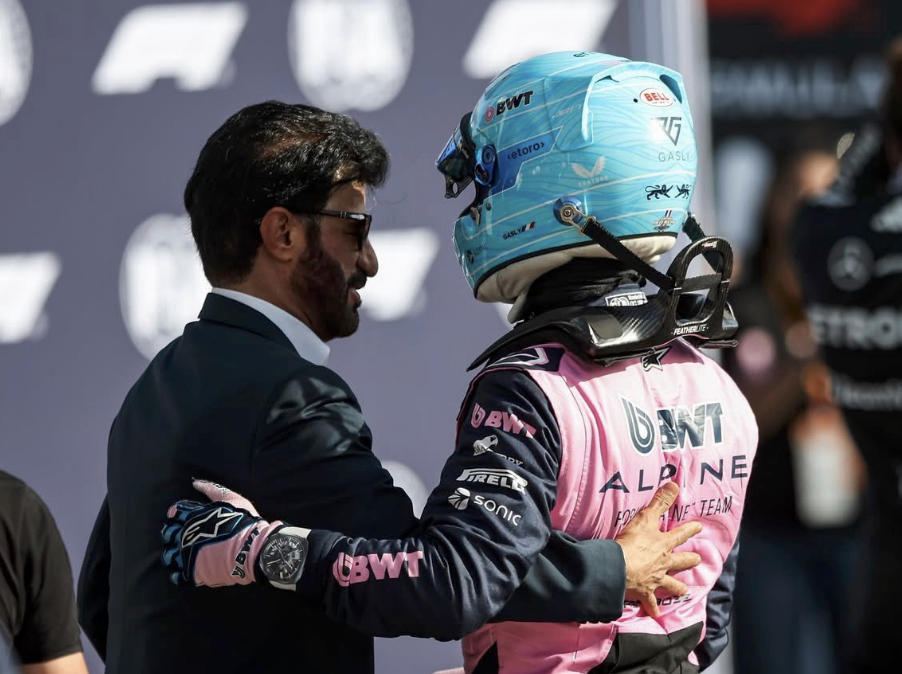
In Formula 1, you can lose a position, a few points, sometimes even your seat. But now, a simple missed overtake can also trigger an avalanche of death threats: Pierre Gasly has just provided a terrifying demonstration of this.
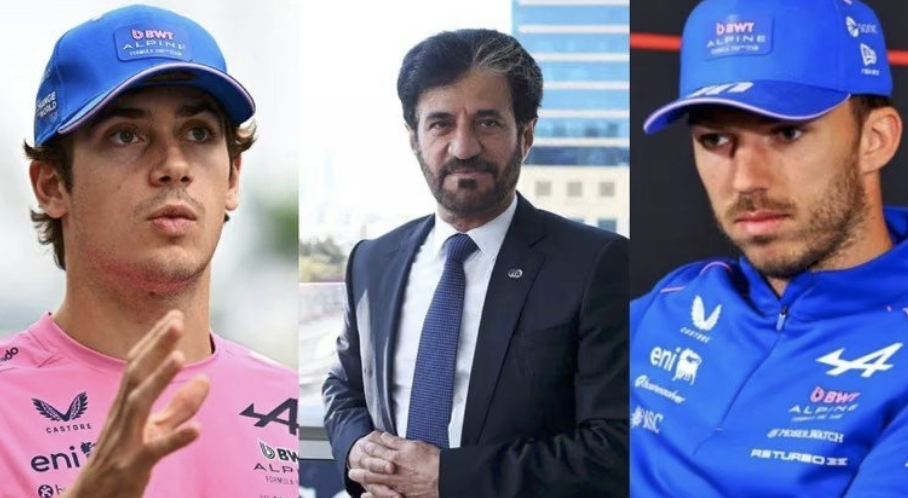
Gasly targeted: the FIA raises its voice
Alpine under fire, Ben Sulayem threatens to expel those responsible.
According to Mohammed Ben Sulayem , president of the International Automobile Federation (FIA), French Alpine driver Pierre Gasly received 13,000 death threats after his verbal and sporting clash with Franco Colapinto during the Spanish Grand Prix, held in Madrid last September.
Thirteen thousand. A staggering figure, revealed in an interview with the American media outlet The Drive , that goes far beyond the boundaries of sporting rivalry. And this time, the FIA is announcing its intention to bring out the big guns.
When a few turns trigger hatred
It all started in the final laps of the Spanish Grand Prix.
Franco Colapinto , battling to hold onto seventh place, was slowed down by his teammate Pierre Gasly , who was still pursuing a different strategy. Behind the Argentinian, Oscar Piastri was closing in dangerously. Colapinto expressed his frustration over the radio. The footage immediately circulated on social media. The Frenchman eventually pitted. The Argentinian maintained his position.
From a sporting perspective, the incident could have ended there.
But some of Colapinto 's fans clearly decided that a few seconds lost on the track justified a digital hate campaign. Insults, harassment, and threats multiplied. Gasly wasn't the only target: his partner and several family members were also attacked.
The situation became serious enough to force Alpine to intervene publicly. Colapinto himself released a video calling on his supporters to put an end to the attacks.
A necessary intervention, but clearly insufficient to erase the damage.
The FIA promises exclusions
Mohammed Ben Sulayem is no longer hiding his exasperation. In his interview with The Drive , the FIA president revealed the extent of the threats received by Gasly and called for a general mobilization.
The official warns that spectators responsible for abusive behavior could be banned from Formula 1 events . The same sanction is being considered for media professionals involved in harassment campaigns.
And for those who think they can continue quietly behind a pseudonym, the FIA boss is brandishing a new weapon: artificial intelligence.
According to him, these technologies could make it possible to identify the perpetrators of threats hidden behind anonymous accounts. A spectacular ambition, the concrete details of which still need to be defined.
Because between promising to unmask harassers and actually managing to identify them while respecting legal rules, there are still some delicate turns to navigate.
Briatore had already threatened to cut the microphone
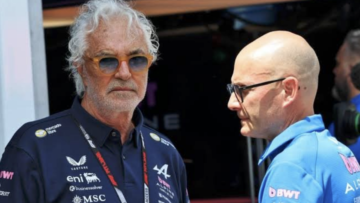
The affair also provoked a particularly strong reaction from Flavio Briatore . The Alpine executive advisor warned that Franco Colapinto could be barred from giving interviews, particularly to the Argentinian media, if the attacks from certain fans continued.
A radical measure that would have the effect of indirectly sanctioning the pilot for the actions of a portion of his audience.
Ben Sulayem nevertheless welcomed this stance. The FIA president believes that drivers must also assume their role as ambassadors and clearly condemn the behavior of their fans.
This message goes far beyond the Colapinto case . Because harassment has neither an exclusive nationality nor a monopoly within a team.
Lando Norris was also targeted after his comments regarding the Argentinian driver. And the race stewards were not spared either.
Ben Sulayem specifically mentions the case of a female police commissioner who received death and rape threats, to the point of questioning her volunteer work. The problem now affects all levels of the discipline.
Thirteen thousand reasons to stop looking elsewhere
The FIA already has its United Against Online Abuse program, designed to combat online harassment in sport. But Ben Sulayem 's statements reflect a desire to move from awareness campaigns to more concrete sanctions.
It will still be necessary to demonstrate that the announced exclusions can actually be applied and that the promised technological tools produce something other than communication effects.
Formula 1 has always cultivated rivalries. They fuel the grandstands, the ratings, and the conversations among enthusiasts. But confusing support for a driver with the right to threaten their opponent constitutes a far more serious transgression than a simple fan dispute.
Pierre Gasly and Franco Colapinto wear the same colors. Their fans may prefer one over the other. They may debate a strategy, contest a maneuver, or criticize a team decision.
But nothing justifies a pilot's family becoming a target.
The FIA now promises to crack down.
It remains to be seen whether she will be able to translate her threats of exclusion into actual action. Because by allowing hatred to fester around its circuits, Formula 1 risks discovering that there are behaviors far more dangerous than a failed overtaking maneuver.
And those things can't be fixed with a five-second penalty.