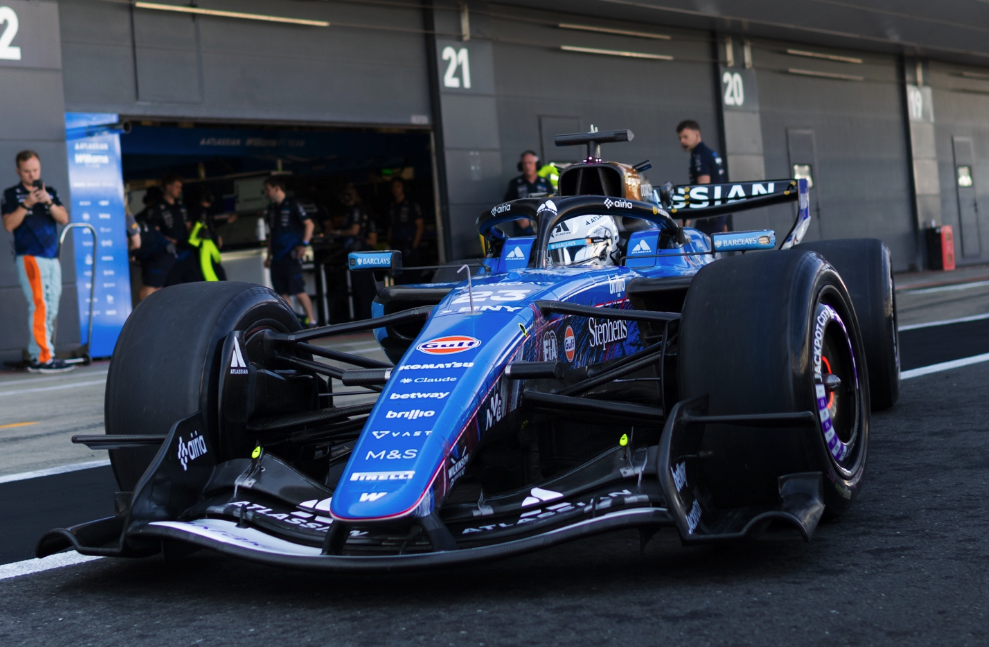





Williams dreamed of taking advantage of the major regulatory overhaul in 2026 to return to the front of the grid. They have, above all, succeeded in building a car capable of fulfilling their ambitions… quite literally. Ninth in the championship with only 11 points, the Grove-based team is hampered by an FW48 that is too heavy, difficult to develop, and already sacrificed for 2027.
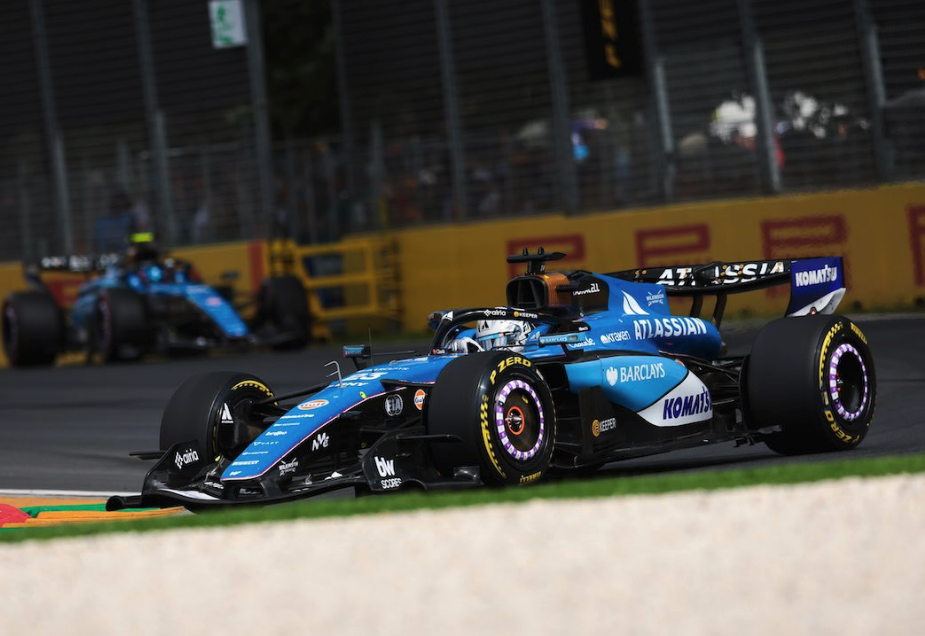
Williams: the technical revolution mainly increased the bill.
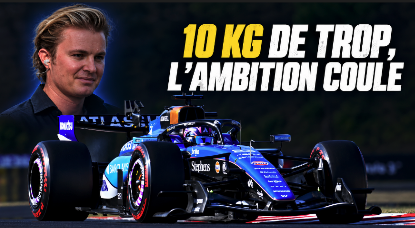
Nico Rosberg didn't mince words. For the 2016 world champion, Williams ' season was a real " shock." The German, who began his F1 career with this team, directly pointed the finger at the work done over the winter: a desire to innovate, a particularly ambitious project, and, at the end of the production line, a car that arrived late and weighed down by several unnecessary kilos.
"Williams completely missed his winter , " Rosberg believes.
According to him, the engineers tried to take new directions in chassis design, but their boldness backfired. In Formula 1 , innovation is fantastic when it shaves off lap times; when it adds weight to the car, it quickly becomes a very costly scientific experiment.
Ten kilos, three-tenths, and a season in the scenery
Rosberg estimates the extra weight at around ten kilograms. This would represent almost three-tenths of a second lost per lap, an eternity in a field where a few hundredths of a second can separate several cars. At this level, the extra weight doesn't just penalize pure speed: it complicates tire management, braking, changes of direction, and limits the possibility of using ballast to optimize balance.
"An extra ten kilos means three tenths of a second per lap. That's huge ," he summarizes.
The problem becomes even more troubling when you consider that Williams has the Mercedes engine , touted as the best power unit on the grid. In other words, the power unit delivers plenty of power, but the chassis demands it move the weight of a wardrobe at the same time.
The team did introduce a significant upgrade in Miami, but failed to consistently challenge for points. Carlos Sainz scored six points and Alex Albon five. With this total, Williams sits ninth in the constructors' championship, a far cry from the progress that had suggested a regular presence in the midfield.
The Spanish Grand Prix perfectly encapsulated this downward spiral: Albon and Sainz qualified 16th and 17th respectively, before the Spaniard dropped to the back of the grid following a penalty. Albon finished 15th, while Sainz retired after 43 laps due to floor damage.
Two new chassis to remove the ball and chain
James Vowles does not deny the scale of the problem. The Williams boss acknowledged that the team had not delivered sufficient performance for too long and that it had fallen behind rivals who continued to develop their cars.
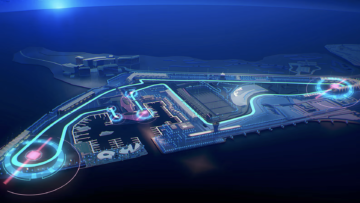
Two new chassis are expected to debut in Baku to bring the FW48's weight below the regulatory limit. Aerodynamic upgrades will accompany them, with the hope of making up some of the time lost since the start of the season. But Vowles is already tempering expectations: while this package represents progress, it is unlikely to be enough to consistently score points.
The reason is as simple as it is cruel: while Williams tries to salvage their winter season, the rest of the field hasn't waited for them. A major upgrade in September can therefore only partially close a gap that has been building for months.
The bulk of resources has now been redirected towards 2027. Vowles accepts this compromise and admits that the consequences of winter mistakes cannot be fully rectified this year. The task is immense for a team principal whom Rosberg nevertheless continues to value highly.
" This is a difficult time for James Vowles. He now has to get through this crisis and get the team back on track."
Williams had deliberately halted development of its 2025 car very early to get ahead of the new regulations. The result makes the failure all the more bitter: having started before the others, the team arrived late, missed the private testing in Barcelona, and presented itself with a car that was too heavy.
Rosberg's diagnosis is therefore correct, but the ten kilograms don't tell the whole story. Aerodynamic shortcomings, production difficulties, and a prolonged lack of development have also widened the gap. Removing weight will make the FW48 faster; it won't suddenly transform it into a podium contender.
In Grove, the diet has finally begun. It remains to be seen whether Williams will simply lose her excess weight... or face another year of rebuilding.