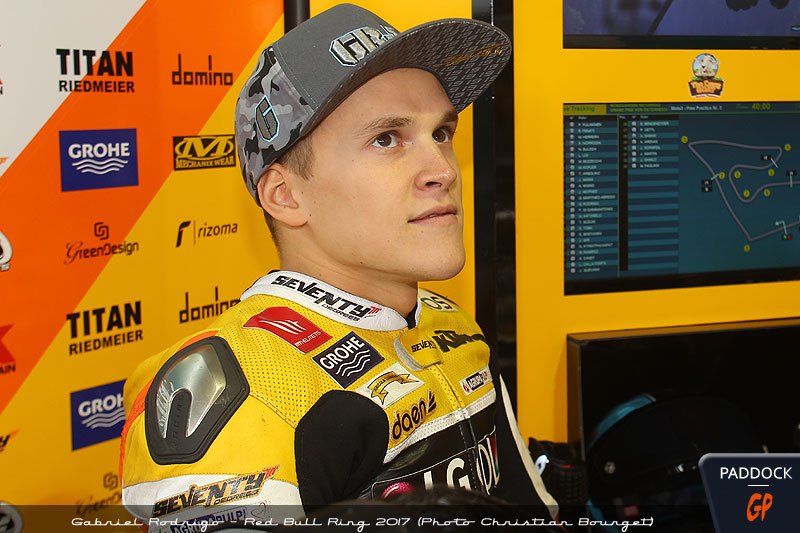








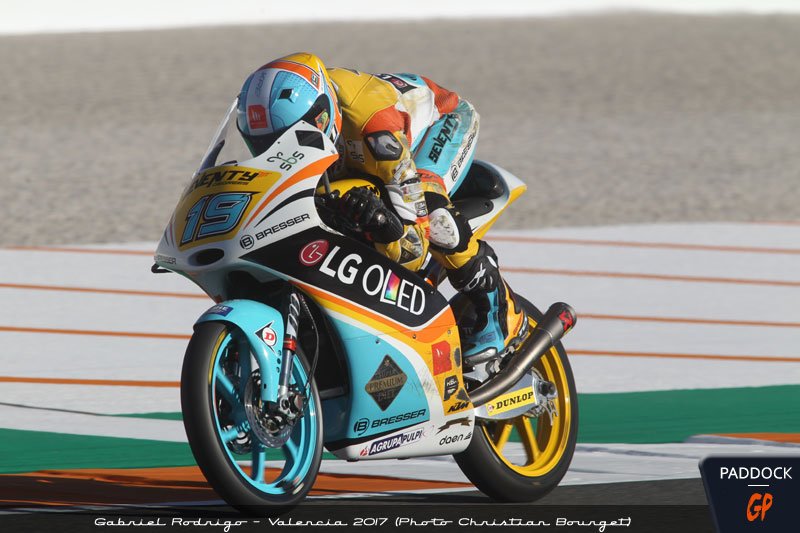
Gabriel Rodrigo has published a very interesting text on his past career and his current life as a Grand Prix driver.
It is rare that a pilot details with such precision its racing weekend, and that is why we are pleased to offer you the rest of this translation today.
Gabriel Rodrigo Castillo is an Argentine pilot born October 12, 1996 in Barcelona. He therefore has dual nationality.
Thursday, the most difficult day for a pilot.
“Thursday is probably the busiest day. In addition to having to organize all the materials we need for the weekend, we have meetings with the team to plan the next few days. Essentially we have to manage the tires we have for this GP, see which engines to use, decide how many runs will be done on track in each practice session, and for how many laps, etc….
We also usually look at telemetry data from previous years and watch videos of testing from other Grands Prix at this circuit. This way, with all the information gathered, we can begin the first session as well prepared as possible.
Finally, to end the day, we go around the circuit to note any final remarks and preview a lap with the technicians and coaches. »
Friday, the trial by fire.
“From paper to track, there is a long way, and the training on the bike is the decisive test of the week. On Friday we have two free practice sessions of 40 minutes each (known as FP1 and FP2).
In FP1 the track is usually very dirty and the times are usually not very fast, but it is useful to familiarize yourself with the layout and see which direction you need to take in the settings to be the best motorcycle rider on the track .
With the rubber left on the track by the higher categories, the FP2 generally allows you to ride much faster, and closer to the track record. But we don't all use the free session for the same purpose.
In my case, I usually use FP2 to do what we call a “long run”. This type of training serves as a race simulation and allows us to more reliably see tire wear and the competitiveness of my pace.
In the afternoon, my engineers and I look closely at the telemetry data to see where they can improve the bike and what I can improve on my riding. At the end of the afternoon, all the engineers, the coach and I meet to present the information collected and together make a final decision on the strategy we are going to implement during the race. »
Saturday, final update.
“The last free practice session takes place on Saturday morning. This running-in serves to confirm whether the changes made have been in the right direction.
In some cases, if we need to try something more specific for the race, we start a long run again as soon as the track opens. Finally, in the last minutes, we put on a new tire to simulate qualifying and get an idea of the best time we can achieve on a single lap.
The second and final practice session on Saturday is the qualifying session (Qualifying/QP), probably one of the most important moments after the race, as this is when the starting positions on the grid are set .
For this qualification, we usually do three outings of a few laps (depending on the length of the circuit) and all this with new tires, since we tried to keep the best rubber.
In the first two runs it is important to set a very good time to ensure a good position on the grid, because in the last run we usually come out for the final attack, with only enough time to make a maximum of one or two rounds, and it is easy to make mistakes.
After testing, we review the data and meet again to refine the strategy we will develop during the race. The work that is done by the engineers, the coach and myself as a driver over the previous days prevents there being any big problems and, in general, the changes that are made on Sunday are minimal. »
To be continued…