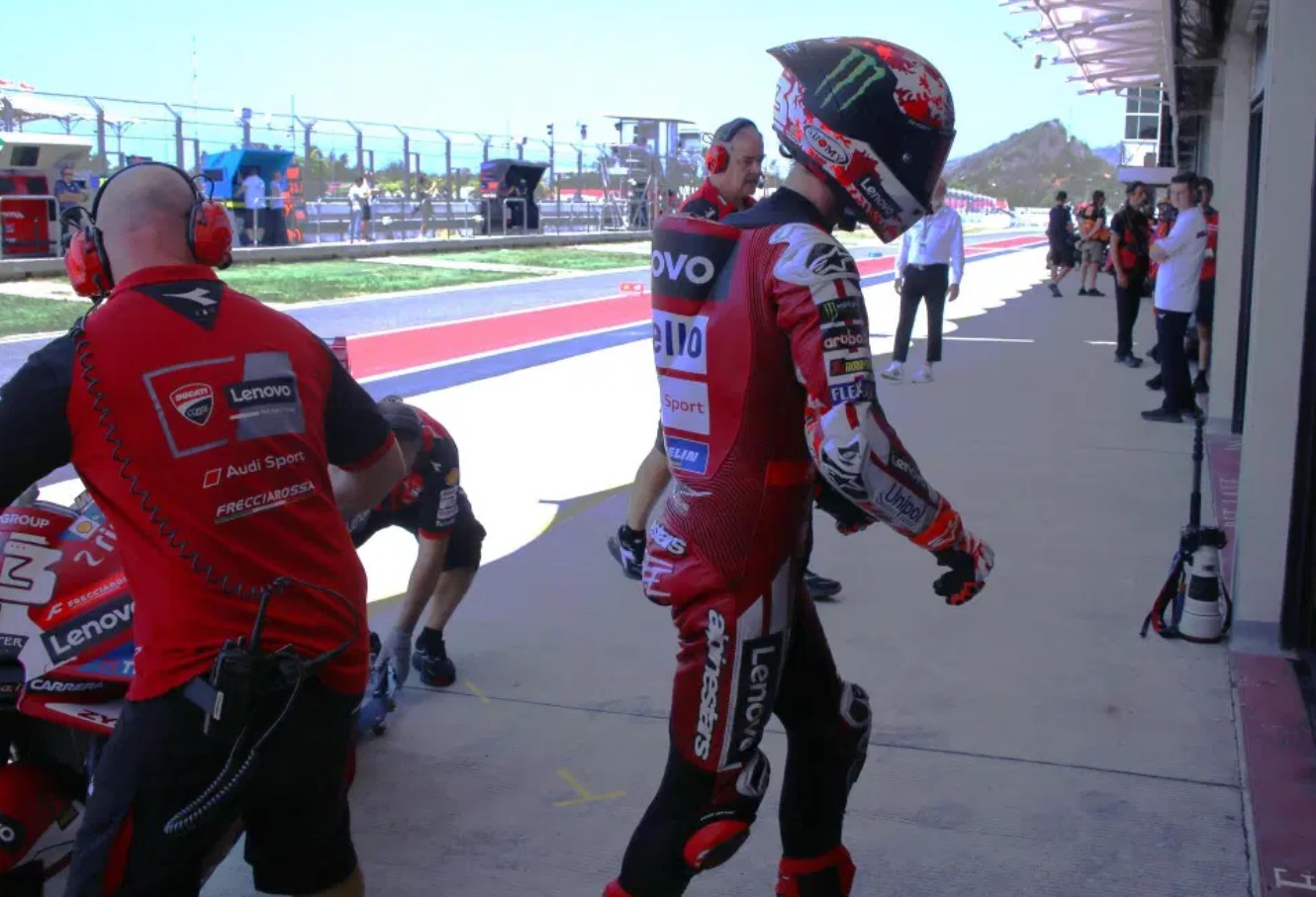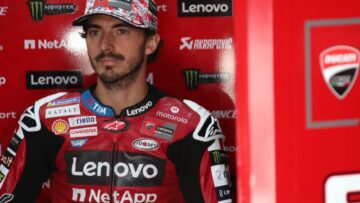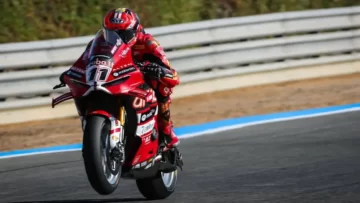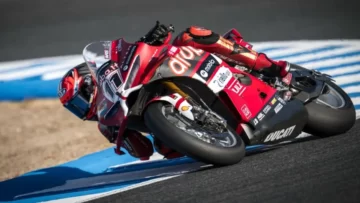





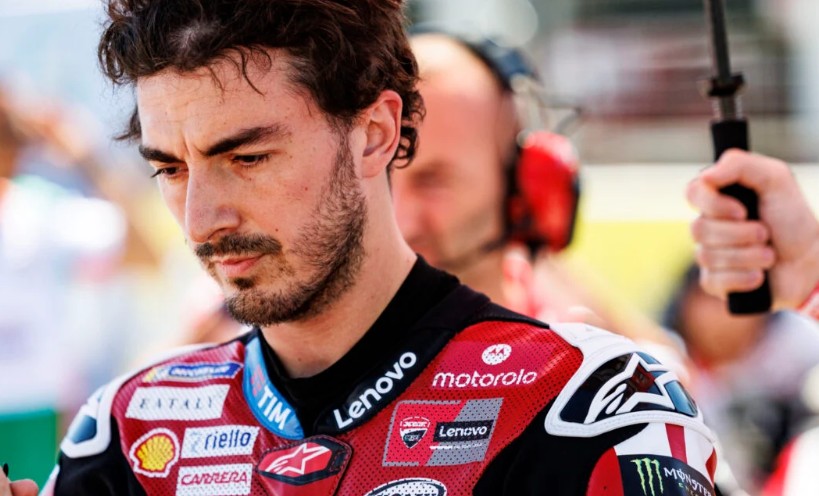
Francesco Bagnaia crashed out of the Indonesian Grand Prix on lap six, after finishing eighth in the Sprint. But beyond this disappointing weekend, the Ducati rider offers a more concerning technical assessment: according to him, the Desmosedici has lost some of the qualities that made it so strong just two seasons ago.
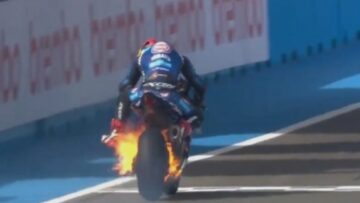
In Mandalika, Francesco Bagnaia didn't even have time to hope for a decent result. Tenth when he crashed on the sixth lap of the Indonesian Grand Prix , the Italian concluded a weekend during which he never seemed to have the means to fight at the front.
But his crash wasn't actually the most interesting news of the day. Rather, it was what he explained afterwards, speaking to Sky, about Ducati 's evolution.
Bagnaia: “ The decline of the last two years is particularly visible here. »
For Bagnaia , Mandalika acts as a stark reminder of his machine's current weaknesses. " The setback we've experienced over the last two years is particularly evident on this circuit, where cornering speed and grip are crucial ."
A statement that deserves consideration. Ducati has long built its dominance on a formidable combination: stability under braking, efficiency in acceleration, and the ability to quickly exploit engine power.
However, according to Bagnaia , some of that ease has disappeared. " We no longer have as much control over the acceleration, and on a circuit like this, you can feel it ." The Italian isn't simply talking about a poor setup or a difficult session. He's describing a negative trend that he places over two seasons.
This doesn't prove that all Ducatis have regressed to the same extent. But the observation takes on a particular significance when it comes from a rider who is intimately familiar with the different generations of Desmosedici.
A lack of grip that has become impossible to compensate for
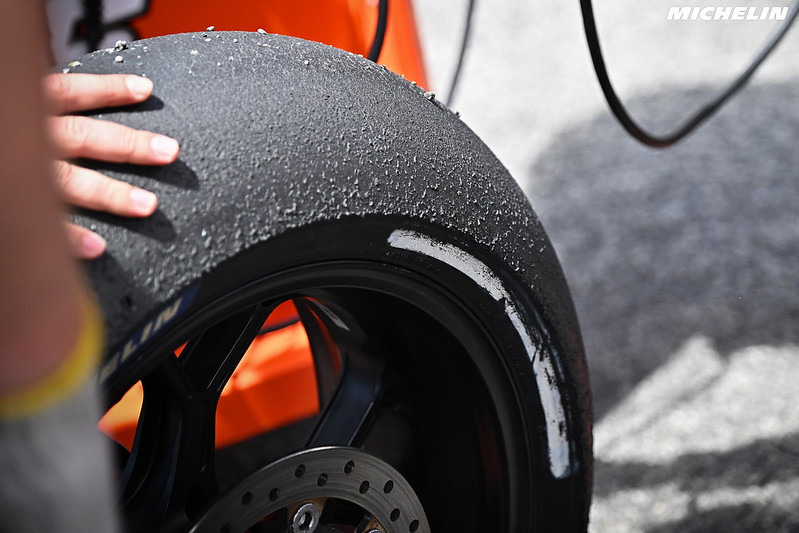
Bagnaia identifies a key problem: rear tire support. " On this circuit, grip isn't optimal, especially with this type of tire . You need a lot of support at the rear, and unfortunately, without it, it's even more difficult ."
Mandalika, with its rapid corners, heavy braking zones, and specific wet conditions, amplifies these difficulties. The Italian acknowledges that the data seemed to show more grip for the other Ducati riders.
An important distinction: his problem was particularly pronounced, but he believes his colleagues were not working in ideal conditions either. This distinction prevents his personal diagnosis from being interpreted as a blanket condemnation of GP26.

A fall caused by the search for an elusive rhythm.
The explanation for his withdrawal is equally revealing. Bagnaia was trying to catch up with Luca Marini while also trying to increase the pressure in his front tire , but his bike wasn't responding as he hoped.
“ I was in serious trouble. I was pushing the bike too hard, and at that point, it refused to respond .” Trying to compensate for his lack of speed, he ultimately lost the front end. “ When I forced it, it gave way .”
The scenario illustrates a recurring difficulty for pilots: when a machine lacks grip, trying to make up time by putting more strain on the front axle can worsen the imbalance.
Without his crash, Bagnaia believes he would have simply battled with Marini and Fabio Quartararo . A far cry from the usual ambitions of a factory Ducati rider.
Ducati wins again, but Bagnaia raises another question
Marc Marquez 's victory in the Sprint demonstrates that Ducati still has the means to win. However, it is not enough to invalidate the difficulties described by his teammate.
A motorcycle can remain competitive in the hands of one rider while becoming more difficult to handle for another. And the characteristics of a circuit can accentuate these differences. This is precisely what Mandalika seems to have highlighted.
Bagnaia isn't just asking why it lacks speed. He's suggesting that Ducati has gradually lost some of what once allowed it to find it easily.
With the 2027 MotoGP regulatory overhaul just a few months away , this question certainly deserves more attention than his single crash in Indonesia.