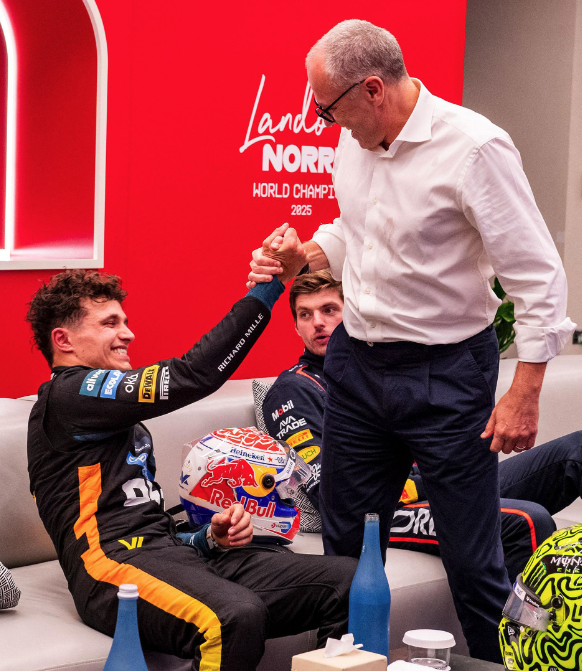








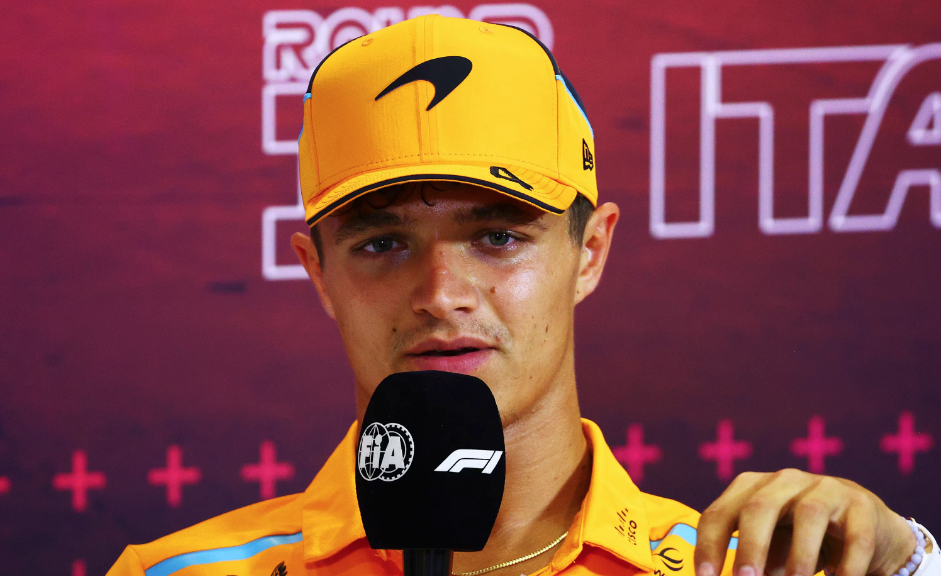
Lando Norris accuses Formula 1 of having designed its 2026 regulations to appeal to manufacturers and inflate its commercial value, even at the cost of relegating the drivers' opinions to the back of the garage. This is a particularly harsh attack against Liberty Media, the FIA, and a sport that claims to listen to its stakeholders "more than ever." Apparently, it listens mainly when the engine is off.
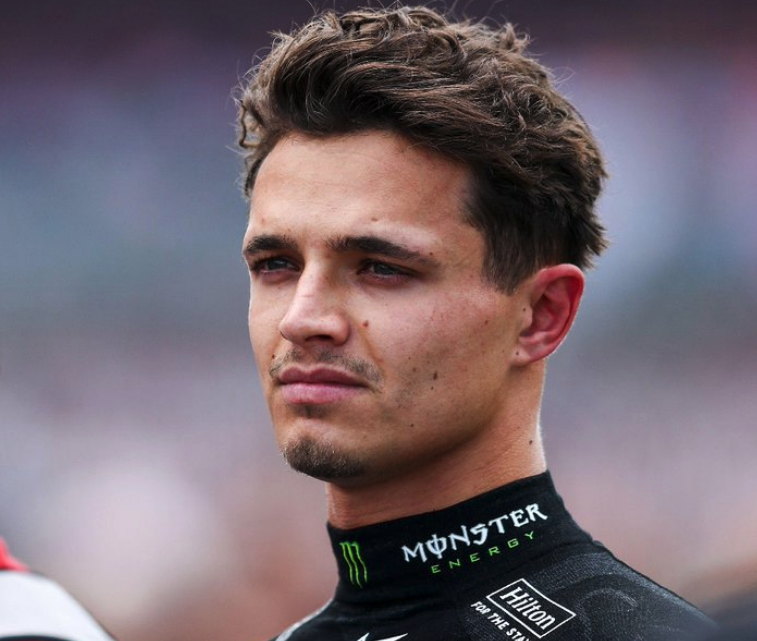
Norris accuses F1 of having replaced sport with a business plan
Lando Norris He is no longer just criticizing a battery that drains too quickly or a single-seater that has become unpredictable. The world champion is now attacking the entire model of the Formula 1 modern.
According to the Briton, regulatory decisions are too often made to promote the commercial growth of the championship rather than to create the best possible races. His statement bluntly summarizes his accusation: "It's a business."
Everyone wants to make money, and the arrival ofAudi This would have required technical concessions that the drivers now have to endure on the track. Welcome to F1 in 2026: the drivers drive, the manufacturers negotiate, and the spreadsheet sometimes seems to hold the real steering wheel.
The pilot McLaren does not deny that the Formula 1 must be profitable. However, he believes the balance has shifted too far. In his view, the dominant question is no longer how to produce the best races, but how to maximize revenue and attract new industrial partners.
Norris claims that the pilots have « very, very little » of influence on the direction taken by the championship, even though they are best placed to judge what actually works on the track. Formula 1 lHe replied that the pilots were consulted more than before and that commercial success benefited everyone, including them.
The answer has an admirably sound accounting logic: since the drivers also benefit from the revenue growth, they should probably appreciate the car in silence. After all, a higher bonus must surely make it more pleasant to lift off the throttle mid-straight to recover energy.
Audi is not a scapegoat invented by Norris
The charge of Norris salary. Audi It may seem easy. The German manufacturer has just arrived, its car isn't dominant, and it obviously doesn't write the technical regulations alone. But the idea that the new rules were designed to attract engine manufacturers isn't a theory born out of the media frenzy. Formula 1 She herself presents this objective as one of the great successes of the 2026 regulations.
The championship officially explains that the primary objective of the new powertrain was to attract more manufacturers. The new formula has allowed for the arrival of...Audi, the partnership between Red Bull et Ford, as well as the return of Honda as the official engine supplier ofAston Martin.
Upon announcing his commitment, Audi had also acknowledged that the increase in electric power and the use of sustainable fuels had played a decisive role in his decision to join F1. Norris He is therefore not revealing any trade secret. He is simply reading the sales brochure aloud, but with a decidedly less enthusiastic tone.
A battery three times more powerful, pilots three times less convinced
The 2026 regulations retained the 1,6-liter turbocharged V6, eliminated the MGU-H complex, and significantly strengthened the MGU-K. Electric power output increased from 120 to 350 kW, with the initial goal of generating approximately half of the total power from the electric system. On paper, the project appears modern, sustainable, and perfectly presentable at a board meeting.
On some circuits, the reality proved less elegant. Drivers had to manage energy recovery and deployment, sometimes at the expense of pure speed. In Melbourne, Norris had even warned that the speed differences caused by these systems could reach 30 to 50 km/h and create a risk of serious accident.
F1 wanted to bring technology closer to the road. It mainly succeeded in bringing some drivers closer to power outages.
The championship claims to listen to the drivers… then is already reducing the use of electric vehicles.
The best proof that criticism is not based solely on mood Norris may have come from the FIA itself. After the first races, several modifications were introduced to reduce excessive energy recuperation and improve safety. Further changes have been approved in principle for 2027: approximately 50 kW more power for the internal combustion engine and a corresponding reduction in electric drive power. Officially, this is not about fixing bad regulations, but about implementing an "evolution."
En Formula 1A rule that works perfectly is therefore immediately modified to work even better. Technical vocabulary possesses this marvelous ability to transform a setback into a strategic advance. FIA It also specifies that these adjustments were developed after consultation with several stakeholders, including pilots.
Norris He may therefore not be entirely right when he claims that the pilots are not being listened to. They seem to be finally being heard after several months of complaints, a few scares, and the need to prepare the next set of regulations.
Norris himself changed his tune
The Briton's current anger becomes more palatable when one rereads his initial impressions. After the Barcelona shakedown, Norris described the new car as fun to drive. He appreciated the combination of increased power and reduced grip, as well as the potential for more strategic movement and action during the race.
A few weeks later, after experiencing the rules firsthand, his enthusiasm had largely vanished. In Melbourne, he was already talking about chaos and danger. By July, he was denouncing a Formula 1 governed by money.
This reversal might seem contradictory. It's more like the difference between testing a car for a few controlled laps and having to compete in an entire championship with it. The brochure promised more excitement. Sunday delivered the bill.
Domenicali responds that the public loves it
Stefano domenicali did not accept the criticism without a response. The CEO of the Formula 1 ensures that fans enjoy the races and are not necessarily concerned with the technical details related to electric deployment or "clipping".
According to him, the public primarily wants to see action, overtaking maneuvers, and the drivers' skill. He cites, in particular, the growth in viewership and attendance, as well as the evolution of a now younger and more diverse audience. The argument is clever: since spectators don't understand all the technical mechanisms, they can't be deeply bothered by them. This is a bit like explaining that a restaurant serves excellent food because its customers don't know how the oven works.
Attendance figures may demonstrate that F1 remains extremely popular. They do not automatically prove that every element of its regulations produces the best possible sport.
Norris also criticizes the audience shaped by Netflix
The world champion believes that the arrival of many spectators thanks to Drive to Survive It has also changed the way F1 is consumed. A segment of the public now follows personalities and individual results more closely than the technical quality of a complete race. This analysis, however, should be interpreted with caution.
The new fans are not responsible for the regulatory choices of the FIAThey neither imposed hybrid sharing, nor programmed the deployment algorithms, nor negotiated the arrival ofAudiThey simply buy what F1 sells them with great skill: heroes, rivalries, documentary series, merchandise and, when there is time left, a car race.
A just attack, but not entirely selfless.
Norris He defends an idea that is difficult to dispute: drivers should have more influence when regulations fundamentally change the way racing is done. But his argument is not that of a neutral observer either. McLaren and its engine Mercedes Benz experienced deployment and reliability issues, while Norris He himself acknowledged that certain performances depended too much on the operation of the propulsion unit rather than on its piloting.
Sporting frustration therefore necessarily fuels criticism. This does not invalidate it. It merely serves as a reminder that in Formula 1Great convictions often arise when the car stops working as expected. After his victory in Hungary, Norris He adopted a more conciliatory tone, acknowledging that the new rules had also led to more battles and overtaking, while calling for a balance to be found. A week after accusing F1 of sacrificing the sport, he was admitting that the spectacle could sometimes work. The revolt had already received its first software update.
F1 wants to please everyone, except perhaps simultaneously
The conflict ultimately goes beyond Audi, Norris or the difficulties of the 2026 regulation. The Formula 1 It wants to attract manufacturers, reduce its environmental footprint, retain technologies applicable to the automotive industry, produce spectacular races, satisfy its teams, reassure investors, and give more power to the drivers. All these objectives are defensible. They are simply not always compatible.
Land Norris F1 is criticized for having chosen commerce when it was necessary to make a decision. Sundays He argues that commerce is precisely what finances the success of the sport. In between, the drivers continue to manage their batteries at over 300 km/h while the executives manage the brand.
So perhaps F1 hasn't lost its soul. It simply seems to have incorporated it into its next sponsorship deal.