














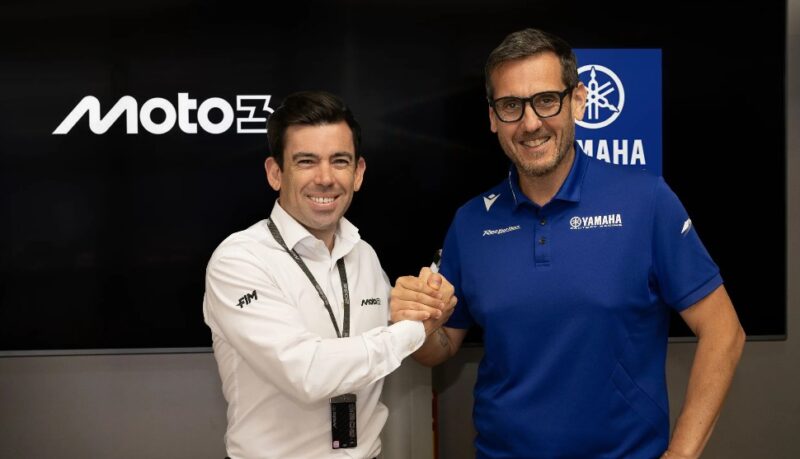
You've probably seen the news if you follow the current MotoGP ecosystem closely: Yamaha will become the official supplier for the Moto3 category starting in 2028. There are many lessons to be learned from this new partnership. Here's what you might not have read about it.
Before we begin, a quick recap. The Moto3 category currently consists of a grid of KTM and Honda 250cc four-stroke machines. In 2028, Yamaha will exclusively supply the teams with identical machines, featuring a near-production frame and an engine derived from the 700cc unit in the R7. You can find all the details of this revolution by clicking here.
The increase in engine displacement is a real plus.
Since I have a lot to say, I'll try to be very concise. For several years, the engine displacement of Moto3 bikes has been a problem for me.For some time now, 250cc bikes have seemed too small to me, as they don't adequately prepare riders for the 765cc Moto2 bikes. Considering that MotoGP bikes will be 850cc, it becomes clear that the gap between the two previous classes was too small. Therefore, I like the idea of moving to 700cc; it seems relevant and will bring Moto3 riders closer to the MotoGP riders. MotoGPbecause adapting to Moto2 was a real problem. I have already explored this topic in depth in this article.
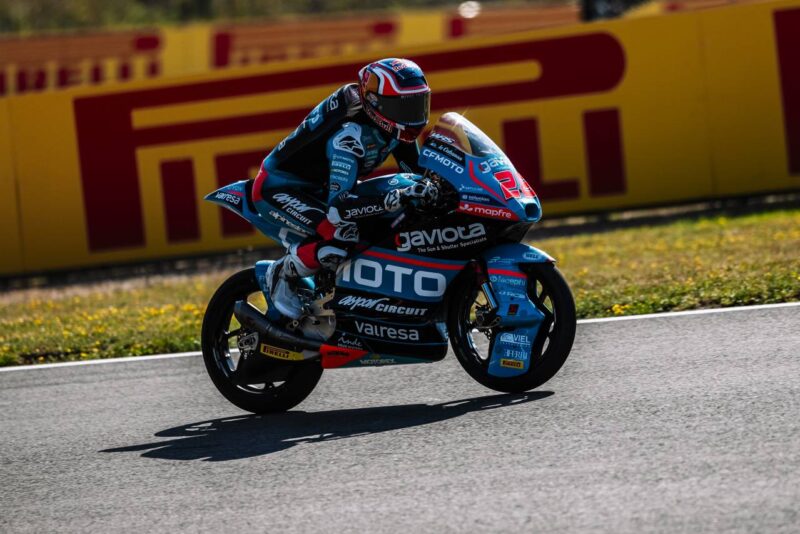
Before Quiles, it was Carpe; before Carpe, Piqueras, Rueda, etc… Photo: Aspar
Yamaha in all promotional categories?
However, One point I raised has not been corrected at all.In my opinion, the main reason for the poor adaptation of Moto3 riders to Moto2 wasn't just the engine size difference, but also the training. Indeed, all the performance development programs (Asia Talent Cup, MotoGP Red Bull Rookies Cup, FIM JuniorGP, etc.) use the Moto3 250cc platform. As a result, when riders arrive in Moto3, they've already been seasoned for several years, which, since the beginning of the 2020s, has given rise to a new rider archetype: the Moto3 specialist. Every year, we see a new star emerge, but as soon as they move up to Moto2, things get more complicated. And meanwhile, those who are performing well in Moto2 are riders who never made it in Moto3!
To address this trickle-down issue, I would personally have kept a smaller engine displacement for the pre-world categories, and the 700cc for Moto3. Indeed, MotoGP has announced that Yamaha will supply a similar, perhaps only slightly less powerful, motorcycle for the FIM Junior Moto3 World Championship. In my opinion, this is a slight mistake, especially since Yamaha, one of the world's largest manufacturers, could very well have developed the 700cc for Moto3, and a derivative of the R3 for training. I don't think that would have blown the budget.
But why this project?
Today, I felt like digressing. Ultimately, one might ask: " Why change? A major overhaul was necessary, as explained in the paragraphs above, even if the spectacle offered by the 250cc class will be hard to match. But was it necessary to move towards a one-make series? The aim of this operation is, of course, to reduce costs.
Since the beginning of the 2000s, Cost reduction is the primary objective of all developers.We're bypassing research and moving towards standardization, to give everyone an equal chance and save money. All categories are affected, without exception. This trend began with the creation of the GT3 platform in 2005. It was an attractive option for manufacturers wanting to build a race car at a lower cost, and, naturally, it worked. It worked so well that all Grand Touring categories are now occupied by GT3s or their less powerful variants, the GT4s.
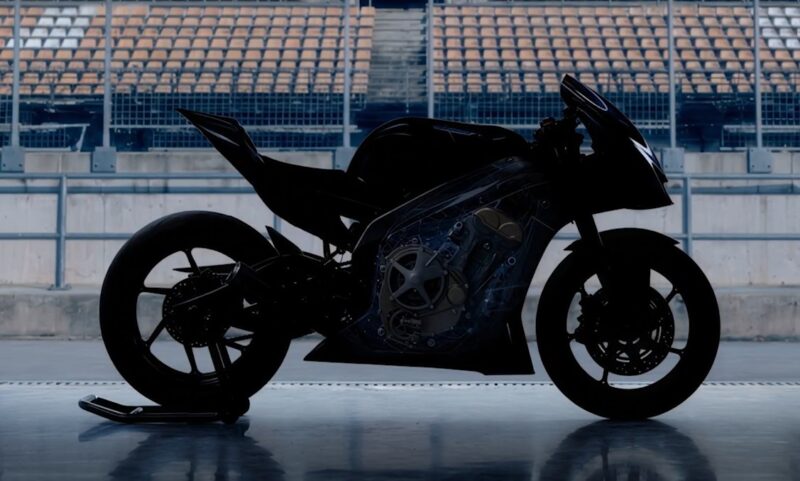
I'm still looking forward to seeing it, and especially comparing the spectacle with the current Moto3. Photo: Yamaha
Previously, we delighted in seeing supercharged DTM cars in Germany, GT1 and then LMGTE cars at the 24 Hours of Le Mans, and GTLM cars in IMSA in the United States. But the low-cost solution has won: today, a manufacturer can easily compete in these categories with a ten-year-old platform thanks to the balance of performance and the famous GT3 regulations. The DTM has lost its soul, but at least it costs less. The same applies to the Hypercar class in FIA WEC/GTP in IMSA, LMP2, etc.
Well, in motorcycling, we are also moving towards standardization, as evidenced by Yamaha's adoption of the Moto3 design. I liked the Moto2 championship, launched in 2010, at the beginning, because we saw many chassis manufacturers (sometimes unconventional) fighting to impose their vision. Suter, Moriwaki, Promoharris, FTR, BQR…now? All the top riders are using the Kalex (which won the title continuously from 2013 to 2024), and only a few teams are using the Boscoscuro, with identical Triumph engines, of course. Moto3 is following a similar path. where technical innovation is relegated to the background.
So, be careful, I don't want costs to increase for pilots! On the contrary, I'd like those with more modest means to have the same opportunities as everyone else. But wasn't there a middle ground to be found? And besides, Formula 2 is also a standardized category, but the entry fees are just insane. I don't have the perfect solution to the problem of the cost of motorsport for drivers and their families, but I think there was a way to avoid sacrificing technological research and the engineers' ingenuity in the process. Perhaps it had to involve simplicity and avoiding overly advanced technologies, I don't know.
If you want to see original "prototypes," where should you go? By motorcycle, There is now only MotoGP with a single ECU. I'll bet you anything right now: in twenty, thirty, or forty years, if it still exists, MotoGP will also be a spec series. In cars, on the Old Continent, everything is GT3 or GT4, except for the BTCC. Otherwise, you have to look to Japan with the GT500, the last true championship of pure, unique and interesting prototypes that is not Formula 1. Apart from that, I personally recommend Sidecar, with the FIM World Championship, or FSBK, now available on YouTube.
The garage spirit persists in the sidecar paddocks. This category, too often forgotten in motorcycling history, shows that with relatively limited budgets, it is possible to achieve real diversity in machine preparation, even if, alas, the vast majority of chassis and engines are the same (LCR or ARS/600cc Yamaha). However, at the trackside, you really get the impression of seeing different prototypes with different sounds, and it's very pleasant; a feeling that will unfortunately disappear in Moto3 from 2028.
I hope I haven't lost you in my thoughts. In any case, tell me in the comments what you think of Yamaha's selection as a supplier for the Moto3 category!
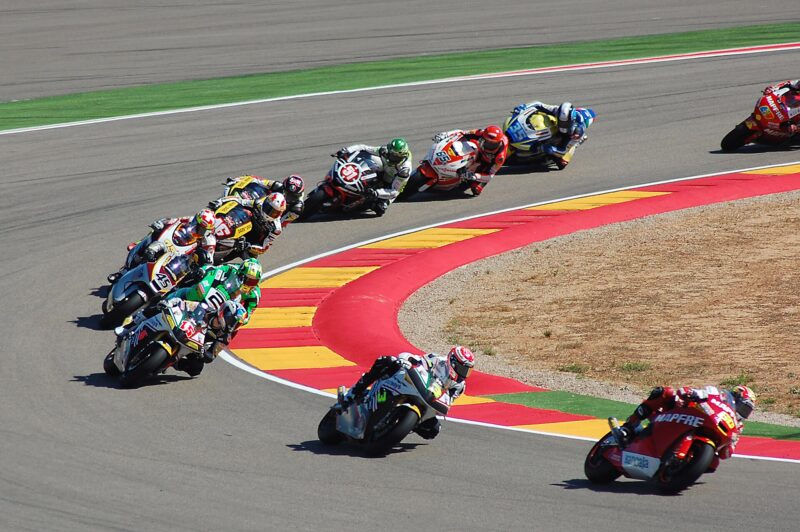
I loved the promise of Moto2. Can you spot all the riders who were here at the 2010 Aragon Moto2 Grand Prix?
Cover photo: MotoGP