







Disney dreams of transforming Formula 1 into a global machine for licenses, merchandise, and content. On paper, the potential is in the billions; in reality, bringing Ferrari, McLaren, and the drivers into a single store is likely to be far more complicated than a Pixar movie.
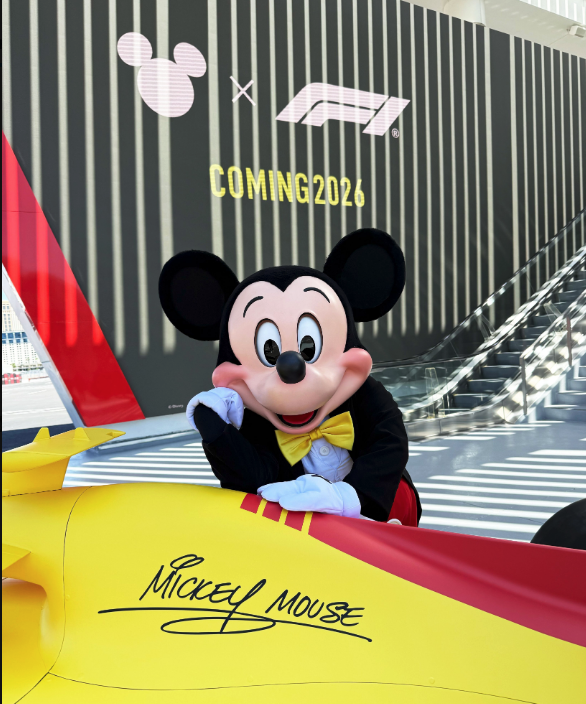
Disney and F1 are already working together — with no announced takeover plans
Ten billion: the magic number that proves nothing yet
The reasoning begins with a striking comparison: the franchise Cars has generated over $10 billion in merchandise revenue, despite its heroes being merely animated cars with eyes and emotional lives. The conclusion, therefore, seems obvious: if Disney knows how to sell Flash McQueen in the millions, imagine what he could accomplish with Ferrari, McLaren, MonacoThey are true world champions.
This is precisely the thesis developed by Motorsport Weekwho imagines Disney applying its licensing power to the Formula 1 to build a franchise capable of far exceeding one billion dollars in annual commercial revenue.
The problem is that the 10 billion allocated to Cars correspond to sales accumulated over many years, around a franchise designed from the outset for children and toy departments.
Formula 1, however, doesn't sell a fictional universe owned by a single company. It brings together eleven teams, twenty-two drivers, several engine manufacturers, dozens of sponsors, and just as many owners determined to jealously protect their brands. On paper, a miniature Ferrari looks like Lightning McQueen. In contracts, it looks more like a meeting of thirty lawyers.
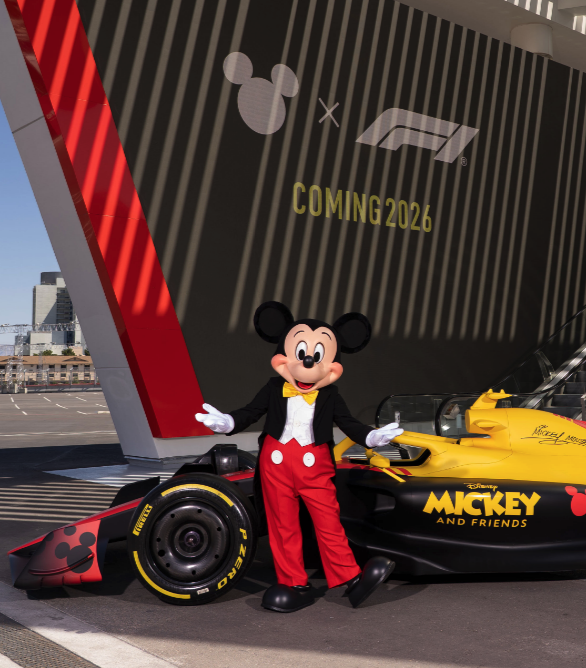
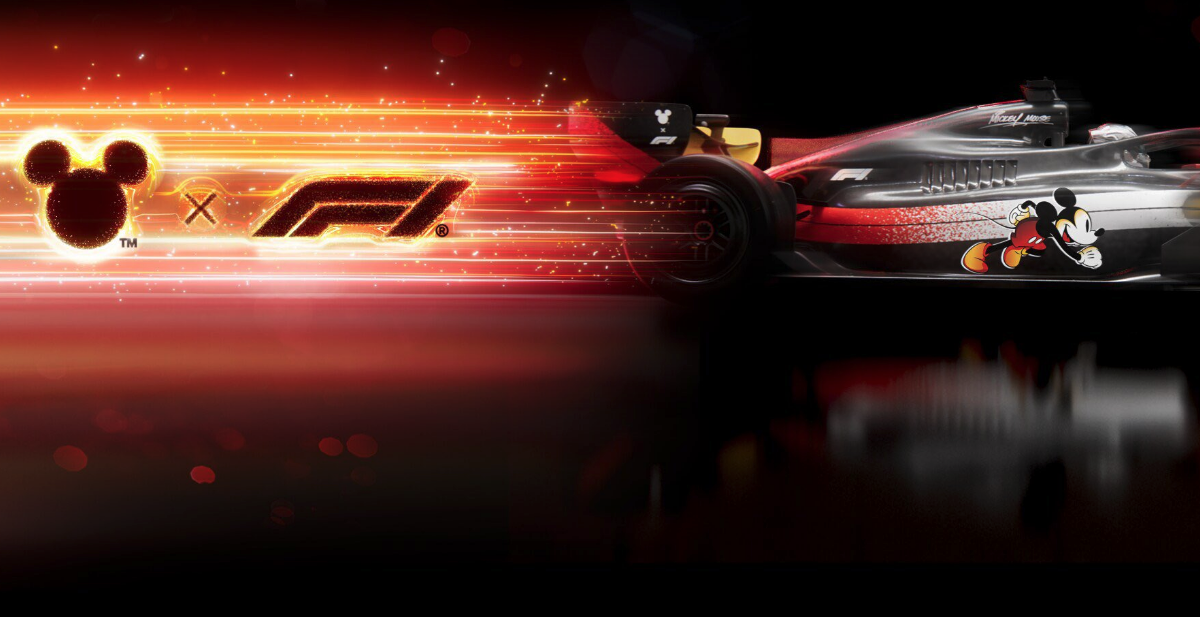
The idea didn't come completely out of nowhere. Disney and the Formula 1 have already launched their global collaboration Fuel the Magicbuilt around Mickey and his friends. The partnership is set to unfold throughout the 2026 season through content, merchandise, and experiences organized at several Grands Prix. F1 itself describes this collaboration as a convergence of competition, storytelling, and immersive entertainment.
Disney It also cites Formula 1 among the sports platforms capable of fueling its model linking content, products, and experiences. The group presents itself as the leading consumer product licensor in the United States and has a network covering virtually every commercial category.
However, no official source currently confirms a takeover bid or negotiations with Liberty Media or a series project Pixar featuring Classic Ferrari for sale et McLaren. We are therefore dealing with a strategic proposal, not an operation in preparation. In other words, Mickey He already has a paddock pass. But handing him the keys to the championship is still a few laps away.
The 787 million isn't just caps and toy cars
The figure of $787 million put forward for 2025 also deserves some caution. Liberty Medium It doesn't publish a separate line item corresponding solely to merchandise and licenses. Its "other revenue" category includes hospitality, freight, and licenses. It represented 20,3% of total F1 revenue in 2025. Presenting this entire sum as simply under-exploited merchandising revenue is therefore like lumping together model cars, the Paddock Club, and the transport of equipment between circuits. It's convenient for creating a dramatic gap with the NFL. Less so for establishing a serious valuation.
F1 has nevertheless exceeded $4 billion in annual revenue, almost twice as much as at the time of its acquisition by LibertyMedia. Licensing growth is also evident, with Liberty reporting progress in this sector in its 2025 interim results. The commercial potential is therefore real. It's just that no one has yet unearthed the forgotten $10 billion hidden behind the garage. Haas.
A huge audience, but not 1,8 billion different people
The text mentions 1,8 billion viewers worldwide. This figure represents the cumulative television audience for the entire 2025 season, not 1,8 billion unique individuals watching each race. F1 estimates its global fan base at around 827 million people. It also welcomed nearly 6,7 million spectators to the circuits in 2025, a historic record. These figures are more than enough to demonstrate the global reach of the championship. There's no need to artificially inflate them.
The 2026 season is continuing this progression, with nearly 3,7 million spectators already welcomed to the first rounds and several attendance records broken. Disney This would therefore give them access to a huge young, international, and increasingly female community. But turning a racing fan into a regular buyer of merchandise requires more than just slapping a Mickey Mouse logo on a racing suit.
Centralizing Ferrari, McLaren, and the drivers: the real fairy tale
The core of the project would be the creation of a centralized license encompassing the intellectual property of F1, the teams, and the drivers. In an ideal world, Disney would design a unique product line, distribute the products worldwide, and then share the revenue among all participants. In the real world, Classic Ferrari for sale operates its brand independently, McLaren develops its own collections and each team has specific agreements with its equipment suppliers, sponsors and commercial partners.
The comparison with the NFL reaches its limits here. American franchises operate within a system historically built around strong commercial collaboration. F1 remains an association of competitors who already struggle to share technical data, let alone their intellectual property… Classic Ferrari for sale did not wait Disney to discover that a red logo on a cap could bring in money.
For a centralized system to work, teams would need to be offered more than what they already earn on their own, while also being guaranteed control over their image.
A simple negotiation, then, provided you have a few decades available.
F1 isn't Marvel with tires
The article also imagines the Formula 1 to become one of the great jewels of Disneycomparable to Marvel ou à Star Wars.
The comparison is appealing: 24 Grands Prix each year produce rivalries, heroes, villains, plot twists, and enough controversy to fuel multiple platforms. But F1 doesn't provide "24 episodes with no production costs" for free.
Teams spend hundreds of millions designing the cars. Promoters finance the events. Formula One Management covers its broadcasting, production, logistics, and marketing costs. Liberty Media also mentions an increase in expenses related to hospitality, freight, technical operations, and Grand Prix promotion. The content isn't scripted, admittedly. But it's certainly not free.
And unlike Marvel, Disney could not decide that Verstappen suddenly becoming the villain of season three, or Ferrari winning the championship to boost pajama sales. Well, normally.
A financially feasible acquisition does not necessarily mean a probable acquisition.
Disney It could theoretically participate in a multi-billion dollar deal. But simply comparing its market capitalization to the supposed value of F1 is not enough to demonstrate that a takeover would make sense. Liberty Medium acquired the Formula 1 In 2016, the league was valued at $8 billion. Since then, revenue, viewership, and the league's commercial value have increased significantly. A current transaction would likely involve a substantial premium, the assumption or restructuring of debt, regulatory constraints, and Liberty's willingness to sell. However, there is no public indication that Liberty is looking to divest its flagship asset.
Disney He should also explain to his shareholders why he wants to invest tens of billions in a world motorsport championship, when a simple partnership already allows him to sell products and experiences without bearing all the sporting, political, and logistical risks. Buying the entire business to secure a prominent position isn't always the best deal.
Mickey can enrich F1 without becoming its owner
Disney undoubtedly possesses the tools to expand the commercial universe of the Formula 1 : family storytelling, animation, games, merchandise, parks, cruises and worldwide distribution.
Collaboration Fuel the Magic It already constitutes a full-scale laboratory. It can attract children, refresh collections, and transform drivers into more accessible cultural figures. An animated series inspired by F1 wouldn't be absurd at all. Neither would a permanent area in a theme park or a global toy line. But moving from this collaboration to an acquisition capable of automatically generating $10 billion is more akin to a movie script than financial analysis.
Disney It can certainly help F1 sell more tickets. The question remains whether the championship actually needs to be bought out for that to happen — or if Mickey would be more profitable as a partner than as an owner. Because after transforming the drivers into characters, the circuits into attractions, and the rivalries into series, there would still be one detail to preserve:
Motor racing.