








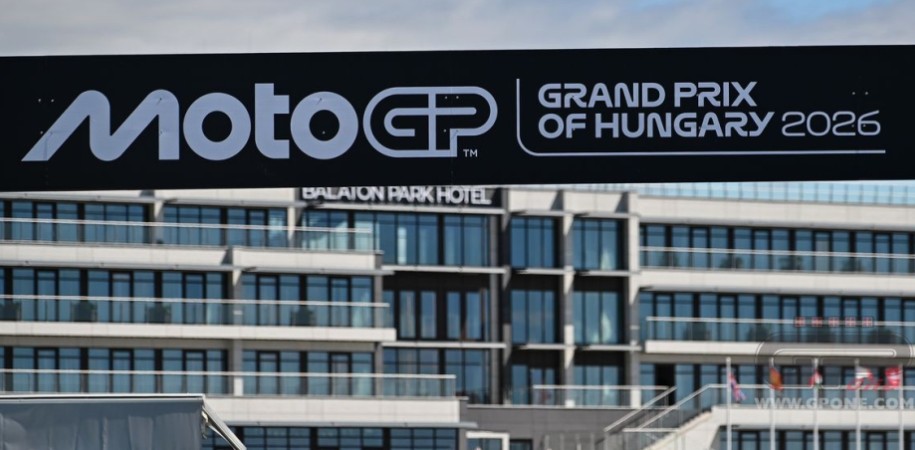
It was meant to symbolize MotoGP's grand return to Hungary and become the showcase for motorcycling in a country already passionate about motorsports. Two years later, the reality is stark: the Balaton Park Circuit could already be living its final moments on the world calendar. And this time, the problem goes far beyond the usual criticisms from riders about the track.
The story begins, however, with grand ambitions. Inaugurated in 2025, the Balaton Park Circuit was intended to serve as a transitional solution before a more prestigious move to Budapest, with the stated objective of replicating the phenomenal success of Formula 1 at hungaroring.
But from the very first laps, concerns arose. Several riders immediately pointed to the design of the first corner, deemed far too narrow and potentially dangerous to accommodate the start of a MotoGP field of more than twenty motorcycles.
From a sporting perspective, the weekend was salvaged. Commercially, however, difficulties quickly mounted. The real problem now has a name: profitability.
With about 80,000 spectators attended over the three days of the event last June.Balaton Park is far from meeting the standards required by Dorna to justify a lasting place on the global calendar.
To grasp the scale of the problem, one only needs to look at some of the championship's historic Grand Prix races, which regularly exceed the 150 to 000 spectators over a weekend.
Modern MotoGP has become a particularly demanding economic machine. A circuit must no longer simply offer a great sporting spectacle: it must also fill its grandstands, attract sponsors, and provide a true event experience.
And on this ground, Balaton Park seems to have failed on several criteria: lack of atmosphere; lack of prestige; insufficient attendance; lack of economic profitability.
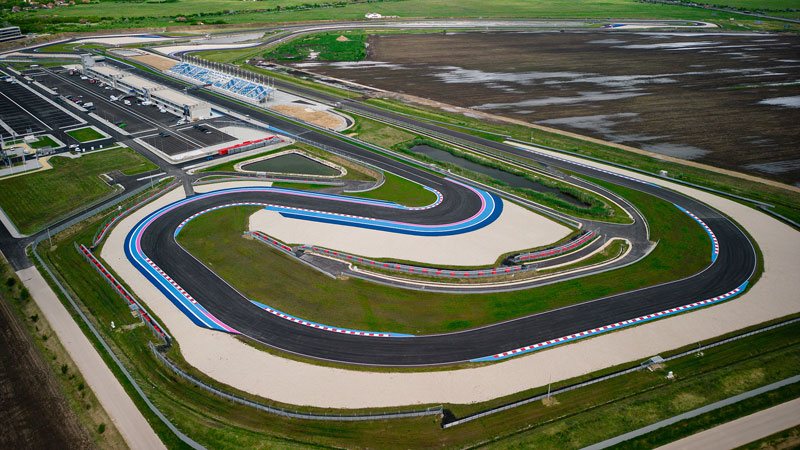
Hungary: The Budapest dream is also fading away
For a long time, this situation didn't really worry Hungarian developers. The plan was simple: use Balaton Park as a stepping stone before permanently transferring MotoGP to hungaroringnear Budapest, modeled after Formula 1.
And the figures are indeed enticing: over 300,000 spectators each year for F1, a world-renowned infrastructure, and immediate proximity to the Hungarian capital. Unfortunately, a major obstacle has jeopardized this project. hungaroring is simply not approved to host MotoGP.
The run-off areas, safety infrastructure, and several technical features of the circuit would require particularly costly work to meet the requirements of the FIMThe bill amounts to tens of millions of euros. However, the Hungarian government has decided to freeze funding for this project. Without public money, the project Budapest is currently at a standstill.
Another factor working against Hungary is the calendar. Adapting a historic circuit to MotoGP standards cannot be done in a few months. The work would require several seasons of preparation, even though Dorna must already finalize its 2027 calendar. And meanwhile, candidates are jostling at the door of the championship.
As if that weren't enough, the MotoGP will permanently host Buenos Aires from 2027. This arrival is a particularly important factor since the contract binding Dorna developers are expected to provide a maximum of 22 Grand Prix per season. In other words, each new circuit inevitably means that another one disappears.
La Hungary It is therefore no longer only facing its own difficulties. It now finds itself in direct competition with all the circuits wishing to join the world championship.
This situation perfectly illustrates the evolution of MotoGP in recent years. A Grand Prix can no longer survive solely on local passion or political will. It must now meet a multitude of criteria: economic viability, large crowds, modern infrastructure, track quality, solid institutional support, and international appeal. On several of these points, Balaton Park never really managed to convince anyone.
Barring a spectacular turnaround, everything today indicates that the MotoGP transition to Hungary It was only a particularly brief interlude. The initial project anticipated this possibility: Balaton Park was never meant to become a permanent destination. But no one had imagined that plan B – Budapest – would also become impossible to implement.
In MotoGP, the competition is no longer solely between riders and manufacturers. The circuits themselves are now engaged in a fierce battle to maintain their place on the world calendar. And in this battle, the Hungary unfortunately seems to have already fallen several laps behind.
.jpg)