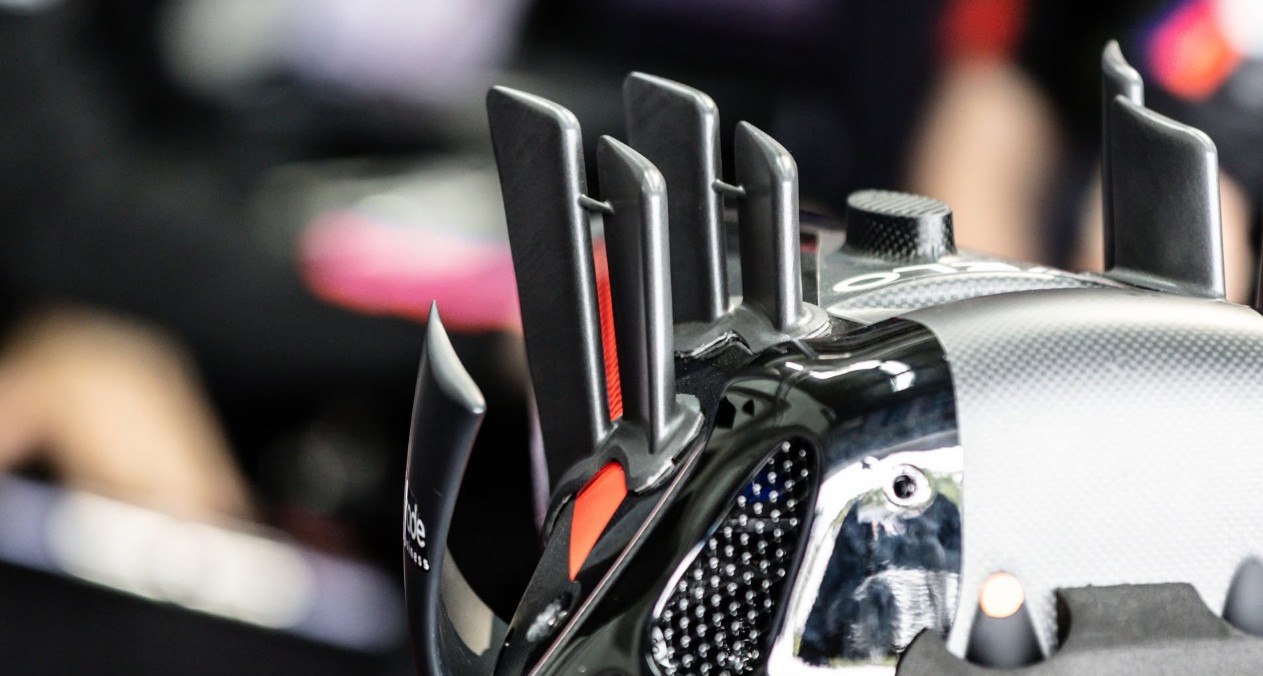














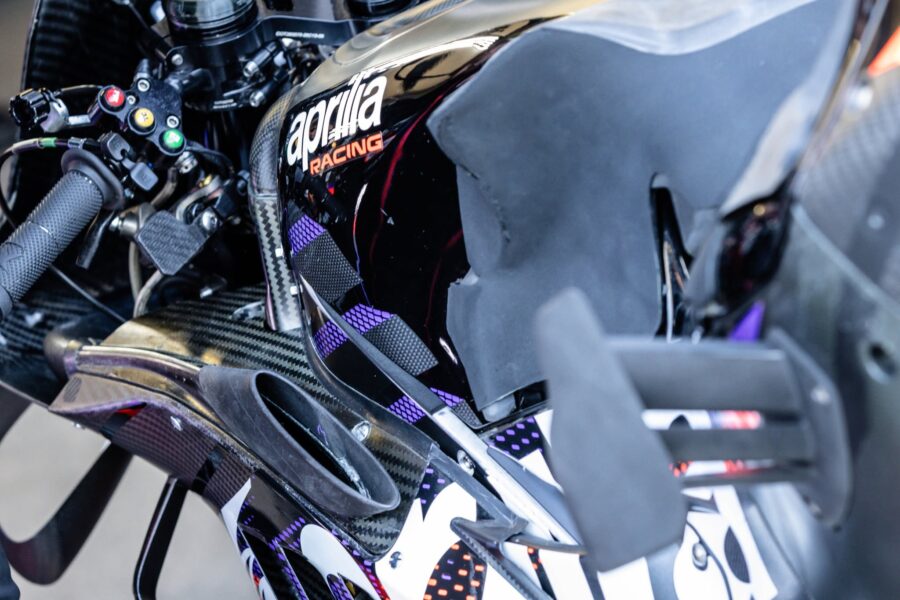
History sometimes has a tendency to repeat itself. Especially when you have the same owner, in this case, Liberty Media. Observing the technical evolution of MotoGP, it's hard not to think of Formula 1. Aerodynamics has become a central element of performance there, to the point of profoundly transforming the way motorcycles are designed… and sometimes even the way races are run.
Increasingly sophisticated wings, attitude control systems, and growing difficulties in keeping up with an opponent: the parallel with Formula 1 is becoming more and more obvious. Formula 1 paved the way as early as the late 1960s. From the appearance of the first wings, engineers gradually understood that aerodynamic downforce could become a determining factor in performance.
This logic has led to innovations that are sometimes extreme. The most famous example is undoubtedly the Braham BT46B conceived by Gordon Murray in 1978Thanks to a huge rear fan creating an artificial ground effect, the car immediately dominated the Swedish Grand Prix… before being withdrawn almost immediately from the competition because its advantage was so spectacular… And the collateral effects for those who were in its wake were dangerous.
Today, such a solution seems difficult to implement in MotoGP due to space constraints, safety concerns, and regulations. But history shows one thing above all: when regulations grant engineers significant freedom, they almost always end up exploring the most unexpected solutions.
The other parallel is just as striking. In MotoGP, the "holeshot device" and then the motorcycle lowering systems profoundly altered starts and acceleration. They have been drastically limited since Assen and are destined to disappear.
Here again, Formula 1 has undergone a similar evolution. Active suspensions of Williams to the mass dampers of Renault during the world titles of Fernando AlonsoThe engineers constantly sought to maintain the car in its ideal aerodynamic position. The principle is the same: continuously control the vehicle's attitude to optimize performance.

The danger of the "Formula-Unification" of MotoGP
But aerodynamics comes at a cost: the overrunsThis is probably the point that most concerns the paddock today. The more efficient the aerodynamic appendages become, the harder it becomes to follow another machine closely.
Turbulence disrupts the motorcycle's handling, reduces front-end grip, and complicates overtaking maneuvers. Formula 1 experienced the exact same phenomenon, to the point of introducing DRS to artificially create overtaking opportunities.
MotoGP isn't there yet. But debates are growing about the need to further restrict aerodynamics to preserve the spectacle. However, the history of motorsport shows a constant: whenever regulations leave a gray area, engineers eventually find a way to exploit it.
This was the case with wings, active suspension, ground effect, mass dampers, and more recently, launch control devices. It is therefore likely that MotoGP manufacturers will continue to push the limits as long as the regulations allow.
2027 presents an opportunity to start afresh. The planned technical revolution will not only affect the 850cc engines. It could also mark a turning point in the very philosophy of the championship.
MotoGP officials will have to find a delicate balance: preserving innovation, which is part of the discipline's DNA, while preventing aerodynamics from definitively overshadowing the talent of the riders.
Because if the history of the Formula 1 This teaches us a lesson, and it's this: when aerodynamic downforce becomes the primary factor in performance, overtaking opportunities decrease… and regulations almost always end up being reversed. MotoGP now has a unique opportunity to anticipate this evolution rather than be subjected to it.