





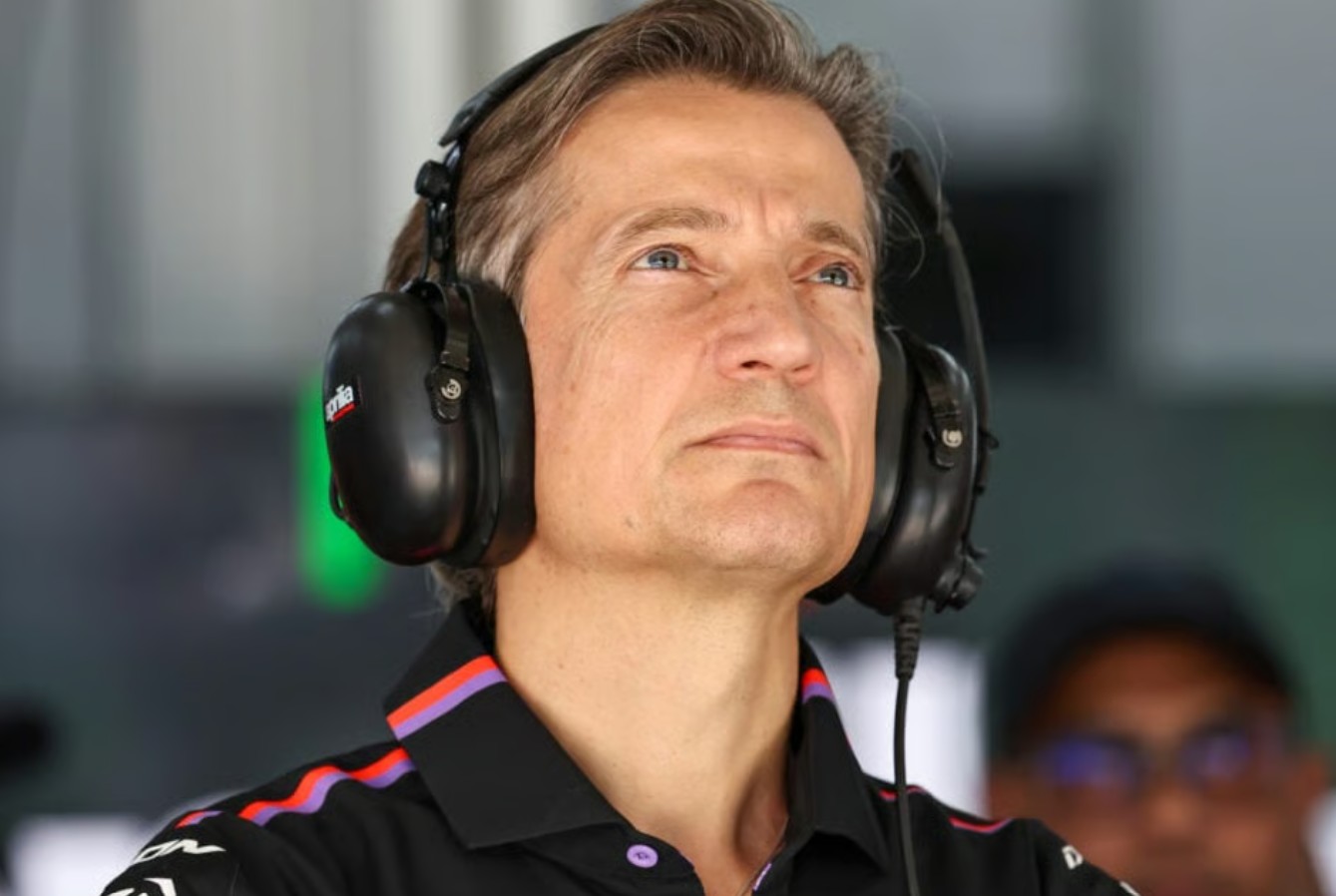
Massimo Rivola clearly has no intention of joining the chorus of concerns surrounding the Qatar Grand Prix. While Yamaha has decided not to participate in the Losail event and many riders are contesting its continuation in the volatile regional context, the Aprilia boss offers a response that is as simple as it is decisive: if the organizers say the race is safe, then we must go. And those who don't want to can stay home.
A position that contrasts sharply with the current atmosphere in the paddock.
Rivola: “ This whole debate is pointless. »
When questioned by the Spanish daily AS , Massimo Rivola didn't mince words. " If the organizer says it's safe, we have to go . This whole debate is pointless. Frankly, I don't understand all the fuss ." For the Italian official, the responsibility for the safety assessment lies with the organizers.
Teams must therefore rely on the guarantees presented and adhere to the schedule. " If they say we have to go, we go ." This logic has the merit of clarity, but it raises a fundamental question: to what extent can the trust placed in the promoter replace individual risk assessment?
Because the pilots aren't the only ones affected. Mechanics, engineers, journalists, and logistics staff also have to go to Doha. And not all of them necessarily have the same freedom to refuse the trip.
Rivola: If you don't want to do this job, stay home! »
Rivola goes further when asked if he personally wants to go to Qatar . “ Yes, I want to go. If you don’t want to do this job, you stay home .” He then clarifies that his reasoning applies to the entire paddock. “ You journalists, me as manager, the engineers: everyone. If the organizer, with all the information and documentation, says ‘let’s go,’ well, we go, and that’s all there is to it .”
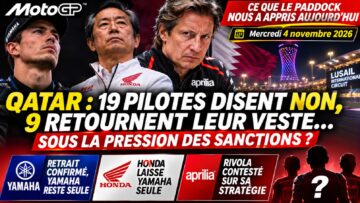
The message is clear. But it comes in a particularly sensitive context. According to information circulating in the paddock, 19 of the 22 drivers have expressed their opposition to holding the Grand Prix, during private discussions at Phillip Island and Sepang. This figure and the details of this consultation, however, require independent confirmation.
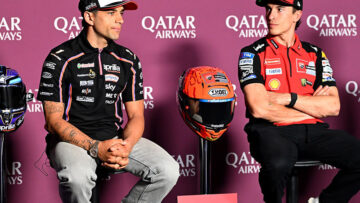
The same reports identify Johann Zarco, Marco Bezzecchi , and Ai Ogura as the three riders in favor of the move. This split, if confirmed, would be significant.
Yamaha refuses, Ducati trusts
Yamaha has already taken the plunge. The Japanese manufacturer has withdrawn its official team and Pramac from the Grand Prix, despite the risks of sporting and contractual sanctions mentioned by the promoter.
Ducati, Aprilia, KTM , and Honda , however, plan to participate. Davide Tardozzi , director of the official Ducati team, shares Rivola 's confidence . " The organizers have assured us that it's safe, and we trust them . "
Two approaches are therefore emerging. On the one hand, Yamaha believes that the conditions do not allow its staff to travel. On the other hand, Aprilia and Ducati consider the guarantees provided sufficient. Neither of these positions, on its own, constitutes definitive proof of the actual level of safety.
And what about Jorge Martin in all of this?
The paradox is that Rivola himself might have to cope with the absence of Jorge Martin . Sidelined with a right wrist injury, the Spaniard has already missed the Malaysian Grand Prix, and his participation in Qatar remains uncertain.
An absence that could facilitate Marc Marquez 's quest for his tenth world title . When questioned about the sporting benefits of a potential cancellation for Martin, Rivola refused to engage in that calculation. " I don't ask myself if it's good or bad ." For him, the issue transcends the championship consequences.
So, what do we remember?
- Rivola: the organizers' guarantees are sufficient and those who are reluctant can stay home.
- Yamaha: the manufacturer refuses to participate despite possible sanctions.
- The paddock: massive opposition from the drivers is reported, but its extent remains to be confirmed.
Massimo Rivola defends an unambiguous conception of professional duty. But the debate is not only about the will to work: it concerns the conditions under which each person can be required to do so.
Even if the Qatar Grand Prix ultimately takes place without incident, one question will remain: should trust in the organizers be an obligation or a choice?