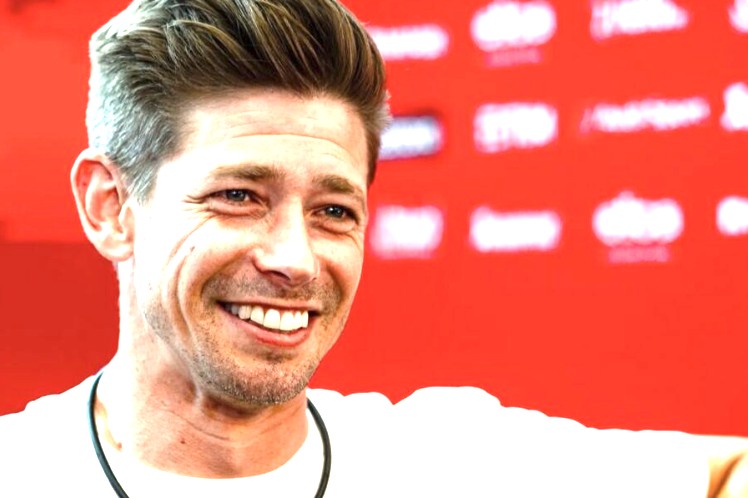








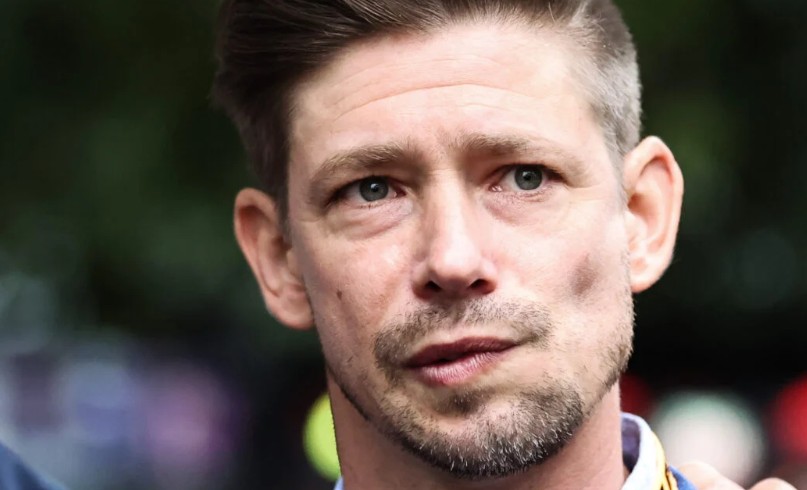
There are champions who continue to live in the paddock long after their retirement. Casey Stoner, however, seems to have chosen a different path: one of lucidity, sometimes brutal, and a certain bitterness. At 40, the two-time world champion no longer hides his disillusionment with modern MotoGP, nor his refusal to continue offering his vast experience for free.
His latest statements to GP One are particularly revealing. They tell the story of the evolution of the championship as much as that of a man who has always preferred authenticity to compromise.
The scene was magnificent during the last World Ducati Week. See Marc Marquez, Pecco Bagnaia et Casey Stoner united under the colors Ducati had something historical about it. Even more so when bagnaia publicly thanked the Australian for his advice and highlighted his unique ability to perceive things that even current pilots don't see.
Davide Tardozzi He himself was full of praise for the former pilot DucatiBut behind the smiles and souvenir photos lies a much more nuanced reality. I invested a lot of time and effort, and often I did not receive the answers I was expecting.It seems there is no satisfaction in doing this kind of thing. »
Stoner continues: “ It was a great honor for me to hear Pecco thank me, and I did it solely to help him. But I won't do anything for anyone in the future.. » An extremely strong statement coming from a rider who probably possesses one of the finest technical eyes that MotoGP has ever seen.
Casey Stoner reminds us that knowledge has a price.
Over the years, several manufacturers have sought Casey Stoner's expertise. Ducati of course, but also Honda at certain times. Today, the Australian has drawn a simple conclusion: his experience will no longer be offered for free. I will not share my knowledge for free »
And he explains why with his characteristic frankness: Unfortunately, I've done it too often in the past: They send you there when they know you, then they let you disappearI will not make the same mistake again; I won't go and help without a reason, and I won't do it for nothing.That's the main reason. »
It is difficult not to see in these remarks a broader critique of the current functioning of MotoGP, where certain legends are sometimes celebrated on a one-off basis before being forgotten once the photographers have left.
Even when he mentions the possibility of helping young Australian talent, Casey Stoner remains true to its current philosophy. The motorcycling world in Australia is really tough right now; there's nothing. There's no budget for anything, everything is very complicated »
And especially : " I don't want to waste my time and energy on anything when I have my family to devote myself to."A particularly revealing statement when one considers the sacrifices his sporting career demanded of him. He isn't closing any doors, however. He's simply refusing to open all the others for free."
But it is probably when he mentions the announced disappearance of Phillip Island of the MotoGP calendar that Casey Stoner shows himself to be the most nostalgic. It's really sad, and at the same time, it shows us where we're going."A sentence that sums up his current view of the championship." We're no longer in the purity of the race, a value I fought so hard for. »
The former world champion sees this disappearance as a much deeper symbol of the transformations in MotoGP. Criticism is particularly harsh regarding the technical evolution of the premier class. MotoGP is repeating the same mistakes as F1 »
And to develop: “ We encounter the same aerodynamic problems, increasingly intrusive there is always More unnecessary equipment on motorcycles »
Casey Stoner belongs to that generation which believed that the beauty of MotoGP lay precisely in its balance between technology and the pure talent of the rider. A position which also echoes that recently expressed by several current riders, including Marc Marquez himself regarding the future MotoGP 850cc.
The projects mentioning a possible Urban Grand Prix in Australia do not appeal at all to the former pilot Ducati that holds the top spot. " It seems they are considering organizing the race on a street circuit. However, in my opinion, It is impossible to make an urban circuit sufficiently safe.He cites in particular the spectacular fall of Marco Bezzecchi à Assen to illustrate the potential dangers.
For him, Phillip Island represented everything a MotoGP circuit should be. Phillip Island enjoyed a fantastic location"Admittedly, access to the circuit was sometimes complicated, but that was precisely part of its charm." He has always delivered the best races of each season, always an exceptional momentHis conclusion is imbued with a profound nostalgia: And now we've lost all of that, and I deeply regret it. »
Ultimately, these statements perhaps tell more of a story about Casey Stoner than that of MotoGP itself. The Australian rider continues to defend a certain idea of motorcycle racing: less politics, less unnecessary technology, more pure talent and more respect for those who built this sport.
He now refuses to play the role of a legend available at the paddock's behest. His knowledge, time, and experience have a value he feels he has too often undervalued in the past. And when he watches them disappear Phillip Island Looking at the calendar, one cannot help but see a parallel with his own relationship to modern MotoGP.
In both cases, Casey Stoner seems to say exactly the same thing: some things deserve to be preserved precisely because they have become rare.