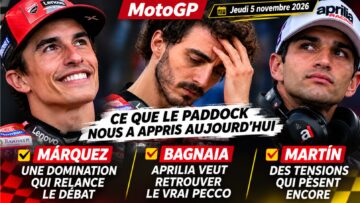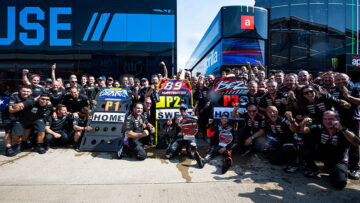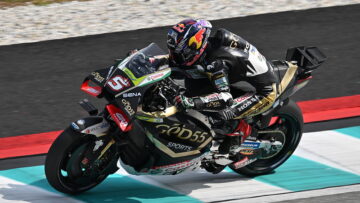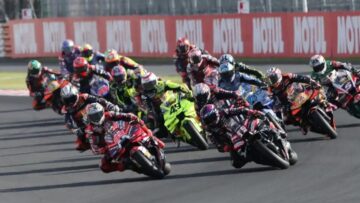





The drivers can delay their arrival in Doha. They cannot postpone their obligations indefinitely. As the Qatar Grand Prix approaches, the organizers have just demonstrated this: the traditional Thursday press conference has been moved to 20 p.m. local time to accommodate late arrivals. The schedule is being adjusted, but the event remains on track. And the message sent to the paddock is clear: they must be there.
MotoGP: Thursday already tense in Qatar
The opening press conference for the Grand Prix usually takes place at 16 p.m. local time. At Losail, it is now scheduled for four hours later. This change is not insignificant: several drivers are not due to arrive in Doha until Thursday. Some have chosen to extend their stay in Malaysia after Sepang, while others have returned to Spain or Italy.
These late deployments come amid heightened concerns about regional security. However, the individual motivations of each pilot are not yet fully established.
The postponement allows for the absorption of last-minute arrivals without cancelling the media event . At this stage, the list of drivers called up has not yet been released.
Nineteen pilots opposed? A rebellion that doesn't change the program
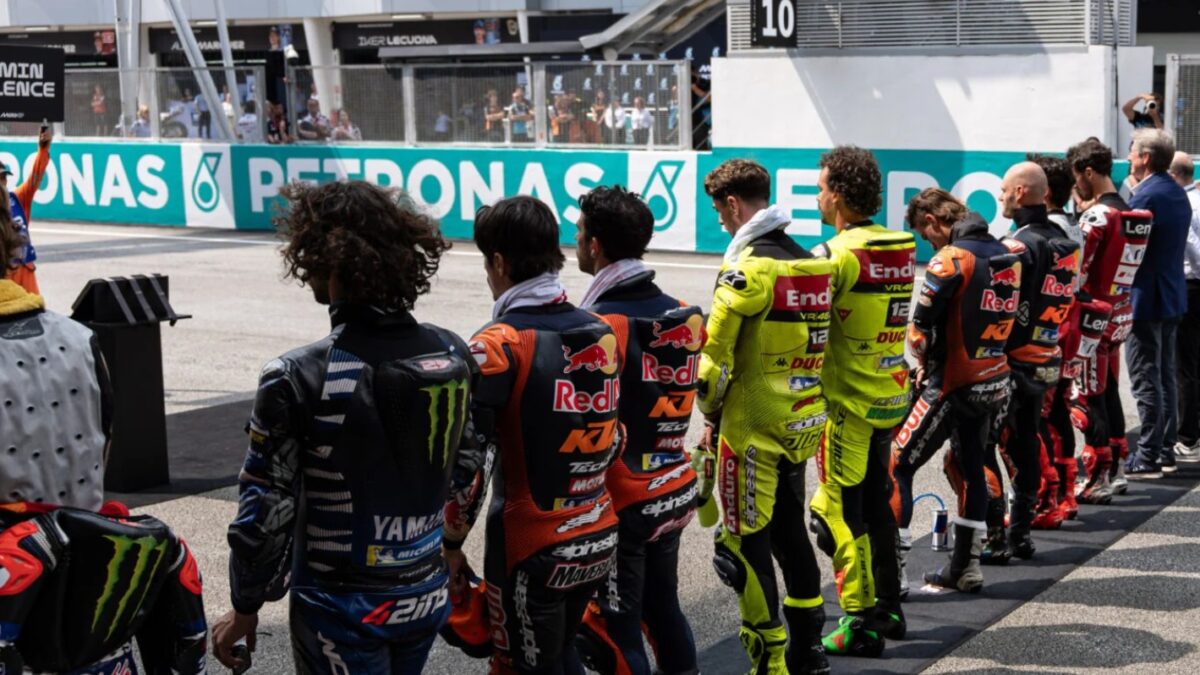
According to reports circulating in the paddock, 19 of the 22 riders have sent a letter to the MotoGP Group expressing their opposition to traveling to Qatar . This number and the exact content of the letter remain to be independently confirmed.
The main point is elsewhere: despite these reservations, the Grand Prix remains scheduled. The organizers have not chosen to cancel the media day or announce a general exemption from promotional commitments.
She preferred to change the schedule. This is a crucial distinction. The adjustment acknowledges the practical difficulties of a paddock arriving in dribs and drabs, without constituting a concession on the principle of being present in Qatar.

Media obligations do not disappear with worries
Thursday before a Grand Prix is not a mere formality. Press conferences, interviews, promotional sessions, and partner outreach all contribute to the championship's economy. Their schedules mobilize teams, broadcasters, sponsors, and the media. Postponing a four-hour press conference is a logistical adjustment, not a fundamental change to the format.
This does not mean that each pilot will have to personally participate in all the originally planned activities: individual invitations are still to be finalized. But the general intention is clear. The organizers intend to maintain the weekend's format, rather than drastically reduce it.
Two strategies are thus facing off: the drivers seek to limit their time spent in Qatar; the organizers want to maintain the Grand Prix and its obligations, even if it means rearranging some slots.
Qatar: a compromise on the clock, not on the substance
Thursday evening will be the first test. Which drivers will ultimately be present in front of the journalists? How will they explain their last-minute arrival? And will they be able to express their concerns, given that they are expected to promote an event that some of them are contesting?
Because behind the simple change of schedule lies a deeper question: to what extent can we demand the usual functioning of a Grand Prix when its main actors contest the conditions of its organization?
So, what do we remember?
- Press conference: postponed from 16 p.m. to 20 p.m. in Doha to take into account late arrivals.
- Pilots: collective opposition is reported, but the figure of 19 out of 22 remains to be confirmed.
- Organization: the Grand Prix and its media coverage are maintained despite the tensions.
Qatar has , for the time being, gotten what it wanted: a Grand Prix that is being prepared, even if the drivers only arrive at the last minute. The schedule has been moved by four hours. The organizers ' position , however, hasn't budged an inch.