








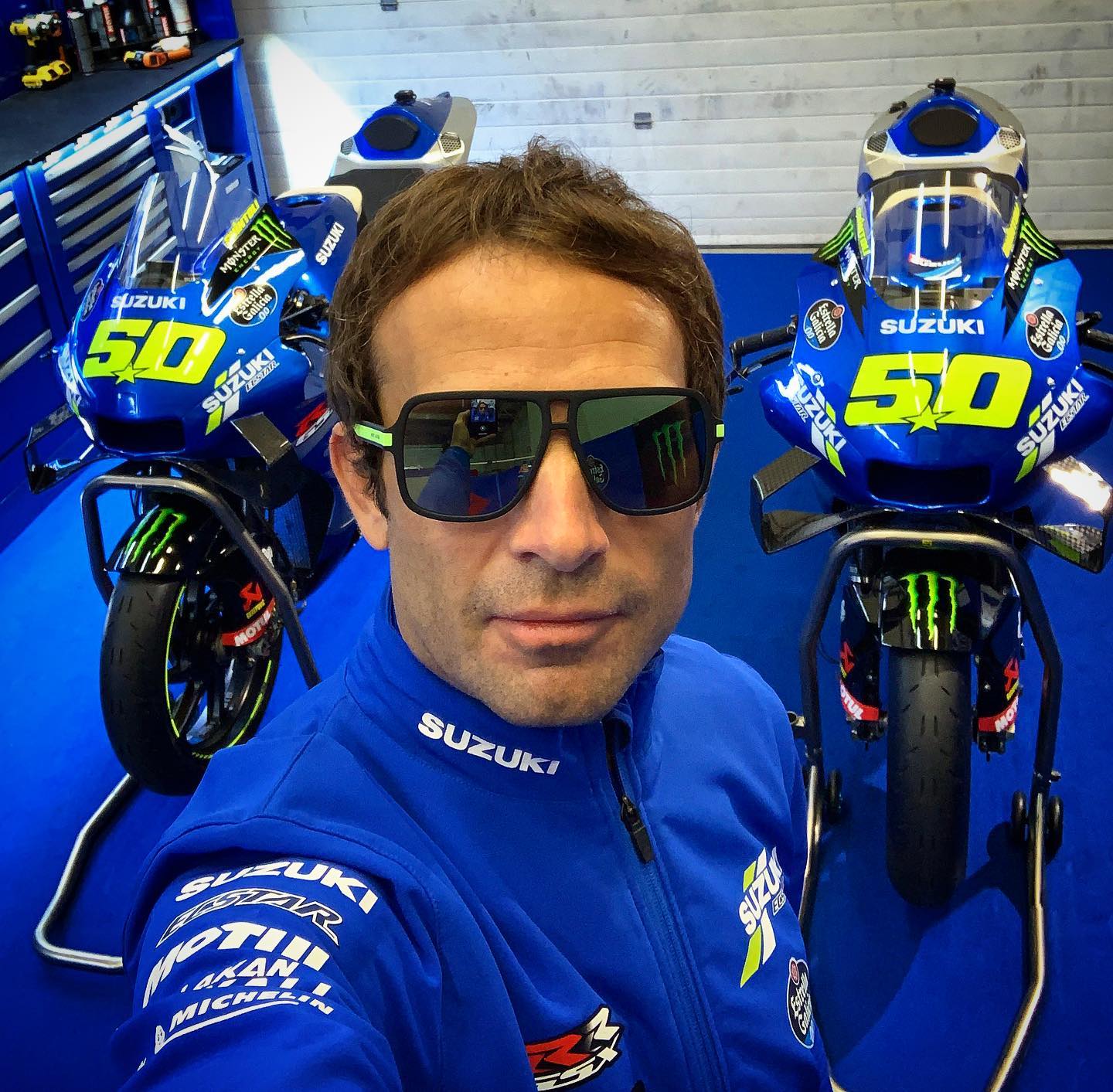
After studying the developments brought by Yamaha at Jerez, let's focus on a team that also uses an in-line 4-cylinder engine, Suzuki, which also seemed to leave Jerez with more frustrations than hope for 2022. The factory 'Hamamatsu didn't seem to have many pieces to test.
Contrary to what was perceptible to the naked eye, Hamamatsu engineers did not sit idly by, and offered numerous developments to their riders: engine, chassis, swinging arm, Holeshot Device, etc. The tests were productive, especially since Sylvain Guintoli was able to drive 2 more days on the Andalusian route.
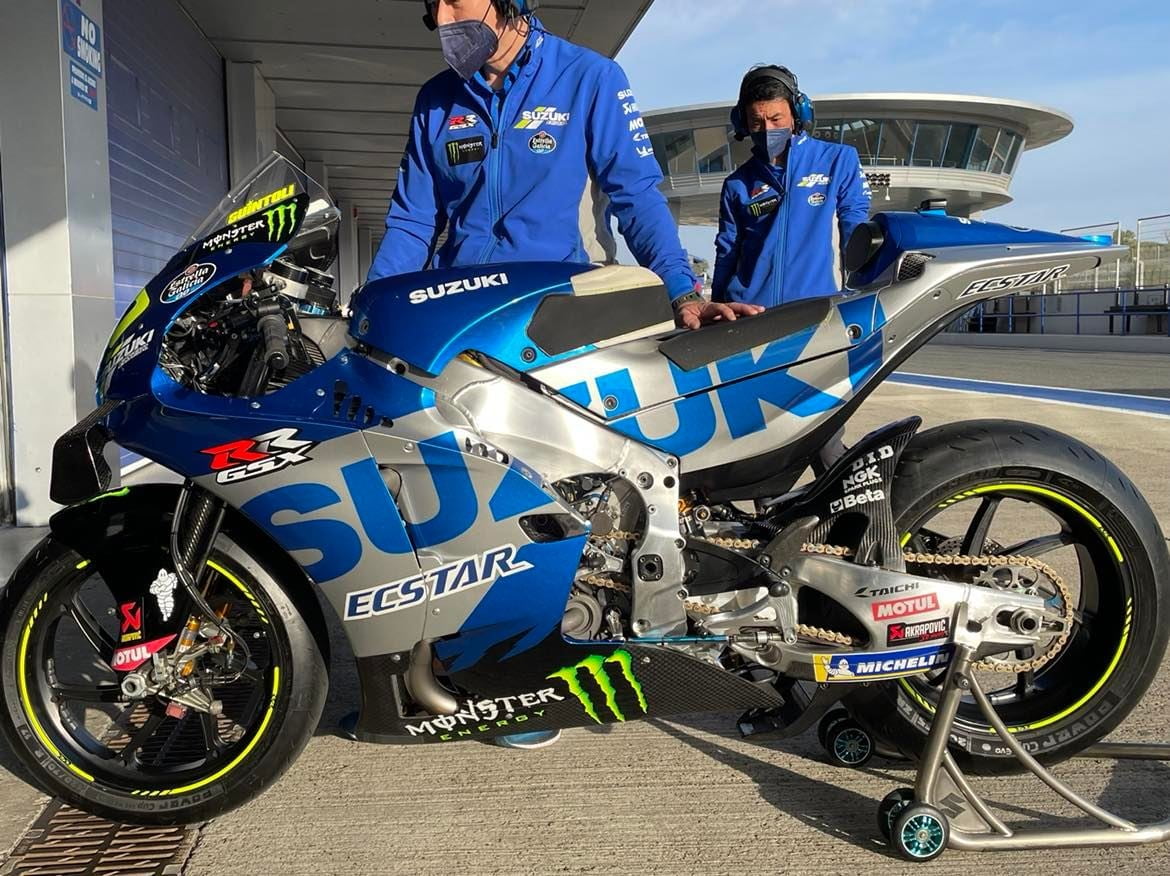
It was not clear what Suzuki tested in Jerez: the technical teams and the riders were not very talkative. Joan Mir and Alex Rins said they had a new chassis and swingarm on hand, but no modifications were obvious to spot.
We know they had two different versions of their Holeshot Device, a technology that allowed them to have excellent one-lap pace late in the season. The Suzuki teams also tested some small aerodynamic parts, not a complete aerodynamic package, but rather small developments notably concerning the side fairings, with the aim of better circulating air and thus cooling the rear of the radiator more effectively.
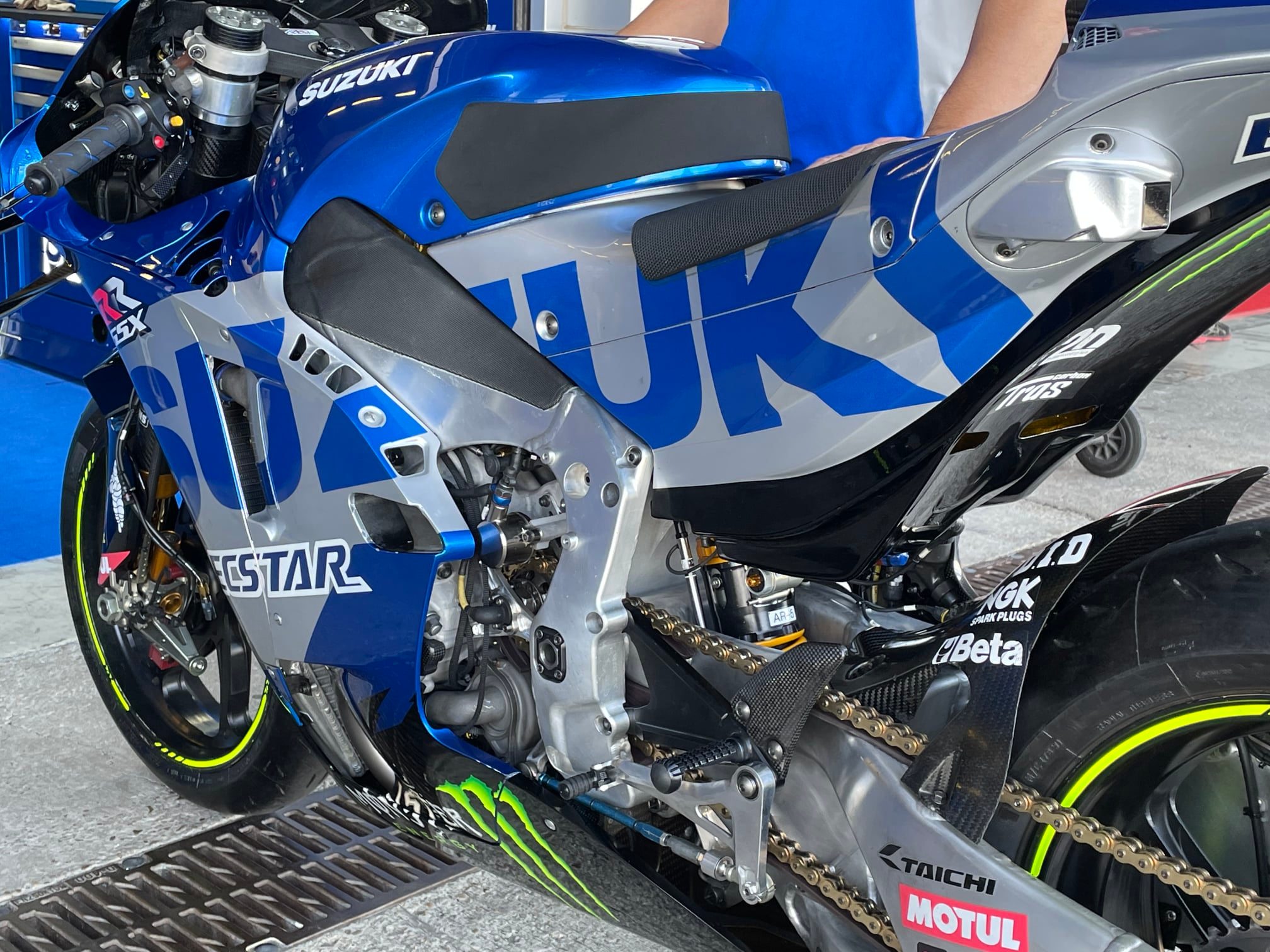
At the end of the 2nd day of testing, more visible changes hit the track: the same carbon-covered chassis that Suzuki had during the Americas GP and the Misano test. This chassis was therefore not completely new.
The carbon bonded to the main beam contributes to braking stability, allowing the Suzuki to brake harder and later, which was appreciated by both riders from the first tests at Misano.
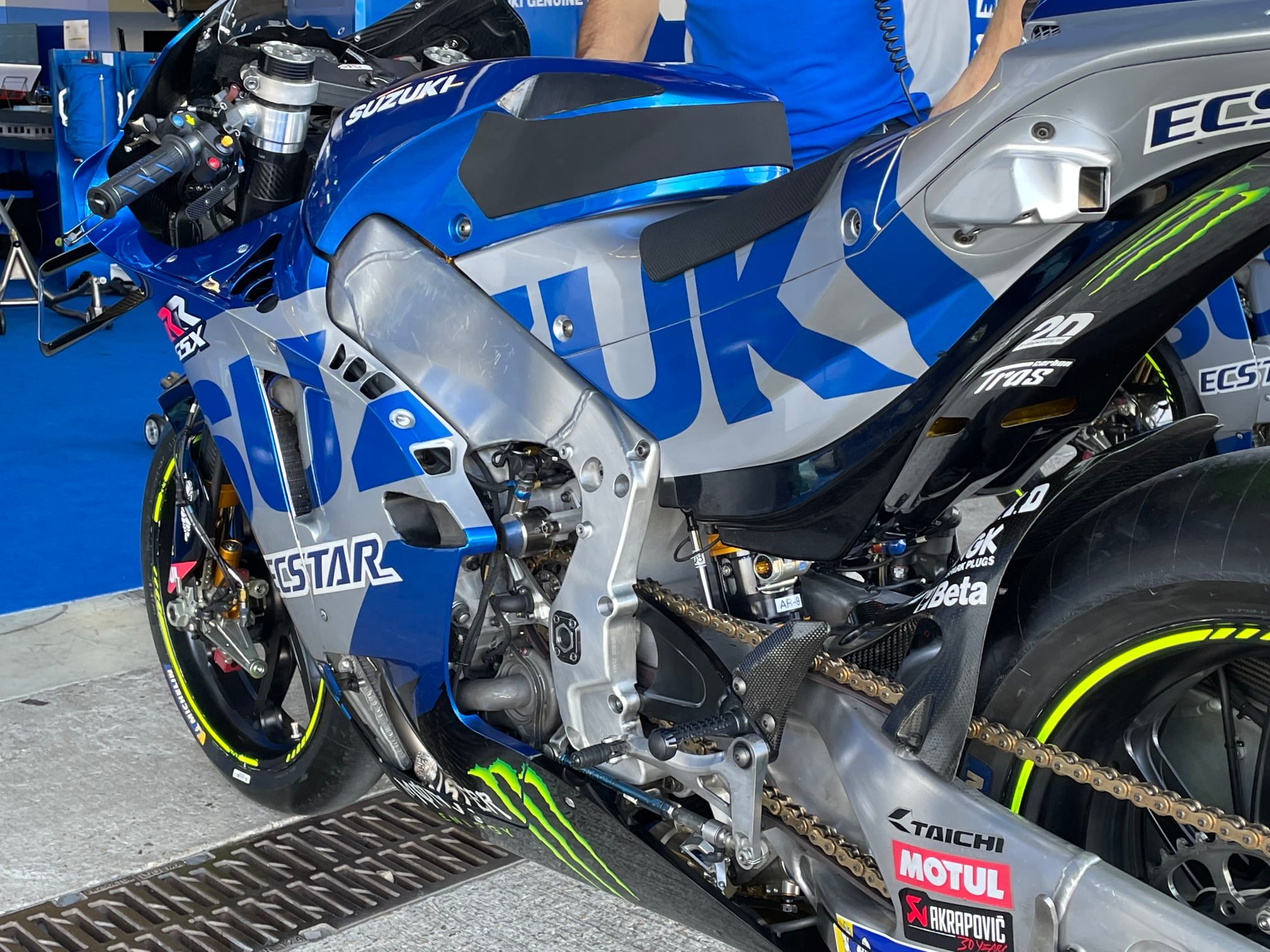
The braking performance of the GSX-RR is one of its weak points, the V4 offering much greater braking stability than that of the prototypes equipped with 4 in-line cylinders, in other words, Suzuki and Yamaha.
Here we observe the difference between the carbon-covered chassis and the classic chassis: the metal part is the same, only the area where the carbon is added differs.
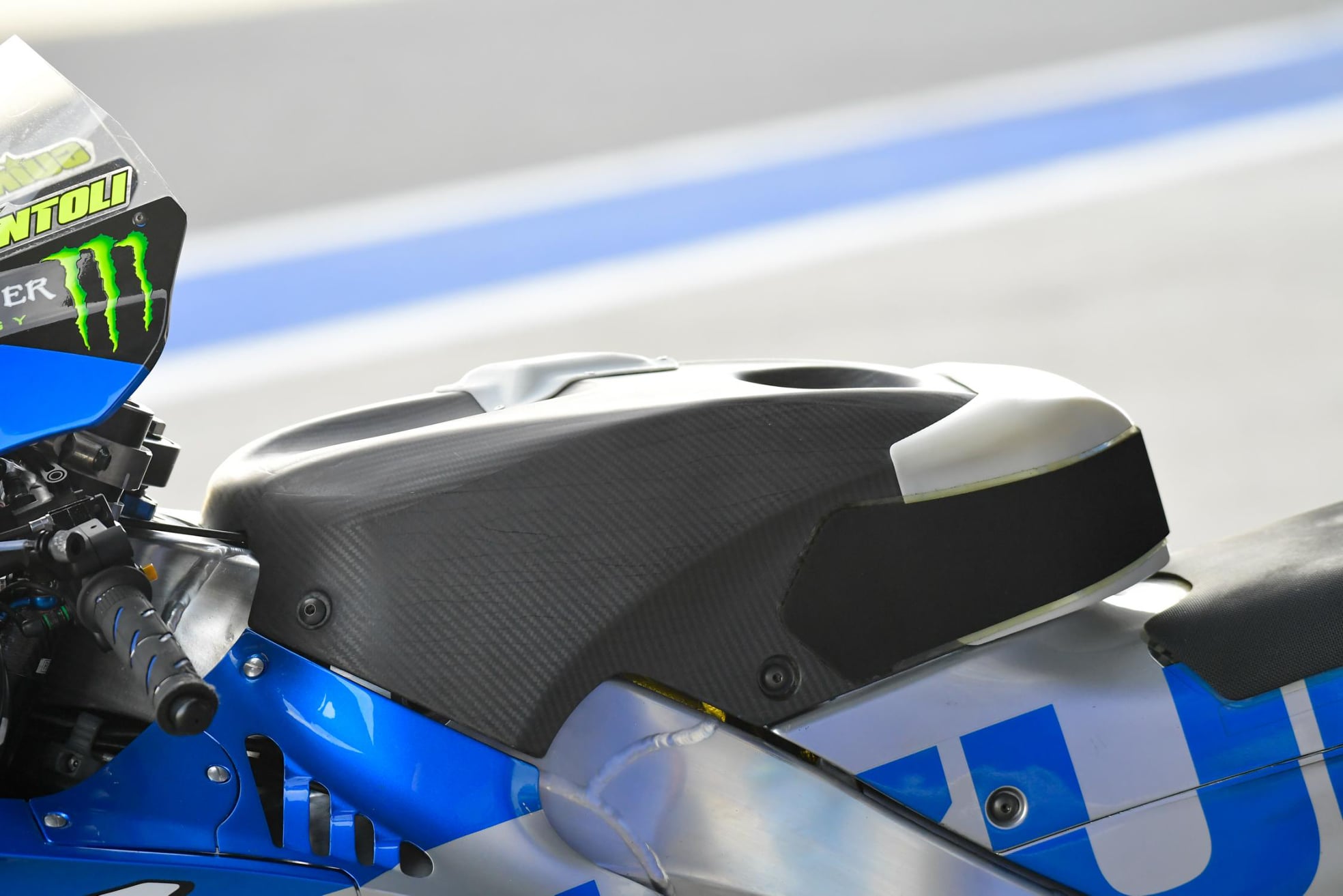
Another thing Suzuki had was this fuel tank and airbox cover different from what has been seen on the GSX-RR so far. A different cover could mean a different airbox and that would make sense considering Suzuki has done a lot of work on its engine for the 2022 season.
Suzuki riders were mostly positive about the 2022 engine's power increase, but Joan Mir was less positive about the effects it had on the bike. So, according to him, the technical teams must now work on the electronic side to get the feeling and control they need, before adding that improvements must be made on corner entry and exit to really get the most out of it. based on the new and more powerful engine.
But on the other side of the garage, Alex Rins said he felt good with the new engine and didn't think there was a need to do as much work on the electronics.
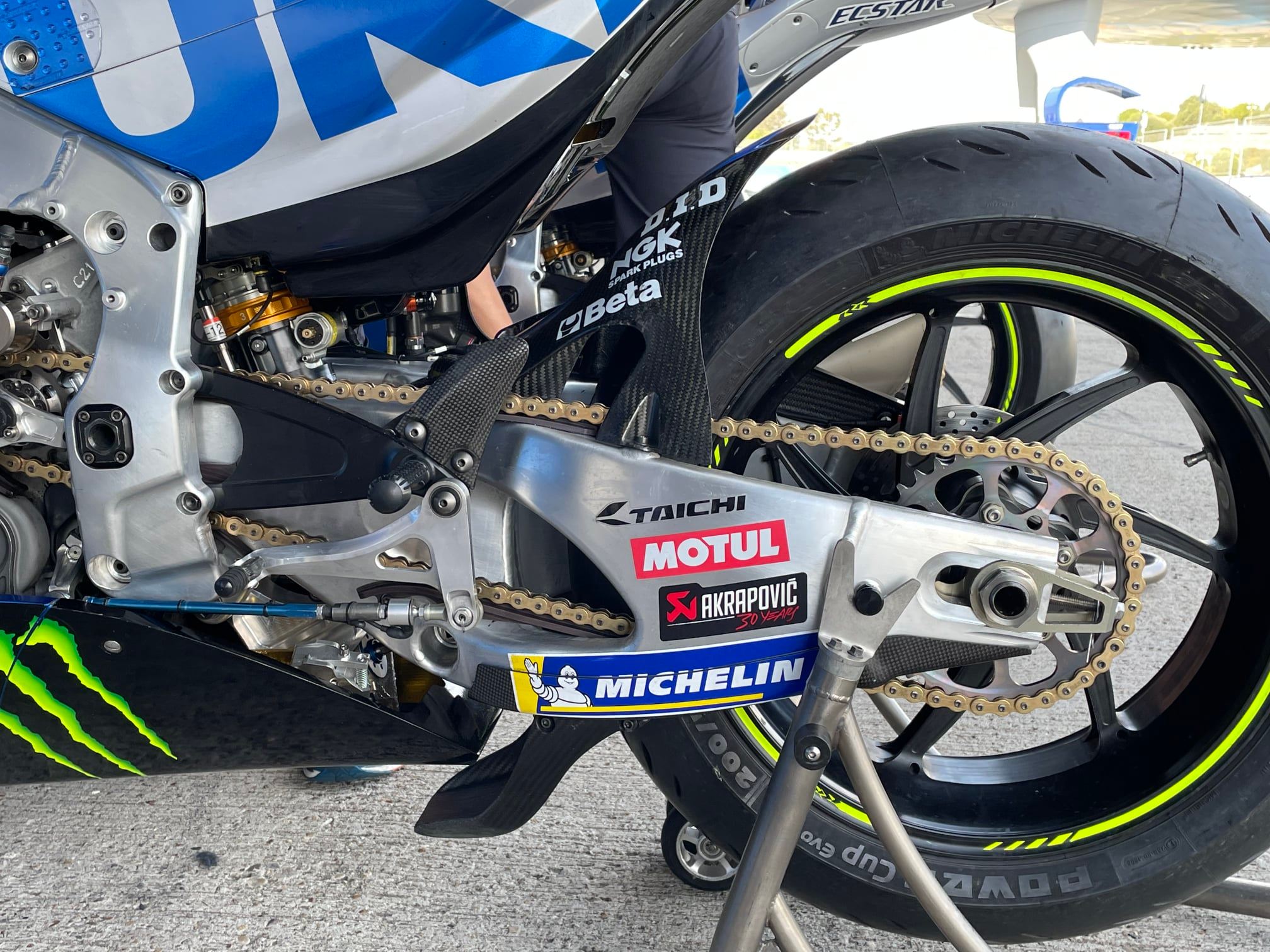
The last thing that was tested was a new swingarm, but as with many of their new parts, the changes to the swingarm were unnoticeable from the outside.
At the end of these tests in Jerez, the feelings were mixed: Alex Rins was rather satisfied with the developments made while Joan Mir complained of inertia at Suzuki, and seemed dissatisfied with the progress made by his machine. It remains to be seen what Hamamatsu engineers will come up with for the Sepang tests, scheduled for February 2022.